
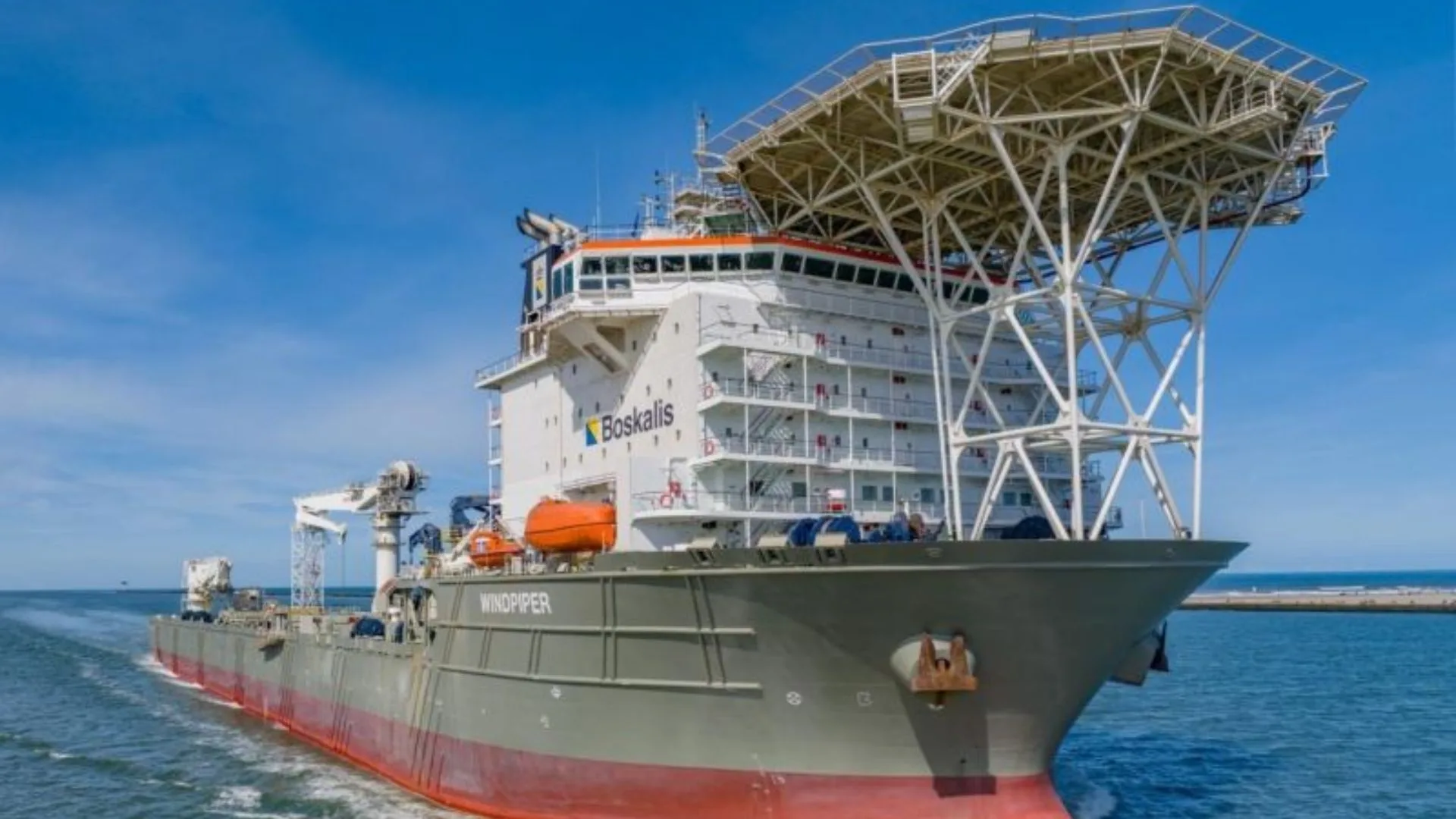
The subsea rock installation vessel Windpiper, operated by Boskalis, has arrived in Rotterdam marking a new step in the development of offshore wind energy infrastructure. The vessel will be prepared at the Dutch port before beginning its first operations in the Baltic Sea.
Boskalis’ Windpiper for Subsea Rock Installation
With a length of 227 meters and DP2 dynamic positioning system, Windpiper stands out for its transport capacity of up to 45,500 tons of rock, positioning it as the largest subsea rock installation vessel in the industry.
Furthermore, this capacity enables the execution of protection and stabilization operations for offshore structures with high precision, a growing need in offshore wind energy projects.
Technical Conversion for Offshore Operations
Previously designed for another function, the vessel was acquired by Boskalis over a year ago and underwent a technical conversion process. During this period, two large rock holds and a fall pipe system were incorporated to facilitate controlled placement of material on the seabed.
Likewise, these modifications enable direct intervention on foundations, subsea cables, and other critical infrastructure in complex marine environments.
Rotterdam as Strategic Preparation Point
Currently, Windpiper will be equipped and commissioned at Waalhaven in Rotterdam before its operational deployment. This process includes technical testing and final adjustments necessary to ensure its performance under real conditions.
Furthermore, its first project is scheduled in the Baltic Sea toward the end of this year, where it will participate in work associated with offshore wind farms.
Boskalis Strengthens Its Presence in Offshore Wind Energy
With the incorporation of Windpiper, Boskalis expands its capacity to develop energy infrastructure in marine environments. The company continues to position itself as a relevant player in the transition toward renewable energy, especially in the offshore segment.
In this context, the new vessel will enable addressing projects of greater scale and technical complexity, aligned with the global expansion of offshore wind energy.
Source and photo: Boskalis