
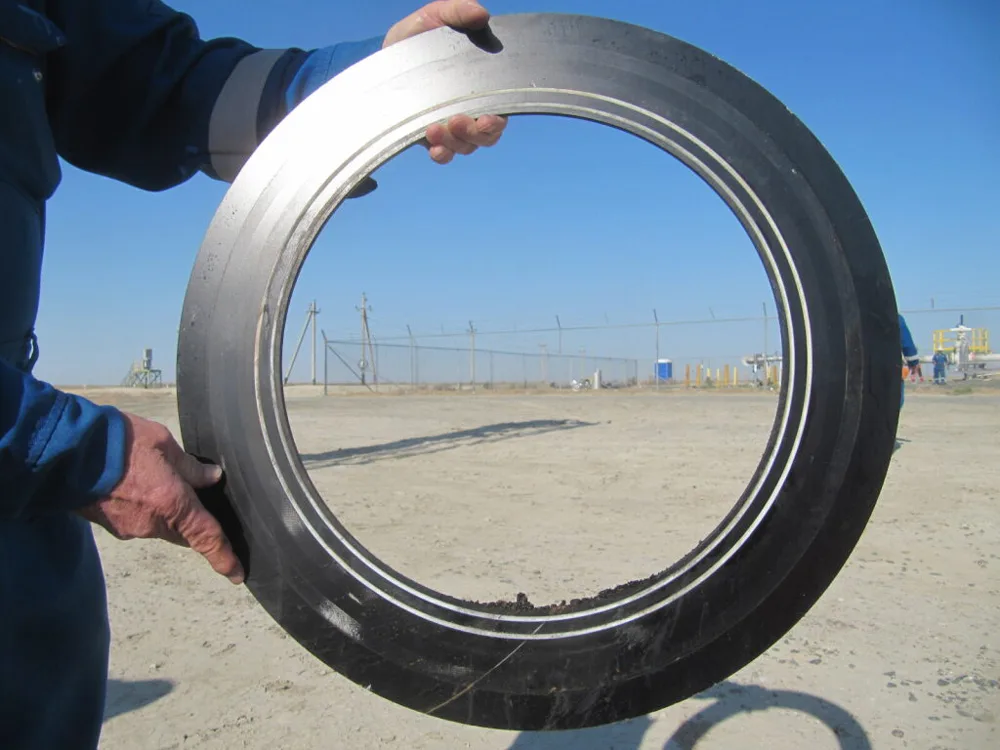
Black powder induces leakage currents in pipelines
In gas and crude oil transportation systems, the most critical phenomenon is not just internal corrosion, but the loss of electrical insulation. The most relevant fact is that black powder acts as a conductive material capable of generating electrical bridges between isolated sections, directly compromising the effectiveness of cathodic protection.
This residue forms through the interaction between hydrogen sulfide (H₂S), moisture, and iron in the steel, generating primarily iron sulfide along with other compounds. The result is a highly conductive product that not only accelerates internal corrosion but introduces a more complex variable: the loss of electrical integrity in the system.
Direct impact on cathodic protection and corrosion
From a technical standpoint, the formation of electrical bridges allows uncontrolled current flow between sections that should be isolated. This reduces the efficiency of cathodic protection systems, leaving pipeline segments exposed to accelerated corrosion and potential structural failures.
Additionally, black powder generates mechanical and flow effects: it increases friction, induces turbulence, and causes particle agglomeration through magnetic attraction. These accumulations can restrict flow and increase the required fluid velocity, intensifying erosive wear, even with particles harder than the pipeline steel itself.
Key flange design to prevent electrical failures
One of the most important findings is that the design of insulating flange gaskets (IFG) plays a determining role in mitigating the problem. It has been proven that gaskets with an internal diameter larger than the pipe create cavities where black powder accumulates, facilitating the formation of conductive paths.
The most effective solution consists of using internal seals made of materials such as PTFE with a diameter matched to, or slightly smaller than, the pipe bore. This approach eliminates accumulation spaces, reduces electrostatic adhesion, and extends the electrical insulation path, significantly improving cathodic protection performance in systems with high sour gas presence.
Insulation failures according to NACE SP0286 criteria
According to recommended practices such as NACE SP0286, the insulation performance in flanges depends largely on the internal diameter (ID) design of the gaskets. When this ID exceeds the bore diameter, cavities are created where black powder deposits, facilitating the formation of conductive paths.
Field studies show three clear behaviors: permanent short circuits in oversized gaskets, intermittent failures in gaskets aligned with the bore, and effective insulation when the internal seal protrudes slightly into the flow. This last case limits particle accumulation and reduces the probability of electrical bridge formation.
Source and Photo: https://pgjonline.com/magazine/2026