
Table of Contents
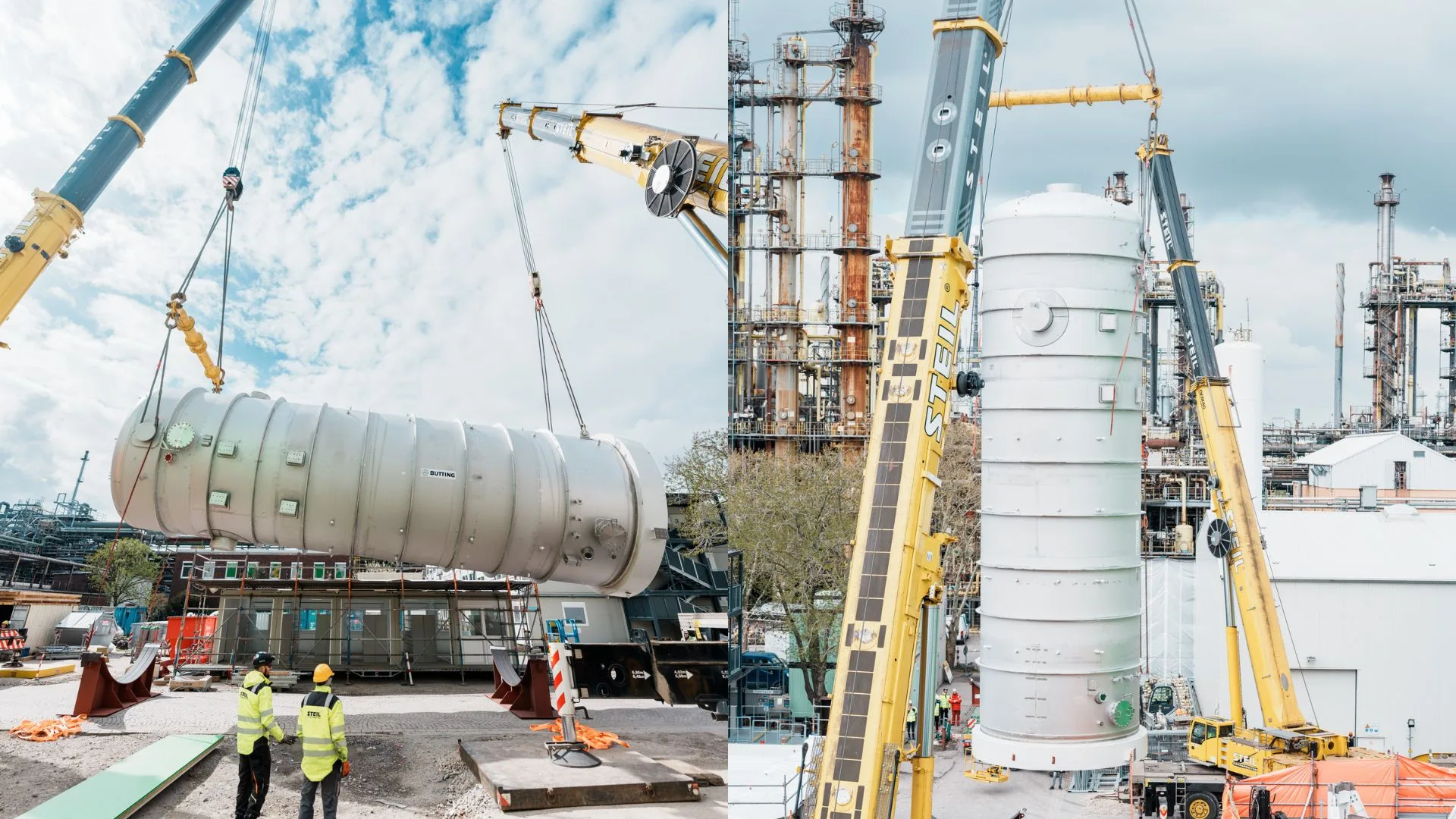
BASF took a new step in the construction of its industrial heat pump in Ludwigshafen with the arrival and installation of the falling film plate evaporator, a 95-metric ton, 16-meter-long component that will be decisive for the generation of emission-free process steam.
Operations are scheduled to begin in mid-2027. The project receives public support from the German Federal Ministry for Economic Affairs and Climate Action, which has committed up to 310 million euros through the Carbon Contracts for Difference program.
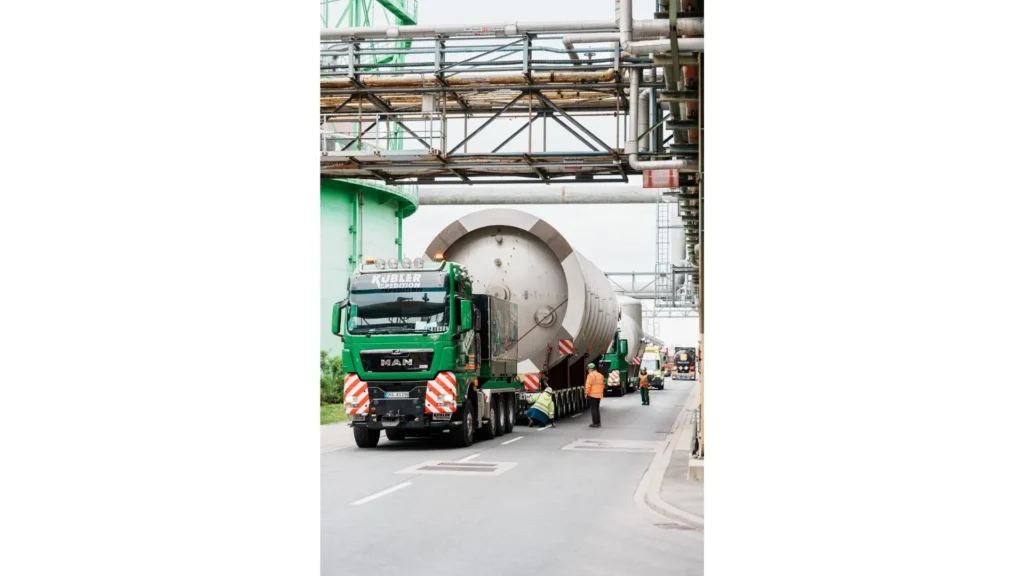
The equipment was transported by waterway from Schwedt, on the Oder River, to the port of BASF’s main plant. It then traveled through the complex on a heavy-duty truck to the construction area located next to the steam cracker.
The most powerful industrial heat pump
The evaporator plays a central role within the future facility. Oxygen-free steam is generated in this unit, a technical requirement for its use in demanding industrial processes. Once produced, this steam will be distributed through the chemical complex’s Verbund network to power various production plants.
According to BASF, the new plant will be one of the world’s most powerful industrial heat pumps for emission-free steam generation. The system has been adapted to the operational conditions of the Ludwigshafen site together with GIG Karasek, the Austrian company responsible for the design of this component and a key player in the system’s construction.
The facility will use electricity from renewable sources and will utilize waste heat from the cooling processes of one of the steam cracker units. With this setup, the heat pump will be able to reach a thermal capacity of nearly 50 megawatts.
Furthermore, BASF expects the plant to produce up to 500,000 metric tons of CO₂-free steam per year. This steam will primarily be used for formic acid production, an application that could reduce greenhouse gas emissions associated with this process by up to 98%.
In absolute terms, the estimated reduction is around 100,000 metric tons of CO₂ per year.
BASF reported that the main building infrastructure is already completed, including the plant hall and the electrical substation building. Additionally, a large portion of the piping connecting to the steam cracker has already been installed.
This progress brings the project closer to its next stage, focused on the final assembly of the system and integration with the chemical complex’s existing infrastructure.
Source and photos: BASF