
Table of Contents
Amarinth has completed the manufacture and delivery of a £1.5 million contract to supply chemical injection skids for the Soku and Gbaran liquefied natural gas fields in Nigeria. These systems will form part of the infrastructure ensuring gas supply to the Nigeria LNG plant located on Bonny Island.
My analysis of this project clearly shows that it is a relevant technical operation to maintain the integrity of gas pipelines in one of the world’s most demanding energy regions: the Niger Delta.
Chemical injection skids to protect gas pipelines
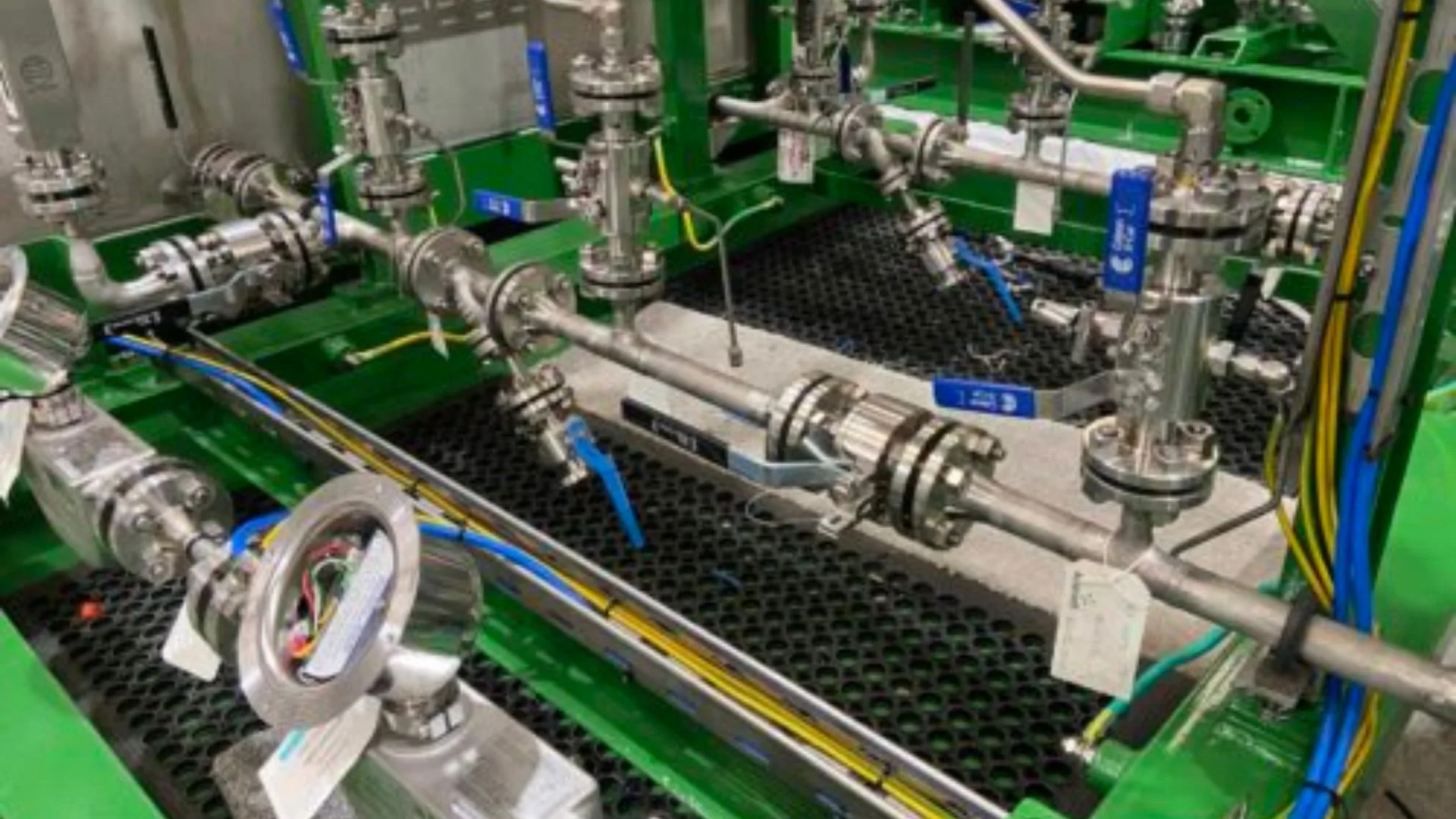
In this case, the delivered equipment consists of four chemical injection platforms manufactured under the API 675 standard. These units allow for the dosing of specialized products that protect gas transport lines against common problems in energy infrastructures.
The installed systems include:
- biocide injection packages
- oxygen scavenger injection units
- scale inhibitor dosing systems
These solutions prevent internal corrosion and the buildup of mineral deposits that can affect the efficiency of pipelines used to transport gas to liquefaction facilities.
Critical operation for gas supply to Nigeria LNG
This equipment will be used by Renaissance Africa Energy Company Limited. The company operates infrastructure that supplies feed gas to the Nigeria LNG plant, one of Africa’s most important liquefied natural gas export complexes.
The use of chemical injection systems maintains stable operating conditions within the pipelines connecting production fields to processing facilities.
This protects the infrastructure and ensures the continuity of the energy supply.
Engineering adapted to Niger Delta conditions
Furthermore, the project presented significant technical challenges due to the environmental and operational conditions of the region.
To facilitate installation, Amarinth designed compact, fully factory-assembled skids. Each unit underwent testing before shipment to reduce field work and improve safety during commissioning.
Additionally, a custom frame was developed for the Soku field, allowing the equipment to be installed on existing concrete bases. This approach avoids new civil works and facilitates integration with current infrastructure.
Optimized logistics for transport in Nigeria
Logistics was also a key aspect of the project. The equipment was designed to fit inside standard shipping containers.
Thanks to this approach, the systems can be moved across Nigeria’s road networks without requiring special permits. This reduces delivery times and costs associated with transporting large-scale industrial equipment.
Collaboration between international engineering and local support
The execution of the contract also involved collaboration with Elkarino Nigeria Ltd. This company provided local support during the project and facilitated implementation within the Nigerian operating environment.
The combination of international engineering and regional expertise allowed the supply to be completed while meeting the technical standards required by the energy industry.
Expansion of the African energy market
Finally, Amarinth’s Managing Director, Oliver Brigginshaw, noted that the delivery of these systems demonstrates the company’s ability to develop technical solutions within demanding timeframes.
According to the executive, the project was completed in 39 weeks and reinforces the company’s presence in the African energy market. Nigeria continues to be one of the countries with the largest oil and gas reserves in the world, maintaining strong demand for energy infrastructure technologies.
Source and photo: Amarinth