
Technical challenges in the energy transition: The voice of the end user as a driver of innovation
The energy transition is reshaping our society by reducing CO₂ emissions in production processes, mobility, and the products we manufacture and consume. This paradigm shift taking place in the European Union represents a major challenge that requires public-private collaboration to ensure technological development without compromising industrial and economic competitiveness.
Energy companies play a key role in reducing emissions, but along the path to this goal, it is essential to assume responsibility for guaranteeing an affordable and reliable energy supply that supports social development.
At Repsol, we believe that, only by leveraging all available technologies, environmental targets will be achieved without jeopardizing our strategic autonomy, industry, and employment.
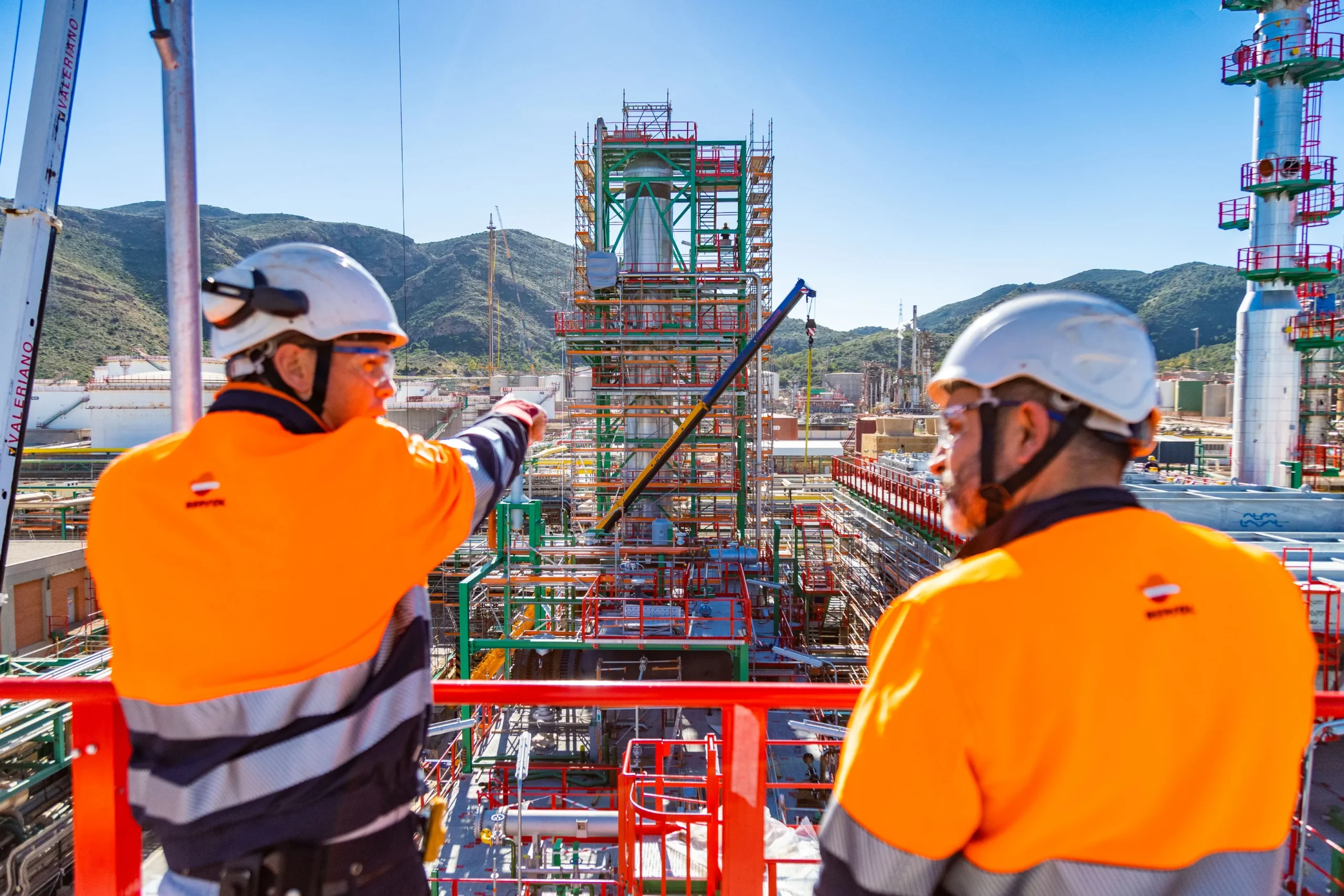
Our industrial complexes are being transformed into decarbonized multi-energy hubs thanks to renewable hydrogen; circular economy initiatives that produce value-added products from residual feedstocks, such as renewable fuels; energy efficiency measures; and carbon capture, utilization, and storage technologies (commonly referred to as CCUS). All of this is driven by technology and digitalization as key enablers of transformation.
We are advancing in projects supported by Spanish and European institutions, achieving significant CO₂ emission reductions. The Cartagena biofuels plant produces 250,000 t/y of renewable fuels, reducing approximately 900,000 t/y of CO₂ emissions; the Tarragona Ecoplant will process 400,000 t/y of non-recyclable municipal solid waste to produce around 240,000 t/y of renewable methanol and circular products; and the e-fuels demo plant built in Bilbao will produce synthetic fuels from renewable hydrogen and captured CO₂.
These technologies entail operational changes and materials will be under conditions that, in some cases, are more demanding than traditional operating modes. Consequently, degradation mechanisms are altered, requiring a review of material selection criteria and protection strategies.
During this transition, engineering operates in a space where innovation advances faster than regulations and accumulated experience. To keep pace with the transformation while ensuring asset integrity, reliability, and operational efficiency, strategic innovation areas emerge.
The following strategic areas represent challenges that, from a customer perspective, must be addressed simultaneously through collaboration among manufacturers, operators, and technology centers:
1. Development of new coatings and testing standards
New operating conditions—such as extreme temperatures, streams with high TAN (Total Acid Number), oxygen-rich mixtures, or humid environments with CO₂—challenge conventional coatings. In CO₂ capture projects, premature failures have been observed in epoxy coatings due to carbonic acid formation, and lipid-based feedstocks for biofuels differ from fossil ones, making decades-old coating solutions unsuitable.
Traditional tests such as AMPP NACE TM0174 may not be adequate for lipid-based feedstocks, whose properties change over storage time.
One of the most critical challenges is developing more resistant coatings, considering variables such as fatty acid type, water content, temperature, and oxygen concentration. Innovating in standardized testing protocols that simulate real conditions is key to preventing premature failures and extending equipment life.
2. More versatile and predictive inspection and monitoring techniques
Current inspection techniques face limitations when dealing with new corrosive processes and equipment made from advanced alloys or composites.
In hydrogen transport and storage, it is crucial to have techniques that detect microcracks in real time, avoiding unplanned shutdowns and reducing maintenance costs. In biotreatment plants, techniques are needed to identify localized damage caused by fatty acids with minimal sensor deployment.
The challenge is twofold: evolve toward non-invasive, real-time measurement techniques capable of detecting microcracks caused by hydrogen embrittlement; and develop sensors with greater coverage to detect localized failures with fewer devices.
3. Accelerated validation of new materials
Advanced alloys, lower-CAPEX materials, and composites are essential for hydrogen, biofuel, or CO₂ capture facilities, but the lack of clear validation standards creates uncertainty.
For hydrogen storage, steels with high chromium and molybdenum content have been introduced to mitigate hydrogen embrittlement, but their qualification requires protocols not yet covered by international standards. In biofuels, alloys are being investigated to resist corrosion from ammonium chloride salts at lower cost.
The challenge is to define validation protocols that guarantee performance within shortened timelines.
4. New standards for material selection and corrosion testing
Current standards do not cover material selection or corrosion testing required by new technologies. For hydrogen storage, there is no established methodology for embrittlement analysis. In biofuels, there are no guidelines addressing specific material selection issues, such as unexpected chloride stress corrosion cracking (Cl-SCC) in austenitic steels.
Moreover, conventional testing does not replicate the extreme conditions of these technologies, and the lack of standardization leads to inconsistent results across laboratories, increasing the risk of errors in material selection.
Regulations must evolve at the same pace as technology, ensuring safety without hindering innovation. The challenge lies in accelerating the development of standards by pooling efforts and creating reproducible autoclave methodologies with standardized parameters to obtain consistent results.
The energy transition is not only a technological challenge, it is an opportunity to reinvent industry with a lower carbon footprint. Listening to the end user voice enables us to anticipate solutions, reduce risks, and accelerate the adoption of key technologies for decarbonization.
This path requires collaboration among manufacturers, research centers, and operators to create standards that evolve alongside innovation, validate materials, and develop inspection techniques that guarantee asset integrity. It also demands knowledge—technical training must be viewed as a strategic investment to drive competitiveness.
Anticipation is not optional; it is the only way to ensure safety, reliability, and resilience in a sector moving toward a more efficient future. Every technical decision carries economic and operational implications. Innovating today means establishing robust methodologies, validating materials under real conditions, and defining standards that reduce uncertainty and guarantee long-term integrity.
I would like to express my special thanks to Cristina Miralles Nyrelius for her collaboration in preparing part of this article.
This article was developed by specialist María José Yanes and published as part of the seventh edition of Inspenet Brief February 2026, dedicated to technical content in the energy and industrial sector.