
SLOM has established itself as a leading technical network for operators of offshore terminals and single buoy systems, combining international standards with operational experience in Latin America and the Caribbean. In this interview, its leadership addresses the strategic priorities for the coming years, focusing on human factors-based safety, the incorporation of digital technologies for risk management, and the adaptation of infrastructure to new energy vectors and decarbonization requirements.
The conversation also delves into the balance between operational performance, environmental compliance, and CAPEX and OPEX optimization in the context of the energy transition, as well as the role of technical training, confidential exchange spaces, and multilingual digital platforms in accelerating the adoption of world-class practices. In addition, opportunities for international collaboration to strengthen innovation, digitization, and the safe operation of new fuels in the maritime and offshore sectors are analyzed.
- SLOM has established itself as a leading technical network for offshore terminals and single-point mooring operators. What are your global priorities to enhance safety, efficiency, and sustainability over the next 3–5 years?
Our primary objective is to establish SLOM as a global reference for safe and sustainable terminal operations. We are focusing on three fronts:
First, safety: The human factors approach is the new frontier towards zero incidents. This approach assumes a set of principles, such as “error is normal”, to help terminal operators incorporate human factors into their designs, existing systems, and procedures.
Second, sustainability: supporting our members as they prepare for new energy vectors and decarbonization technologies, such as onshore power supply (OPS). That also includes retrofitting existing infrastructure to handle different products, such as LNG.
And third, efficiency: promoting innovation and digital tools that make operations more reliable and efficient.
- Which emerging technologies (real-time monitoring, sensors, drones/ROVs, AUVs, data analytics) are transforming risk management in marine and coastal operations?
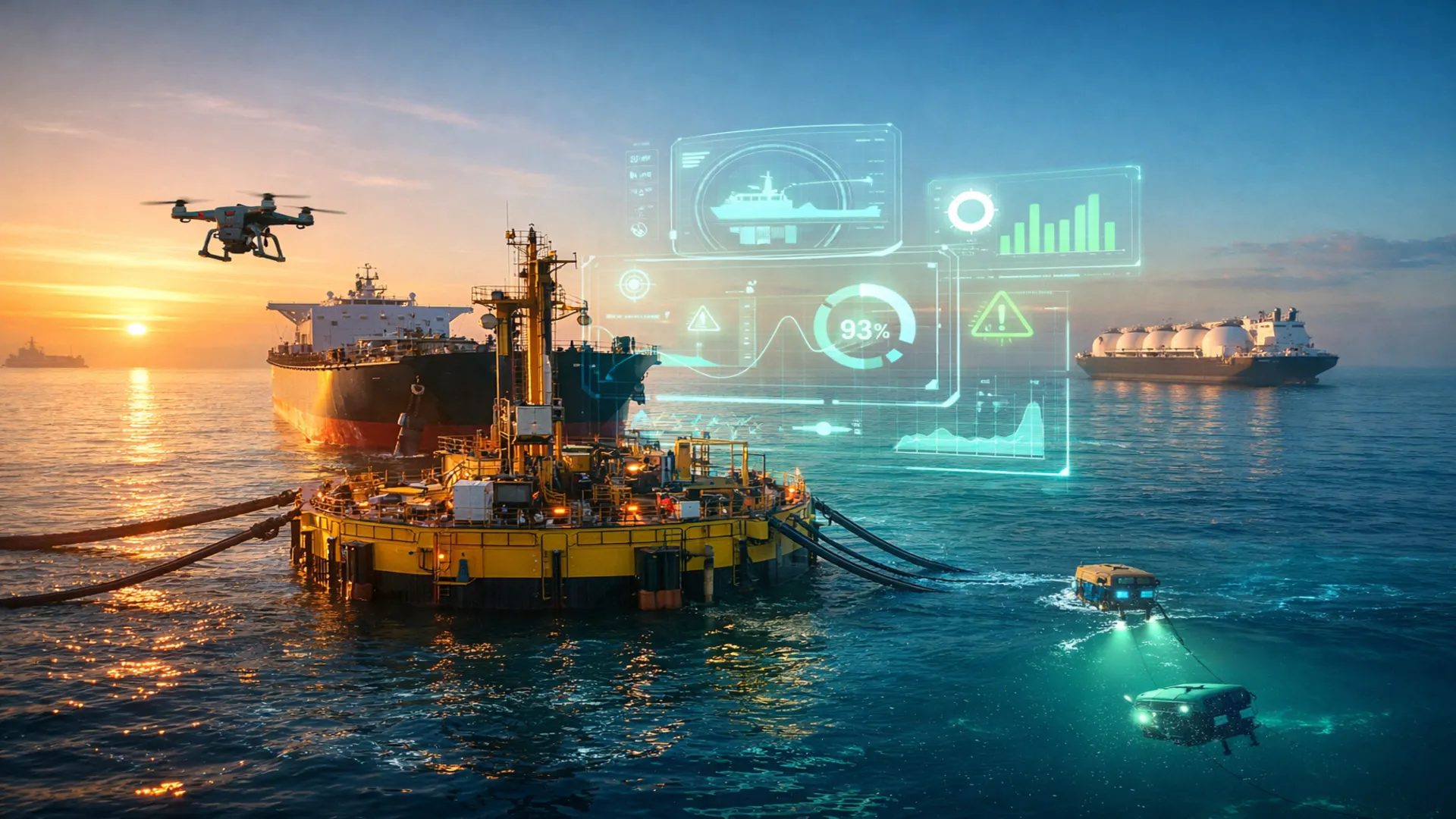
Technology is becoming an essential enabler for safety and efficiency. Tools such as real-time monitoring systems and data-driven predictive maintenance allow us to detect risks early and make better decisions. ROVs and drones have also changed how we inspect underwater and offshore assets, making inspection processes safer and faster.
- In an energy transition context, how do you balance operational performance, environmental compliance, and the optimization of CAPEX (Capital Expenditure) and OPEX (Operational Expenditure)?
In the context of the energy transition, balancing operational performance, environmental compliance, and CAPEX and OPEX optimization starts with recognizing that the traditional hydrocarbon-based business still financially supports the development of low-carbon energy solutions. This is also true in Latin America, where companies use a portion of current profits from their conventional operations to fund investments in low carbon energy.
For this reason, maintaining a healthy and efficient core business remains essential. The CAPEX and OPEX of traditional operations must be well managed, because these resources now need to support initiatives that are still smaller in scale and still evolving, such as low-carbon fuels.
At the same time, it is crucial to build an investment portfolio that matches the specific strengths of each region. Countries with strong bioenergy resources, such as Brazil, tend to capture more value by investing in biofuels. Countries with abundant solar and wind potential, such as Chile, are naturally better positioned to invest in green hydrogen and green ammonia.
In summary, balancing performance, environmental compliance, and costs means ensuring the efficiency of the existing business, allocating a portion of financial capacity to new energy vectors, and choosing investments that align with local energy potential to increase returns and reduce risk.
- How does SLOM promote convergence between international standards and diverse operational realities, ensuring the exchange of lessons learned among operators?
SLOM promotes convergence between international standards and diverse operational realities by first ensuring that operators understand the international best practices. We do this in several ways. Our events provide a platform for operators to share their own practices, and we also invite the organizations that develop these international guidelines and regulations. For example, the Oil Companies International Marine Forum, OCIMF, is regularly present at SLOM events.
SLOM also offers dedicated workshops and webinars to present new guidance documents to our members. When needed, we support individual operators through one-to-one engagement and even by facilitating cross-terminal exchanges, so they can understand how to implement best practices while considering their local and regional realities.
It is essential to recognize that Latin America and the Caribbean have unique conditions, from weather and geography to regulation and infrastructure. These conditions have shaped technical knowledge that often matches or exceeds global standards. These elements need to be incorporated into international standards and guidelines to ensure they remain practical and relevant. Because of this, SLOM actively encourages and enables its members to participate in international working groups that write these standards and guidelines.
For example, we are currently part of the OCIMF working group revising the “Guidelines for the Design, Operation and Maintenance of Multi Buoy Moorings (MBM).” Through this participation, we bring lessons learned from Latin America and feedback from SLOM members directly into the guideline, including improvements identified over time as our members have implemented these practices in the field. This process helps ensure that global standards reflect real operational experience and continue to evolve with practical input.
- What educational initiatives or training programs will you promote to accelerate the adoption of world-class practices across the region?
SLOM promotes the adoption of world-class practices through a combination of large regional events, technical workshops, and new digital learning platforms. Our flagship annual events are at the center of this effort.
The first is the Jornada de Operadores de Terminales Marítimos Petroleros y Monoboyas, which will take place next year in Cartagena de Indias, Colombia. Our goal is to deliver the best edition in SLOM’s 22-year history, with record participation and the largest business exhibition we have ever hosted.
The second is the Workshop on Lessons Learned in Marine Oil and Gas Terminal Operations. This is a closed-door event for terminal operators only. No phones, cameras, or laptops are allowed in the room, which ensures a safe environment for participants to share sensitive lessons learned from incidents and accidents. For 2026, we plan to deliver two editions of this workshop. The first will take place in Europe, marking the expansion of our community.. The second will be held in Rio de Janeiro. Our members are invited to both.
Beyond these major events, SLOM regularly offers technical webinars. We are now working on a new on-demand content platform that will give members access to online courses developed by SLOM’s own community. These courses will be created both by Type A members, who are terminal operators with deep operational expertise, and by Type B and C members, particularly service providers who hold highly specialized technical knowledge such as hoses, inspections, coatings, and other critical areas.
This digital platform will allow members to access high-quality technical content anytime. It will complement our in-person workshops, such as the upcoming mooring line replacement session, as well as the webinar program planned for next year. All of these materials will eventually be available on the on-demand platform, creating a comprehensive learning ecosystem for the region’s operators.
- In your view, what types of technical platforms, media, or collaboration networks can best support multilingual knowledge sharing, visibility of success stories, and benchmarking among terminals worldwide?
A combination of technical platforms, media formats, and collaboration networks is necessary to support multilingual knowledge sharing and the visibility of success stories among terminals worldwide. No single tool is enough. What works best is an ecosystem.
First, in-person events remain essential. Physical presence creates a level of focus, trust, and face-to-face interaction that is difficult to replicate digitally. These events must be supported by high-quality simultaneous translation, which allows participants to speak in their native language and express technical concepts with precision.
Second, video-based media has become one of the most powerful tools for knowledge transfer. This is why SLOM is moving toward an on-demand platform with recorded courses and technical sessions. Video content can reach operators across different time zones and allow them to revisit material whenever needed. Subtitles and multilingual audio tracks significantly expand accessibility. Today, AI-generated dubbing makes this even more feasible, and we intend to incorporate these tools to efficiently scale multilingual content.
Third, these platforms must support SLOM’s core purpose: connecting the entire ecosystem of stakeholders to safer, more efficient, and more sustainable terminal operations. The goal is simple: operators with a specific problem should be able to find someone who has already solved it, and operators who have not yet faced a particular issue should be able to learn from those who have. In other words, we want to enable preventive learning by sharing both solutions and lessons learned.
Combining in-person exchanges, high-quality multilingual digital content, and strong collaboration networks creates the environment needed for the visibility of best practices.
- What do you expect to see at upcoming events in the United States that could strengthen collaboration with shipowners, operators, and international suppliers?
We expect to see open discussions about energy transition, human factors, and safety leadership. These events are opportunities to connect the Latin American experience with global initiatives. We also aim to strengthen partnerships that accelerate innovation, particularly in areas such as digitalization, emissions reduction, and the safe handling of new fuels. The maritime sector can only achieve decarbonization and safety goals if we work together, sharing both successes and lessons learned.
This article was developed by specialist Filipe Santana and published as part of the seventh edition of Inspenet Brief February 2026, dedicated to technical content in the energy and industrial sector.