
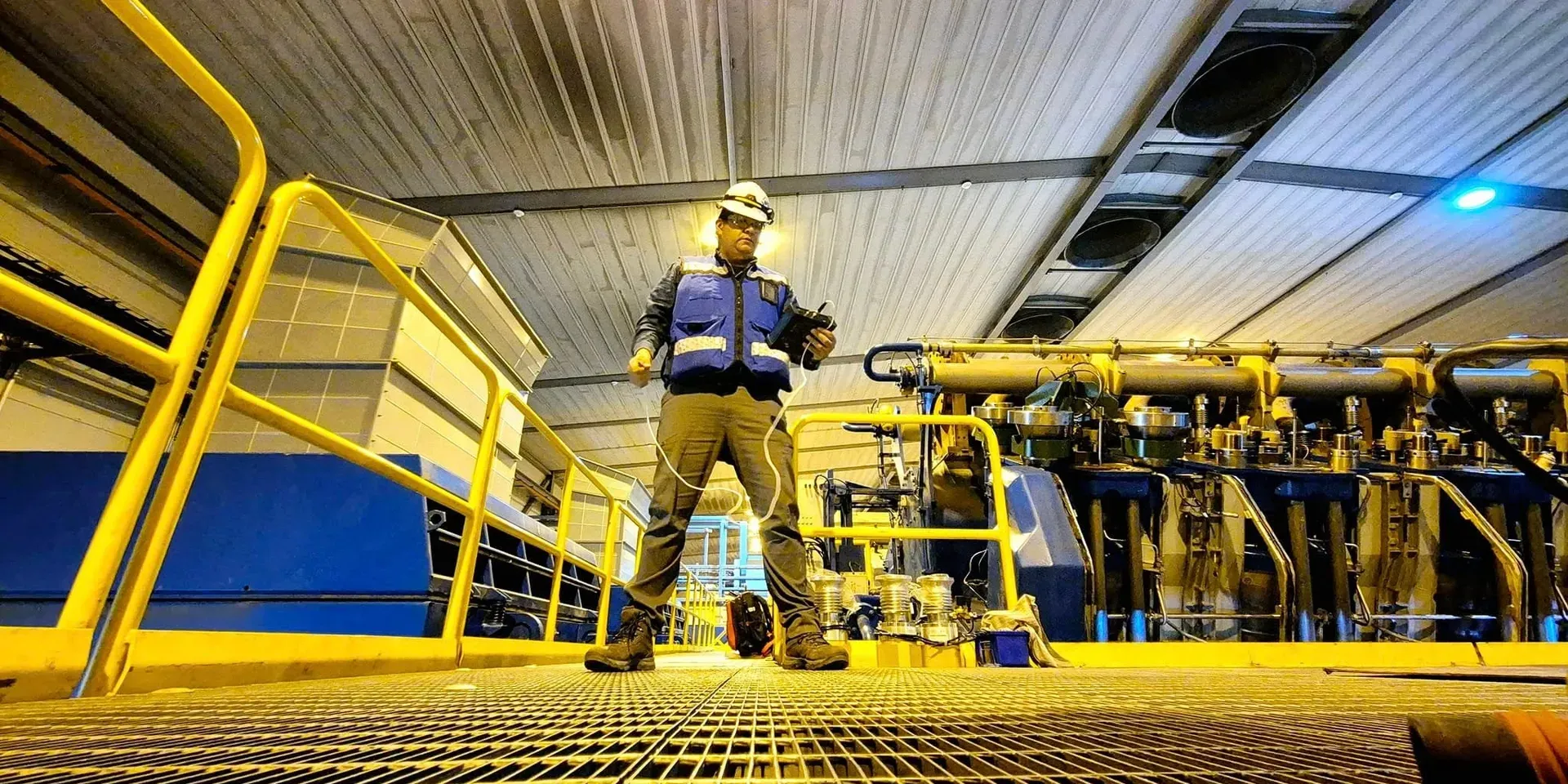
From temperature to insight
Infrared thermography works by detecting infrared radiation emitted from surfaces and converting it into a visual map of temperature differences a thermogram. You can scan energized panels, rotating equipment, or steam lines while everything keeps running. No downtime. No guesswork.
Over time, you start recognizing what “normal” looks like for your equipment.
When a bearing runs 10 °C hotter than its neighbor, when a busbar has that faint gradient shift, when an insulation patch reads colder than the rest s of stress long before they become failures.
That’s when thermography stops being a cool gadget and becomes part of a predictive maintenance philosophy or PdM, as many of us quietly call it. You’re no longer reacting to problems; you’re anticipating them.
Safety first, always
Most people associate thermography with energy savings, but in my experience, its first and greatest gift is safety.
Loose connections, overloaded circuits, or deteriorated insulation all show themselves through temperature anomalies. The irony is that they’re invisible until they’re dangerous. A hot connection doesn’t trip alarms, it just keeps heating until insulation breaks down or, worse, until an arc flash erupts.
When I perform infrared surveys on live electrical gear, I often think of NFPA 70E, the standard that governing electrical safety in the workplace. It reminds us that even though we’re observing from a distance, every thermal scan must respect arc-flash boundaries, PPE, and safe approach procedures.
And behind those rules lies something deeper: thermography doesn’t just protect equipment; it protects people. A single scan can prevent an accident you never hear about, and that’s exactly the point.
The energy you don’t see (and pay for anyway)
Thermography also tells stories about energy, the kind we lose silently every day.
Think of all the heat leaking from worn insulation on a steam line, the unbalanced phase on a motor circuit, or a misaligned pump that runs hotter than it should. Every one of those “small small inefficiencies” shows up clearly in an infrared image. Fixing them not only reduces consumption but extends component life.
In one plant, a simple infrared survey of the boiler room revealed that a single section of piping had deteriorated insulation. The fix was cheap, but over a year, it saved thousands in steam losses. Energy optimization doesn’t always require a massive investment; sometimes, it just needs the right lens.
That’s why the NFPA 70B (Recommended Practice for Electrical Equipment Maintenance) now includes specific references to infrared inspections. It’s a subtle recognition that energy efficiencyand safety are two sides of the same coin.
Building a predictive eye
When you embed thermography into your maintenance culture, it becomes a living record of your plant’s health.
A baseline survey establishes how equipment looks when it’s in good condition.
Each new scan becomes a frame in a time-lapse ,showing where temperatures drift, where stress builds, and where intervention is needed.
It’s simple, yet powerful:
- Scan regularly.
- Compare trends.
- Investigate anomalies.
- Act before failure.
This rhythm is the heartbeat of PdM. Thermography is just one instrument, alongside vibration, ultrasonics, and oil analysis, but it’s the one that speaks most visually. Even managers understand a red spot on a thermogram. It translates data into instinct.
Lessons from the field
One of my favorite examples comes from a food-processing plant where downtime meant spoiled products. During a routine scan, I found a faint temperature rise on a main feed breaker, only about 6 °C above its twin. Not critical, but worth noting.
A week later, the anomaly grew to 12 °C. We scheduled a short shutdown, cleaned the contacts, torqued the lugs, and retightened the connection. Post-repair scan? Perfectly balanced.
Had we waited, that breaker could have burned out mid- shift, shutting down the entire line. Instead, we fixed it in 30 minutes with zero disruption. That’s the essence of predictive maintenance: quiet wins that no one notices , because nothing failed.
Challenges and credibility
To talk honestly about thermography, we also need to mention its limitations.
Not all surfaces are equal, shiny metals reflect infrared radiation, sometimes showing false hot spots.
Environmental factors like wind, sunlight, or rain can distort readings. And while thermography sees surface temperature beautifully, it doesn’t see depth, subsurface flaws may require other NDT techniques.
That’s why qualified thermographers follow procedures like ASTM E1934 or ISO 18434-1, ensuring consistent results. A credible inspection combines good equipment, calibrated settings, stable loads, and a trained eye that knows when to question the image instead of trusting it blindly.
Where safety meets efficiency
What makes infrared thermography truly special is that it bridges two worlds: safety and energy.
Every electrical anomaly you fix is both a safety improvement and an efficiency gain. Every insulated pipe you repair reduces both heat loss and surface hazard. It’s a rare tool that serves both human and economic interests at once.
And that’s why I often present it not as a separate service, but as part of a holistic reliability program. Whether you call it Predictive Maintenance, Condition Monitoring, or simply Good Engineering Practice, thermography fits naturally into the ecosystem. It supports decision-making, validates repairs, and tells a clear story through images everyone can understand.
The bigger picture
At its core, infrared thermography is about visibility, not only of temperature but of responsibility.
It allows engineers to see consequences before they manifest, to act rather than react. It’s technology with empathy: a way of listening to machines through their heat signatures.
Whenever I walk through a plant with a thermal imager hanging from my shoulder, I think of it less as a camera and more as a translator. It tells me what the equipment is feeling, stress, imbalance, fatigue, in a language of color and contrast.
And maybe that’s the most important part of all: it teaches us to pay attention. Because the invisible heat we ignore today is often tomorrow’s headline failure.
In an era obsessed with data and dashboards, infrared thermography offer something beautifully simple: truth made visible.
It doesn’t predict the future with algorithms; it reveals the present with light.
And if used wisely, within a culture of safety, efficiency, and predictive thinking, that’s enough to keep an entire plant running not just longer, but smarter.
This article was developed by specialist Jorge Reyna and published as part of the seventh edition of Inspenet Brief February 2026, dedicated to technical content in the energy and industrial sector.