
Table of Contents
- The blind spots beneath jetties
- From occasional insight to continuous awareness
- Seeing both the pipe and the context
- Monitoring a jetty line
- When trend became warning
- From indication to evidence
- Why timing changed the outcome
- The difference between knowing and assuming
- Guided Wave Monitoring as part of the integrity strategy
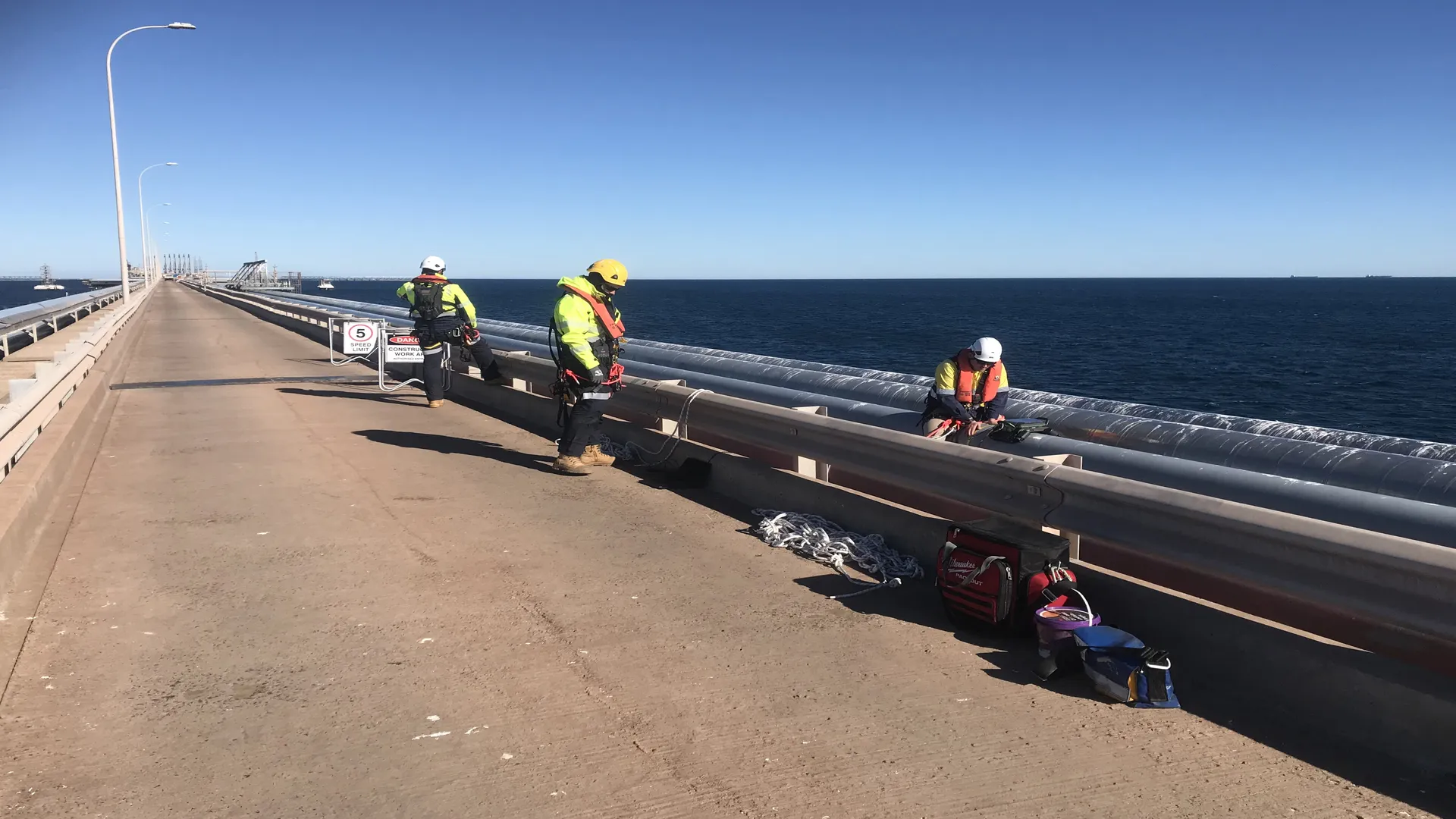
Jetty pipelines operate where infrastructure is most exposed and least forgiving. They are critical links in product transfer between shore facilities, storage systems, and marine terminals, yet they run through environments that actively conceal degradation.
Salt spray, persistent moisture, temperature cycling, and restricted access create ideal conditions for external corrosion, particularly beneath coatings and around welds. The real challenge is corrosion developing quietly at unpredictable locations, between inspections, and out of sight.
Operators know this tension well. Jetty lines cannot be ignored, but inspecting them frequently is expensive, disruptive, and often impractical. Many are suspended over water, routed through congested structures, or located in classified areas where access is tightly controlled. Under these conditions, periodic inspection struggles to provide timely, reliable insight into asset condition.
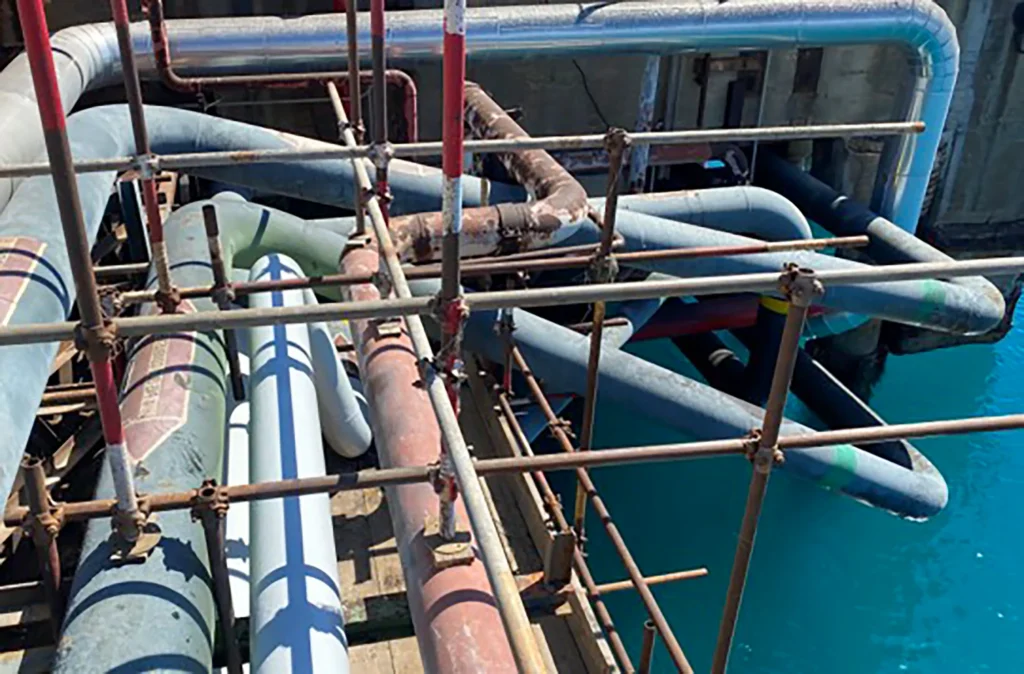
This article follows a real installation of gPIMS®, a guided wave Permanently Installed Monitoring System, on a 16- inch crude oil jetty line. It shows how continuous guided wave monitoring enabled early detection of external corrosion long before it approached critical limits, and how that information changed both the inspection strategy and the outcome.
The blind spots beneath jetties
Conventional inspection methods remain essential, but they are inherently episodic. Spot ultrasonic measurements, visual surveys, and rope-access inspections provide snapshots of condition at specific moments and at limited locations. On jetty lines, those locations are often dictated by access rather than corrosion risk.
External corrosion beneath coatings does not follow inspection grids. It develops locally, often at welds, supports, or coating defects, and can progress significantly between inspection intervals. Even when access is achieved, visual inspection may miss active corrosion concealed beneath intact-looking coatings.
The result is uncertainty. Large sections of pipe are assumed to be in good condition simply because no indication has been observed. Access constraints only amplify the issue. Scaffolding, marine access, weather windows, and operational coordination add cost and complexity, often extending inspection intervals precisely where corrosion risk is highest.
From occasional insight to continuous awareness
Guided Wave Testing has long been used as a screening tool, allowing large lengths of pipe to be assessed from a single test location. Guided Wave Monitoring uses the same physics, but for a different purpose. Instead of periodic surveys, permanently installed sensors are used to track change over time.
gPIMS® is designed specifically for this role. It is not just a sensor ring left on the pipe, but a complete monitoring system. Permanently installed guided wave sensors, field control units, and secure delivery of data to GUL Monitoring Studio work together to provide trending and interpretation. In practice, this transforms guided wave from an inspection method into a continuous source of integrity intelligence.
Seeing both the pipe and the context
A defining capability of gPIMS® is its dual monitoring approach. Each sensor continuously tracks local wall thickness directly beneath the ring, divided into multiple circumferential segments. This provides a stable reference for generalized corrosion behavior at the sensor location. If internal corrosion were active, it would appear here first.
At the same time, guided wave measurements monitor cross-sectional change along the surrounding pipe length, extending several meters on either side of the sensor. Localized external corrosion developing away from the ring is detected through changes in reflected guided wave signals.
Together, these measurements provide context. Stable local wall thickness establishes baseline behavior. Emerging changes elsewhere along the pipe are identified as genuine degradation, not noise or operational variation.
Monitoring a jetty line
In this case, a gPIMS® Sensor was installed on a 16-inch crude oil pipeline running beneath and alongside a jetty structure. The line was located in a classified area, making frequent manual inspection challenging and logistically complex.
Once installed, measurements were automatically acquired and transmitted via a gPIMS® Field Control Unit (FCU) to the browser-based GUL Monitoring Studio. Corrosion engineers could review trends remotely, without site visits or operational disruption.
During the initial monitoring period, local wall thickness beneath the sensor remained stable across all circumferential segments. This confirmed the absence of active generalized internal corrosion and established a reliable baseline for long-term comparison.
When trend became warning
Approximately eighteen months after installation, the monitoring system identified a developing change in cross-sectional response several meters from the sensor, close to a weld. The change progressed gradually and crossed a predefined warning threshold.
This is where monitoring delivers its real value.
The alert was not triggered by a single measurement taken out of context, but by deviation from the pipe’s own historical behavior. The system did not simply indicate that something was wrong. It showed where change was occurring and how it was evolving.
With that information, the operator planned a targeted follow-up inspection focused on the affected location, avoiding unnecessary surveys of large, hard-to-access sections of the jetty.
From indication to evidence
When access was achieved, examination of the indicated area revealed corrosion scale around the weld. After cleaning, follow-up ultrasonic measurements confirmed localized external wall loss consistent with the monitoring response. The degradation had not yet reached critical limits, but it was clearly active.
Without continuous guided wave monitoring, this corrosion would likely have progressed unnoticed until a much later inspection, when repair options would have been more constrained and disruptive.
Why timing changed the outcome
Early detection allowed intervention while the response could remain straightforward. The recommended action was limited to cleaning the affected area and reapplying a coating suitable for marine exposure. No extensive repair. No replacement. No emergency response.
In jetty environments, this distinction matters. Unplanned maintenance can restrict loading capacity, disrupt vessel schedules, and cascade into broader operational impacts across a terminal.
From an environmental standpoint, preventing loss of containment in marine settings is equally critical. Guided wave monitoring does not prevent corrosion. It prevents surprise.
The difference between knowing and assuming
This installation reflects a broader shift in integrity management. For assets where access is limited and corrosion risk is high, the question is no longer whether inspection techniques are capable. It is whether relying on periodic snapshots is sufficient.
Guided wave monitoring complements conventional inspection by filling the gaps between campaigns. It provides continuous awareness of asset behavior, highlights emerging threats, and supports targeted use of other NDT methods where they add the most value.
For jetty lines, where corrosion often develops beneath coatings and out of sight, that awareness can be the difference between routine maintenance and a reportable incident.
Guided Wave Monitoring as part of the integrity strategy
At Guided Ultrasonics Ltd. (GUL), guided wave monitoring is positioned as an upgrade to integrity management rather than a replacement for inspection. Systems such as gPIMS® are designed to deliver information that engineers can trust, interpret, and act upon.
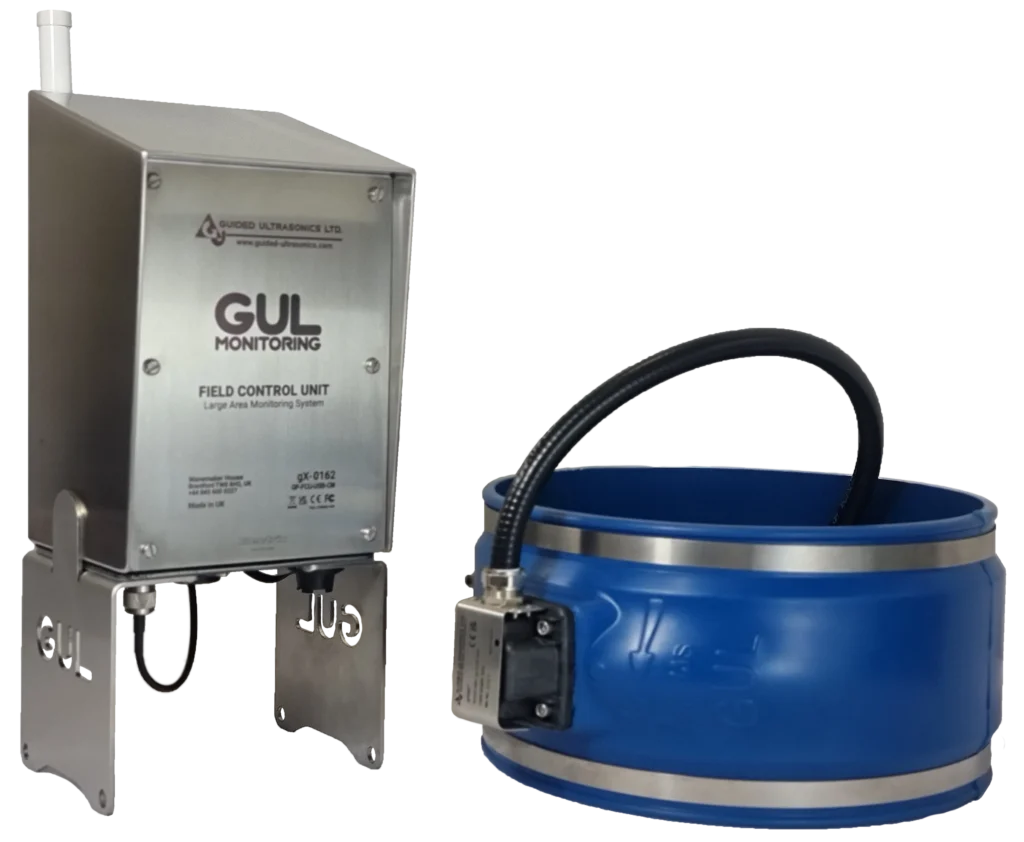
This case shows how combining permanent sensors, reliable data transmission, and informed analysis turns guided wave technology into a long-term partner in asset management. For operators responsible for jetty pipelines and other hard-to-access assets, the shift is less about new hardware and more about control.
Knowing sooner means acting smarter and saving money.
This article was developed by Guided Ultrasonics LTD and published as part of the seventh edition of Inspenet Brief February 2026, dedicated to technical content in the energy and industrial sector.