
Table of Contents
- VOC emissions challenges in API 650 storage tanks
- Aluminum geodesic dome roofs: Structural and safety benefits
- Aluminum internal floating roofs (IFRs): Pontoon and full-contact designs
- The critical role of tank seals in atmospheric storage tank operations
- Design considerations & standards
- Why tank seals matter
- Conclusion and invitation
Coteso is a leading industrial solutions provider with over 30 years of expertise in engineering advanced products for storage tanks and terminals worldwide. Specialized in reducing emissions, maintenance costs, and total cost of ownership (TCO). With over 30 years of combined experience, we have specialized in designing and delivering cutting-edge industrial solutions aimed at reducing carbon emissions, lowering the environmental impact and improving efficiency. Our solutions are engineered to meet the highest international standards, ensuring long-term reliability and optimal performance for the safe storage and distribution of hydrocarbons, chemicals, liquids and gases.
VOC emissions challenges in API 650 storage tanks
Storage tanks emit Volatile Organic Compounds (VOCs) through standing losses (breathing/heat expansion), working losses (loading/unloading), and tank design limitations such as absence of internal floating roofs or use of external floating roofs (EFRs) exposed to weather-driven emissions. Efficient VOC emission reduction is essential for environmental compliance and operational cost savings. Engineered solutions like Aluminum Geodesic Domes, Aluminum IFRs, and expertly designed Tank Seals effectively tackle these challenges while reducing future maintenance and total lifecycle costs.
Aluminum geodesic dome roofs: Structural and safety benefits
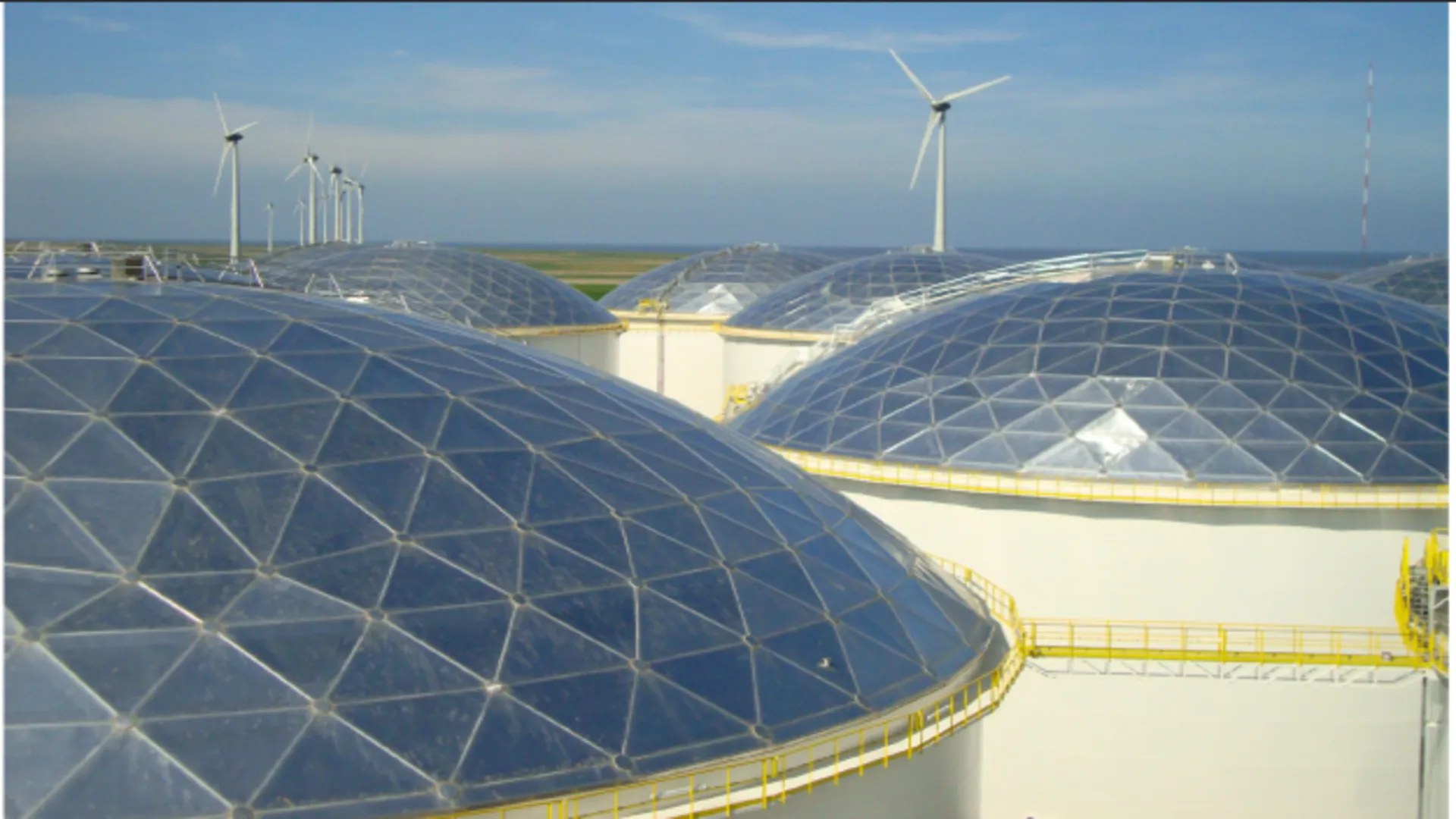
Coteso’s self-supporting aluminum geodesic dome roofs provide significant advantages over traditional steel roofs. Their lightweight, fully prefabricated design eliminates welding during installation and significantly reduces installation time. By removing support columns, these domes reduce bottom corrosion risk often caused by column contact and settlement. Additionally, they require no painting and virtually no maintenance over their lifespan. These features make aluminum domes a preferred choice for larger atmospheric storage tanks. Other benefits include circumventing rainwater penetration issues common in EFR tanks, avoiding the costly maintenance cycles of steel roofs, and eliminating structural risks from support columns that could compromise tank integrity.
Aluminum internal floating roofs (IFRs): Pontoon and full-contact designs
Coteso offers two primary types of aluminum IFRs certified under API 650 Appendix H, designed to achieve VOC emission reductions from 90% up to 98%, with 30+ year expected service life and virtually no maintenance. Both are compatible with a broad range of hydrocarbons, including 100% aromatics, solvents, ethanol, methanol, biodiesel and many more.
The Pontoon-Type IFR features a lightweight sealed aluminum skin floating over closed pontoons. It creates a vapor-saturated space below the roof that prevents new vapor formation. This design is highly custom engineered to match tank diameter, stored products, pumping rates, and cleaning/pigging requirements. The pontoon IFR is a virtually unsinkable solution that can be installed quickly, providing reliability and sustainability. It also serves as an excellent alternative for replacing corroded external floating roofs, especially when combined with an aluminum dome roof to eliminate rainwater ingress and related maintenance concerns.
The Full-Contact IFR consists of bolted aluminum modules with a lightweight honeycomb core that provides exceptional strength and rigidity. This design eliminates any vapor space by maintaining direct contact with the liquid surface, thus preventing VOC formation at the source. It offers 350% flotation capacity per API 650 and features a metallic skin exceeding minimum thickness requirements by over 180%. Installation requires no welding and typically involves an opening in the tank roof or can even be custom designed to fit through the existing manhole. The full-contact IFR maximizes tank capacity, delivers near-zero emissions, and requires only rim fire protection following NFPA standards. It is particularly suited for tanks with high turnover and pigging operations where structural integrity and emission control are paramount.
The critical role of tank seals in atmospheric storage tank operations
Tank seals are essential components for ensuring the integrity and efficiency of atmospheric storage tanks equipped with floating roofs, as regulated by API 650 and API 653. Beyond compliance, well-designed tank seals are strategic investments in environmental responsibility, operational safety, and asset protection.
Primary seals, installed in the annular space between the floating roof and tank shell, serve as the first barrier to VOC emissions and prevent rainwater ingress. Common types include metallic shoe plate seals, compression plate seals, and foam-filled seals. Liquid-mounted designs offer the lowest emissions in accordance with API and environmental guidelines.
Secondary seals, placed above primary seals, provide an additional emission control layer, enhance fire safety, and reduce contamination risks from external sources. These modern seals function independently of primary seals and are crucial for meeting stringent emission regulations in various jurisdictions.
Design considerations & standards
Tank seals must maintain consistent tightness despite tank shell irregularities and roof movement. They must offer long- term durability (often exceeding 20 years) and resist exposure to chemicals, UV, and ozone. Applicable standards guiding their design and use include API 650 & 653, EN 14015, BREF, EPA, and NFPA 11, covering structural integrity, material compatibility, emissions performance, environmental practices, and fire safety features such as foam dam or foam port integration.
Why tank seals matter
Efficient seals reduce vapor losses considerably, significantly lowering carbon emissions and supporting compliance with environmental regulations. They enhance safety by minimizing rim fire risks and product contamination, contribute to operational reliability through maintenance-free designs, and reduce the total cost of ownership by improving tank uptime— vital for refinery or terminal efficiency.
Conclusion and invitation
At Coteso, we are committed to advancing the efficiency and environmental performance of storage tank operations globally. Through our innovative aluminum geodesic domes, advanced aluminum internal floating roofs, and high-performance tank seals, we enable clients to achieve outstanding VOC emission reductions, enhanced safety, and significant lifecycle cost savings. We welcome storage terminal operators, engineers, and decision- makers to partner with us in pioneering emission control solutions that meet tomorrow’s environmental standards today. Reach out to Coteso to discover how our tailor-made products and expert engineering can optimize your storage tank assets and strengthen your sustainability commitments.
This article was prepared by specialists from Coteso and published as part of the seventh edition of Inspenet Brief February 2026, dedicated to technical content of the energy and industrial sector.