
Table of Contents
- How advanced NDT is redefining Oil & Gas inspections
- The role of advanced electromagnetic and ultrasonic techniques
- Modular tools designed for field reality
- Turning inspection data into actionable insight
- Automation as an enabler of expertise
- A partnership-centered approach to NDT
- The future of pipeline inspection lies in:
How advanced NDT is redefining Oil & Gas inspections
In the oil and gas industry, pipeline integrity has become far more than a regulatory checkbox. Aging infrastructure, harsher operating conditions, rising safety and environmental expectations, and ongoing pressure to minimize downtime are forcing operators to rethink how asset health is assessed.
Traditional inspection approaches still play a role, but they are no longer sufficient on their own. Today’s challenges require higher precision, greater adaptability, and inspection strategies capable of delivering actionable insight, not just raw data.
As a result, the role of advanced non-destructive testing (NDT) in pipeline integrity management continues to evolve.
The growing complexity of pipeline inspections
Modern pipelines are exposed to multiple degradation mechanisms at the same time. Corrosion under insulation (CUI), coating degradation, cracking, localized wall loss, and weld-related defects can all coexist on the same asset.
At the same time, inspection teams must contend with:
- Limited access and surface preparation
- Buried, coated, or insulated pipelines
- Short inspection windows during shutdowns
- Increasing data volumes with limited time for analysis
- The need to make confident integrity decisions quickly
Under these conditions, inspection is no longer just about detecting anomalies. It is about understanding their nature, severity, and relevance, while operating within real- world constraints.
For many teams, the key question has shifted from “which technique works?” to “which combination of techniques provides the most reliable insight for this specific asset?”.
The role of advanced electromagnetic and ultrasonic techniques
Advanced eddy current array (ECA) and ultrasonic testing (UT) technologies have become essential tools for pipeline integrity programs, particularly where conventional methods reach their limits.
These techniques enable inspectors to:
- Detect and characterize surface-breaking and near- surface defects
- Inspect through preparation
- Achieve high-resolution geometries
- Adapt inspection parameters to changing field conditions
Their value lies not only in detection capability, but in the level of characterization they provide. More detailed information allows inspection teams to distinguish between indications that require immediate intervention and those that can be monitored over time, supporting more informed maintenance and repair decisions.
However, technology alone does not solve inspection challenges. The greatest benefit is achieved when electromagnetic and ultrasonic techniques are integrated into inspection workflows that reflect the realities of oil and gas assets and operating conditions.
Modular tools designed for field reality
One of the most significant shifts in NDT over the past decade has been the move toward modular, configurable inspection solutions that can be adapted to specific inspection scenarios.
Handheld scanners such as Paintbrush2 are designed for flexibility, allowing inspectors to assess welds, complex geometries, and difficult-to-access areas with speed and precision. These tools are particularly valuable when inspections must be performed quickly or when access is limited.
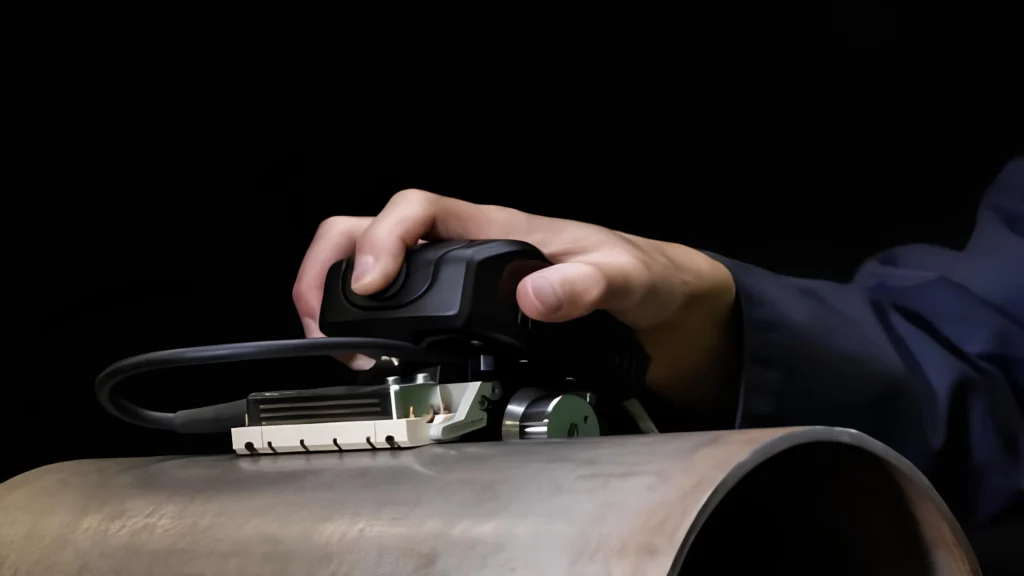
For larger pipeline sections, PipescanHD provides high- resolution ECA inspection capable of detecting corrosion, pitting, and other surface-breaking defects — even through coatings. Its ability to deliver consistent, repeatable data over extended lengths of pipe helps inspection teams balance coverage and accuracy without compromising efficiency.
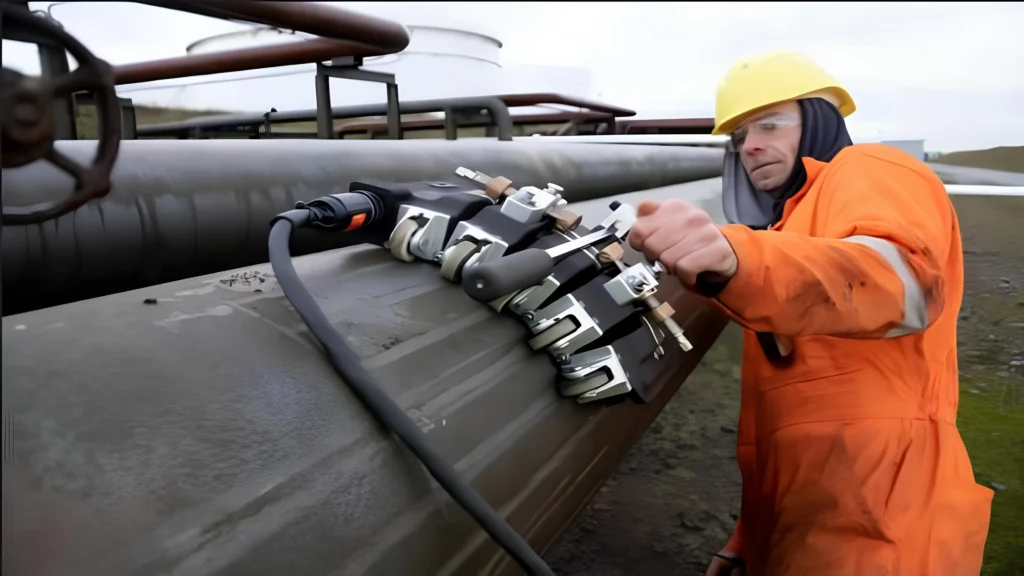
Meanwhile, Sonyks™ adds another dimension to pipeline inspection strategies, particularly for screening applications where rapid coverage and early detection are critical. By identifying areas of concern efficiently, it helps teams focus on detailed inspections where they matter most.
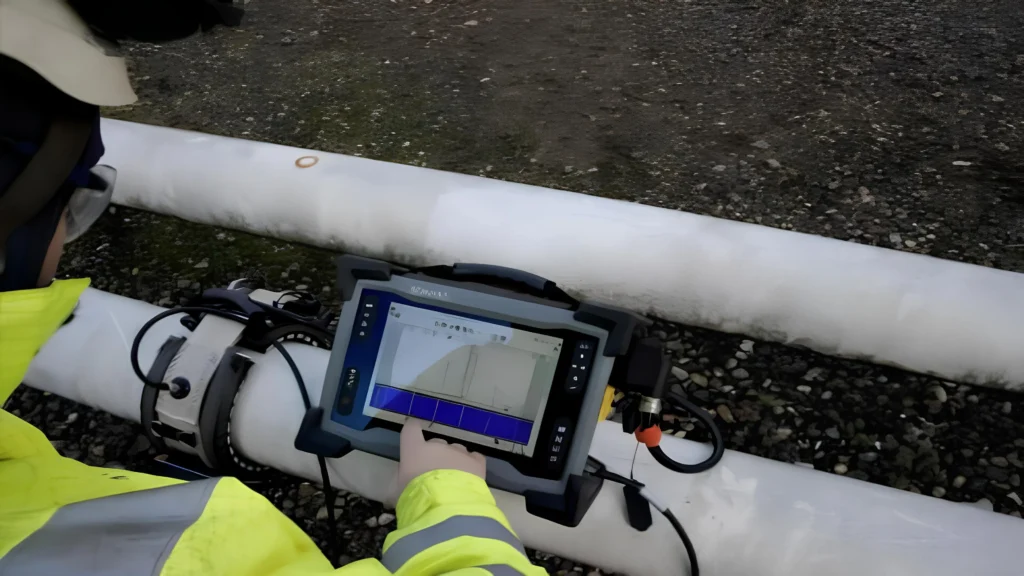
Selecting the right tool for each inspection phase is key to optimizing both reliability and resources.
Turning inspection data into actionable insight
As inspection technologies advance, the volume and complexity of data they generate continue to grow. High-resolution scans and multi-channel signals are only valuable if they can be interpreted clearly and efficiently. When data is difficult to interpret or communicate, decisions are often delayed, or default to overly conservative choices that increase cost and downtime.
Advanced acquisition and analysis platforms such as Cypher® are designed to bridge this gap. Intuitive interfaces, powerful visualization tools, and flexible configuration options allow inspectors to adapt inspection setups in real time while maintaining data quality.
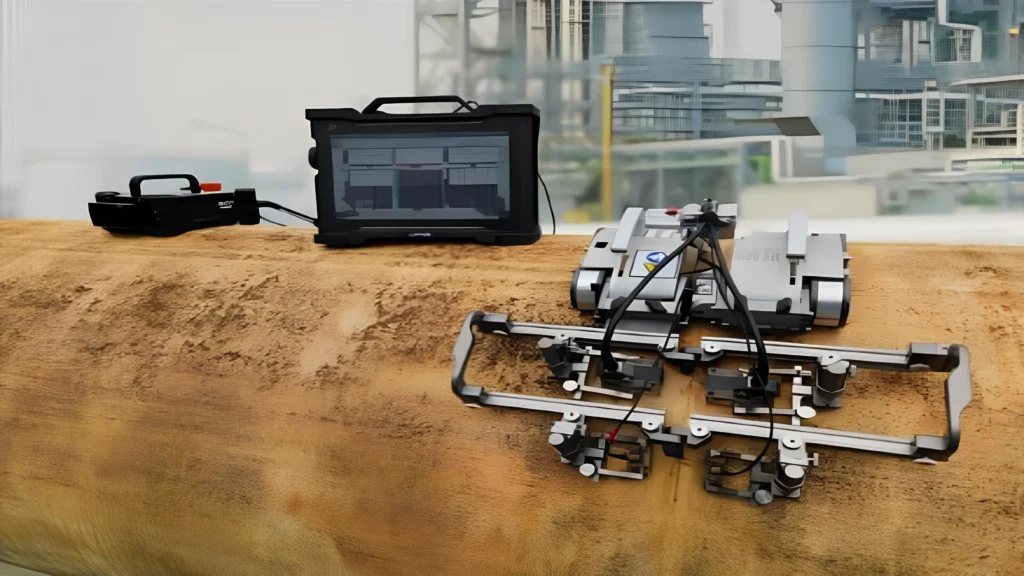
This approach supports a smoother transition from field data to reporting and decision-making, enabling:
- Faster interpretation and validation
- Clearer communication between inspection teams and asset owners
- More confident maintenance and repair decisions
Reducing the gap between data acquisition and decision-making is becoming a decisive factor in pipeline integrity management.
Automation as an enabler of expertise
Automation is often perceived as a way to replace human involvement, but in oil and gas inspections, its true role is to enhance human expertise.
The Spyne™ Scanner is designed specifically for the detection of surface-breaking cracks on pipelines. A key technical advancement is Spyne’s circumferential encoder, which uses miniature accelerometers to determine the scanner’s angular position relative to Earth’s gravity in real time. Once the pipe circumference is entered, the system automatically calculates circumferential position throughout the scan, eliminating the need for manual indexing or external encoders.
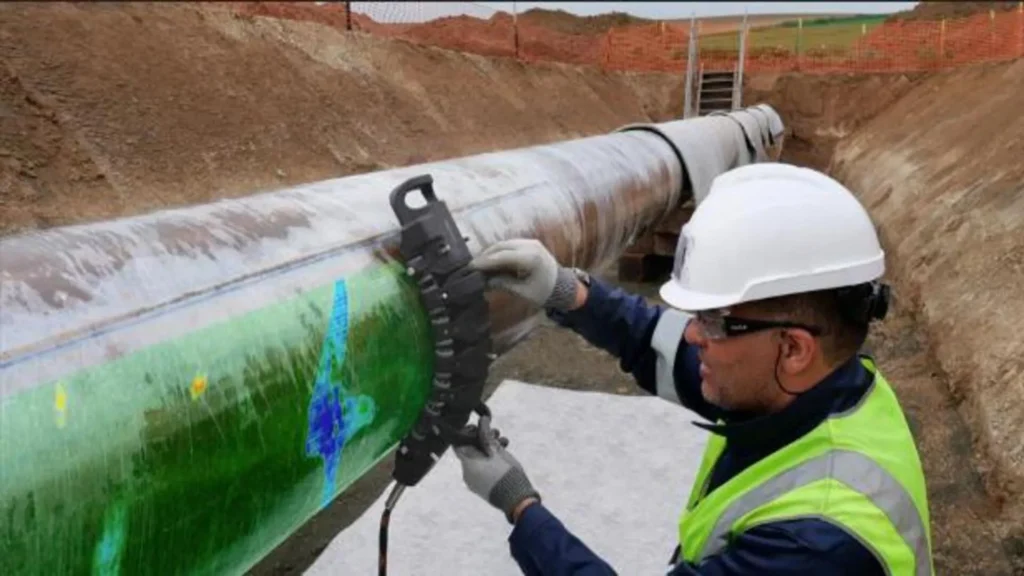
This simplifies setup and reduces positioning errors, particularly in field conditions where access, orientation, or surface conditions are less than ideal.
By automating positioning and coverage control, Spyne allows inspectors to focus on signal analysis, defect characterization, and integrity assessment rather than on the mechanics of scanning. The result is not reduced human involvement, but more consistent screening data and greater confidence in inspection outcomes.
As inspection environments become more demanding, automation is increasingly seen as a practical extension of human capability.
Toward integrated inspection strategies
Across oil and gas operations, one principle has become clear: no single inspection technology can address every integrity challenge.
Effective pipeline integrity programs rely on:
- Multiple complementary inspection techniques
- Tools that can be adapted to specific assets and operating conditions
- Data platforms that consolidate information into a coherent picture
- Expertise that understands both the technology and the industry context
This integrated approach reduces uncertainty, minimizes unnecessary excavations or shutdowns, and supports more informed asset management decisions over the long term.
Exploring how different inspection technologies can be combined often reveals new opportunities to improve reliability and efficiency.
A partnership-centered approach to NDT
As inspection challenges become more complex, oil and gas operators are looking beyond individual products. What they increasingly value is a partner capable of understanding their constraints, regulatory environment, and operational priorities.
A partner who can adapt inspection solutions to the problem — rather than forcing the problem to fit the technology, brings long-term value. Customization, support, and strategic insight are becoming just as important as technical performance.
This shift is redefining expectations for NDT providers across the industry.
The Future of Pipeline Integrity
As oil and gas infrastructure continues to age while performance expectations rise, advanced and adaptable NDT solutions will play an increasingly critical role.
The future of pipeline inspection lies in:
- High-resolution, multi-technology inspection strategies
- Smarter data acquisition and interpretation
- Automation that enhances safety and consistency
- Flexible systems that evolve alongside industry needs Organizations that embrace this evolution will not only improve inspection outcomes — they will strengthen the reliability, safety, and longevity of their assets.
To explore how advanced NDT strategies can be adapted to your pipeline integrity challenges, speak with the experts at Eddyfi Technologies.
This article was developed by Eddyfi Technologies and published as part of the seventh edition of Inspenet Brief February 2026, dedicated to technical content in the energy and industrial sector.