

Table of Contents
- How do fire suppression systems work?
- Active versus passive fire protection
- Fire suppression in storage tanks
- Main fire detection systems
- Mesa ETP: Protection and engineering for tank integrity
- Regulatory standards and compliance
- Considerations in tank fire control
- Importance of fire control in tanks
- Conclusions
- References
A fire suppression system is an integral part of any fire protection infrastructure, especially when it comes to protecting industrial storage tanks containing flammable liquids. It is a collective term for any group of engineered units designed to extinguish a fire through the application of extinguishing agents such as water, foam, or chemical compounds.
For facilities that handle petroleum products, chemicals, or other hazardous materials, the selection, and implementation of an appropriate fire suppression system represents a critical decision that directly affects personnel safety, asset protection, and regulatory compliance.
How do fire suppression systems work?
A fire suppression system is made up of a series of components designed to detect fires as early as possible. First, these components identify the presence of flames and smoke and then activate alarms so the fire can be controlled before it spreads.
The main advantage of automatic systems is that they eliminate the need for manual activation or human intervention, thereby reducing risks to occupant safety. They are also ideal for extinguishing fires in remote or difficult-to-access areas of tank farms and industrial facilities.
In industries that handle flammable materials or high-value goods, insurance companies, often rewarding operators with lower premiums, tend to view these preventive measures favorably.
Active versus passive fire protection
Although this article focuses on active fire suppression, it is essential to understand how active and passive systems work together.
Active systems, such as foam and water-based suppression, directly combat flames, while passive fire protection measures, such as fire-resistant coatings, compartmentalization, and structural steel protection, slow fire spread and preserve structural integrity.
Companies such as Mesa ETP, leading specialists in passive fire protection in the United States, demonstrate the importance of comprehensive fire safety strategies that integrate both approaches to achieve maximum protection.
Fire suppression in storage tanks
Both fire suppression systems and sprinkler systems can control or extinguish fires when heat or smoke is detected. However, these systems do not rely solely on water, which may be ineffective or even dangerous for certain types of fires. Facilities that use combustible gas, oil, or other flammable liquids do not benefit from water alone as a containment agent. In fact, since most petroleum-derived products are lighter than water, applying water can spread the fire rather than extinguish it.
For this reason, specialized systems are essential in industrial environments with tank farms. One of the greatest challenges in fire suppression is effectively protecting areas containing flammable liquids, where fires can accelerate rapidly and standard water-based systems prove inadequate.
How do tank fires occur?
Fires in storage tanks typically originate from lightning strikes, mechanical failures, or operational incidents during loading and unloading. Once ignited, flammable liquids spread rapidly across surfaces, generate intense heat, produce flammable vapors that may reignite even after initial flame suppression, and create three-dimensional fire scenarios that require specialized suppression approaches.
Main fire detection systems
1. Foam systems as protection against flammable liquids
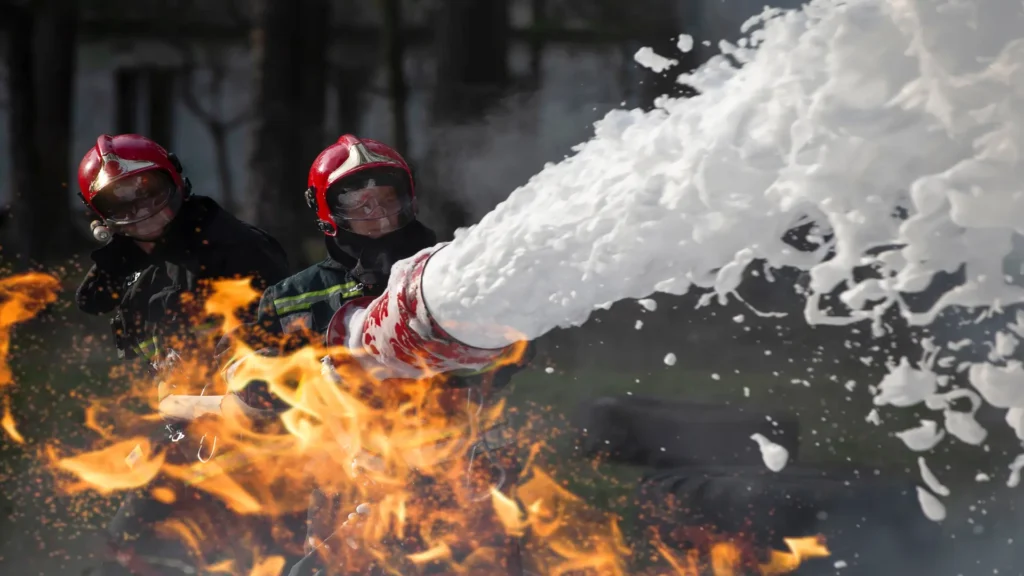
Foam deluge systems represent the most effective means of controlling fires in environments containing flammable liquids. These systems are commonly installed in refineries, aircraft hangars, chemical plants, fuel terminals, and industrial warehouses, where rapid fire spread presents catastrophic risks.
How do foam systems extinguish fires?
Foam deluge systems use a mixture of foam concentrate and water to rapidly control burning flammable liquids. The system operates through several mechanisms:
- Cooling effect: The aqueous component of the foam solution reduces the temperature of the burning fuel surface, helping lower it below its ignition point.
- Smothering action: The foam’s consistency creates a thick layer that covers the fuel surface, depriving the fire of oxygen and effectively smothering it. This is similar to the operation of conventional fire extinguishers, but on a much larger scale.
- Vapor suppression: The foam layer inhibits the release of flammable gases and vapors that would otherwise fuel the fire and create re-ignition risks.
- Fuel surface separation: By creating a physical barrier between the fuel and the heat source, the foam prevents the continuous cycle of evaporation and ignition that sustains flammable liquid fires.
Types of foam concentrates
Different foam formulations are tailored to specific applications and fuel types:
- Protein foam: Derived from natural protein sources, this economical option offers excellent heat resistance and forms a stable blanket over hydrocarbon fuels. Its mechanical stability under extreme fire conditions makes it reliable for petroleum storage applications.
- Fluoroprotein foam (FP): Protein foam enhanced with fluorinated surfactants that improve fuel resistance and reduce the risk of re-ignition. FP foam demonstrates superior performance in challenging fire scenarios.
- Aqueous film-forming foam (AFFF): This synthetic foam creates a thin aqueous film that spreads across the fuel surface, suppressing flammable vapors even before the foam blanket fully develops. AFFF acts quickly and functions with both aspirated and non-aspirated discharge devices.
- Alcohol-resistant foams (AR-AFFF): Specifically formulated for polar solvent fuels such as ethanol, methanol, and other alcohol-based liquids, these foams contain polymers that prevent breakdown when in contact with water-soluble fuels.
Foam application methods for tanks
The method of applying foam to the surface of a burning tank significantly affects suppression effectiveness:
- Surface injection systems: Foam chambers or foam generators installed on the tank roof discharge expanded foam onto the liquid surface. The foam flows down the tank wall, minimizing fuel agitation. This method works well for fixed-roof tanks and external floating-roof tanks.
- Subsurface injection systems: Foam concentrate is injected below the liquid surface through bottom-mounted nozzles. As the foam solution rises through the fuel, it expands and floats to the surface, progressively covering the entire liquid surface.
- Foam barrier systems: In tanks with internal floating roofs, foam barriers confine foam to the critical seal area, where fires typically originate. This targeted approach reduces foam concentrate requirements while maintaining effective protection.
System design components
A complete foam fire suppression system consists of several integrated components:
- Detection elements: Fire detection using thermal sensors, flame detectors, or smoke detection systems activates the suppression response. Modern systems employ multispectral sensors that distinguish real fires from false alarm sources.
- Foam concentrate storage: Bladder tanks are the most common storage method, using water pressure to compress an elastomeric bladder that expels the foam concentrate. These mechanically simple systems require no external power and provide reliable proportioning under various operating conditions.
- Proportioning equipment: Devices that mix foam concentrate with water at the specified percentage (typically between three and six percent) include bladder tank proportioners, pump proportioners, and balanced-pressure proportioners. Accurate proportioning is essential to ensure proper fire suppression performance.
- Discharge devices: Foam chambers for fixed-roof tanks incorporate mixing barrels, deflector plates, and frangible vapor seals. Foam generators for floating-roof tanks deliver foam directly to rim seal areas through articulated piping systems that adjust to roof elevation changes.
- Control systems: Modern foam systems integrate with fire detection networks, providing automatic activation when sensors detect flames or excessive heat. Control panels monitor system pressure, supervise circuit integrity, and provide fault diagnostics.
2. Water mist systems
Water mist systems are a viable solution when the use of large volumes of water is problematic. These systems operate by producing droplets much smaller than those of conventional sprinkler systems, creating a vapor layer that deprives the fire of oxygen and rapidly reduces temperature in the affected area.
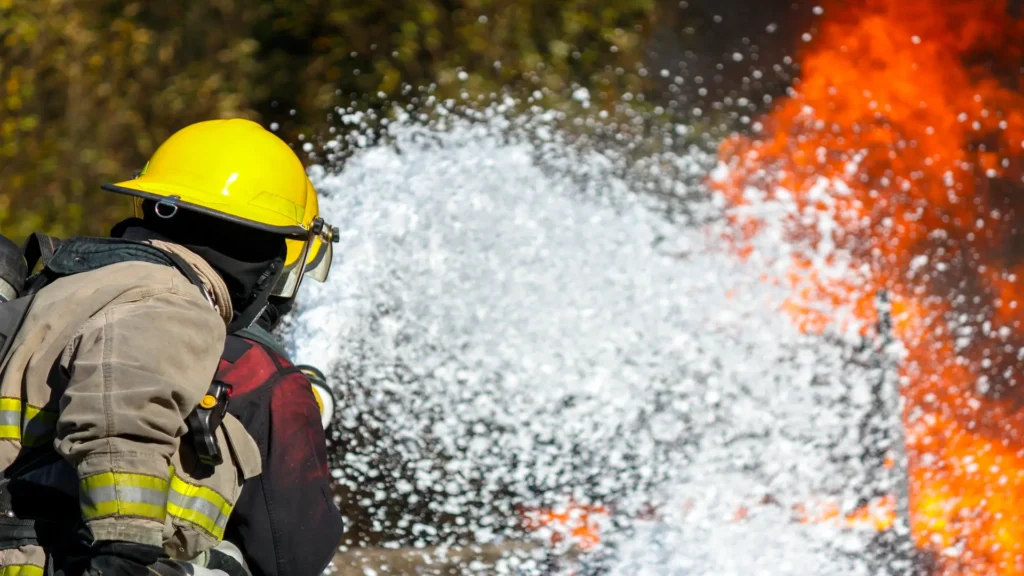
Use significantly less water than traditional sprinklers and may therefore be considered a more sustainable fire suppression method. However, their effectiveness in large-scale flammable liquid fires is limited compared to foam systems.
Primary functions of water mist systems
These systems fulfill essential roles in fire protection for tank farms:
- Tank shell cooling: When fires occur in or near storage tanks, water spray systems cool tank shells to prevent structural failure. These systems keep shell temperatures below failure thresholds, preserving structural integrity during firefighting operations.
- Exposure protection: Fixed monitors and spray nozzles create water curtains that protect adjacent tanks, equipment, and personnel from radiant heat exposure. This containment function prevents fire spread throughout the tank farm.
- Support for foam operations: Water provides the base fluid for mixing foam concentrate and can complement foam application by maintaining cooling in areas where foam coverage is temporarily interrupted.
3. Hybrid fire suppression systems
Hybrid fire suppression systems integrate foam concentrate injection with water-based distribution infrastructure, creating versatile protection that adapts to different fire scenarios and operational needs.

How do hybrid systems work?
They can operate in two modes: water-only mode for cooling and exposure protection, then switch to foam-water mode when extinguishment is required. This operational flexibility offers significant advantages in industrial facilities where multiple fire risks coexist.
Foam-water sprinkler systems combine traditional sprinkler technology with foam proportioning capability. When a fire activates sprinkler heads, the system automatically injects foam concentrate into the water stream, creating an expanded foam layer. These systems are particularly effective in warehouses storing flammable liquids in smaller containers, where individual sprinkler heads can address localized fires before they spread.
Advantages of hybrid systems
Hybrid fire suppression systems combine two or more technologies (such as water mist and inert gas) for more effective suppression by attacking multiple sides of the fire triangle (heat and oxygen) simultaneously. They are ideal for special hazards such as data centers, control rooms, or turbines due to their effectiveness, low water consumption, and sustainability, and are governed by NFPA 770.
- Operational flexibility: Facilities can use water for routine cooling, testing, and training while retaining foam capability for real emergencies. This reduces unnecessary foam consumption and environmental concerns.
- Simplified infrastructure: Shared piping serves multiple functions, reducing installation complexity and cost compared to separate water and foam systems.
- Improved response capability: Systems can automatically select the appropriate extinguishing agent based on fire detection data, ensuring an optimal response to different scenarios.
- Reduced maintenance: Consolidating water and foam systems into an integrated infrastructure can reduce maintenance requirements and streamline inspection procedures.
To learn more about fire suppression systems for tanks, we recommend watching the following video, which explains the characteristics of each of the different types.
Design considerations for hybrid systems
Hybrid systems require careful engineering to ensure proper operation in both modes. Piping must accommodate the differing flow characteristics of water and foam solutions. Proportioning equipment must activate reliably when switching from water mode to foam mode. Control systems require sophisticated logic to manage mode selection based on fire detection inputs and operator commands.
Companies such as Mesa ETP, with specialized experience in tanks and industrial plants, provide the detailed engineering required for these complex installations. Their multidisciplinary approach ensures systems are designed for real-world conditions, regulatory compliance, and long-term maintainability.
Mesa ETP: Protection and engineering for tank integrity
In modern terminal and refinery environments, floating-roof tanks have become the first line of defense against evaporation losses, vapor accumulation, and explosive atmospheres. However, the effectiveness of any floating-roof system depends not only on tank design but also on the integrity of its auxiliary systems: drains, seals, vapor barriers, and emergency containment devices.
In this context, Mesa ETP holds a prominent position in the aboveground storage tank industry as an engineering-driven manufacturer of critical components for floating roofs and emissions control.
Unlike catalog-based suppliers, Mesa ETP operates under a fully engineered-to-order model. Every drain, seal, vapor control device, or lining begins with a complete tank data sheet that reflects the asset’s real operational and environmental conditions: tank shell diameter and height, product chemical composition, roof type and pontoon design, temperature cycles, wind exposure, and regional weather conditions.
This philosophy is especially important for floating-roof tanks, where small geometric discrepancies, improper material selection, or misalignment can lead to vapor leaks, seal failures, and water accumulation—directly increasing fire and explosion risk.
Regulatory standards and compliance
NFPA 11: the foundational standard
NFPA 11 establishes comprehensive requirements for the design, installation, testing, and maintenance of foam systems in the United States. Key provisions include:
Application rates: Fixed-roof tanks require minimum foam application rates of 4.1 liters per minute per square meter for crude oil and Class I flammable liquids, with a discharge duration of 55 minutes. External floating-roof tanks require higher rates of 12.2 liters per minute per square meter for 20 minutes due to challenging rim-seal fire scenarios.
Foam concentrate selection: The standard requires foam concentrate to be listed, approved, and suitable for the specific fuels being protected. Alcohol-resistant foams may be used for polar solvent applications.
Testing and maintenance: Annual inspections of all foam systems are required, including foam quality testing to verify concentrate effectiveness. Proportioning accuracy can be verified, and all mechanical components can be inspected for proper operation.
Additional regulatory frameworks
Beyond NFPA 11, several related standards govern comprehensive fire protection for tanks:
- NFPA 30: Flammable and Combustible Liquids Code addressing safe storage, handling, and fire protection requirements.
- NFPA 25: Inspection, Testing, and Maintenance of Water-Based Fire Protection Systems.
- API 650: Welded Tanks for Oil Storage, including fire protection considerations.
- API 2021: Management of Atmospheric Storage Tank Fires.
- European standards: EN 13565 regulates foam systems in Europe, similar to NFPA 11.
Local fire authorities, insurance companies, and environmental regulators often require compliance with these standards. Failure to comply can result in operational restrictions, increased insurance premiums, and legal liability.
Considerations in tank fire control
1. Floating roof drains for risk control
One of the most critical yet often underestimated contributors to fire risk in floating-roof tanks is poor water management. Rainwater accumulation on floating roofs increases roof loading, stresses pontoons, and can submerge or damage rim seals. When drains fail or leak, hydrocarbons can migrate into drain piping, creating flammable pathways from the roof to the tank bottom or sump.
Mesa ETP floating-roof drain systems are designed as containment and isolation devices—not merely drainage hardware. By engineering drains specifically for roof geometry, roof movement range, and product compatibility, Mesa ETP reduces the likelihood of:
- Product intrusion into drain lines.
- Hydrocarbon accumulation on the roof.
- Rim seal flooding and accelerated seal degradation.
- Vapor release through compromised drain pathways.
In fire scenarios, particularly rim-seal fires, this level of drain integrity plays a direct role in limiting fire spread and preventing escalation into a full-surface tank fire.
2. Quality systems for high-impact equipment
Mesa ETP operates under ISO 9001:2015 and ASME frameworks, reflecting the fact that floating roof components are safety-critical equipment. Its laminated fabrics, vapor barriers, and mechanical assemblies are engineered to withstand continuous exposure to hydrocarbons, UV radiation, temperature cycling, and mechanical movement, conditions that, if not properly addressed, lead to premature failure and elevated fire risk.
In emergency response planning and fire suppression, the reliability of drains, seals, and vapor control systems is just as important as foam monitors or firewater pumps. Mesa ETP’s quality management system is therefore not a compliance exercise, but a core element of the facility’s layered protection strategy.
3. Integrated protection design
Effective fire protection requires integrated approaches that combine foam suppression systems, water cooling systems, detection networks, and emergency response procedures. No single solution fits all applications; each facility requires thorough analysis of hazards, constraints, and objectives to develop optimal protection strategies.
Fire suppression systems are an integral part of any fire protection infrastructure, but they must be properly designed, professionally installed, and diligently maintained to provide reliable protection. For industrial tank farms and facilities handling flammable liquids, foam-based systems remain the foundation of fire suppression, with continuous improvements in concentrate chemistry, application methods, and system design enhancing effectiveness while reducing environmental impact.
Organizations such as MESA Industries demonstrate the importance of working with qualified professionals who understand both technical requirements and the practical challenges of implementation across all aspects of fire protection.
As industries continue to handle flammable liquids essential to modern life, investment in robust fire suppression systems protects not only physical assets and personnel, but also supply chain continuity, community safety, and environmental quality. Too much is at stake, and the consequences of inadequate protection are too severe, to accept anything less than the highest standards in the design, installation, and maintenance of tank fire suppression systems.
Importance of fire control in tanks
Fire control and suppression systems in storage tanks are essential tools for operational integrity and process safety in facilities handling flammable liquids. Their design and performance must align with recognized international standards such as API 650, NFPA 11, and NFPA 15, which establish technical criteria for fire protection in tanks, foam systems, and water spray applications.
According to API 650, fire protection should be considered from the tank design phase, incorporating appropriate foam application devices, drainage systems, and configurations that reduce the likelihood of event escalation.
Complementarily, NFPA 11 defines requirements for foam selection, proportioning, and application for flammable liquids, ensuring effective coverage, vapor suppression, and reduced re-ignition risk. NFPA 15 provides guidelines for water spray systems intended for surface cooling, exposure protection, and preservation of structural integrity during a fire.
Consistent application of these standards enables the design of active protection systems that respond effectively to fires and limit event propagation, protect adjacent assets, and facilitate emergency response. In this context, fire suppression systems should not be evaluated in isolation, but as part of an integrated safety architecture combining early detection, suppression, passive protection, and operational procedures.
Ultimately, rigorous adoption of standards such as API 650, NFPA 11, and NFPA 15 enhances the reliability of tank farms, reduces residual risk, and contributes to operational continuity and sustainability, particularly in sectors where a fire event can have catastrophic human, environmental, and economic consequences.
Conclusions
Fire protection in storage tanks cannot be addressed as an auxiliary or reactive system, but rather as a critical function of process safety. Proper selection and design of foam systems, water spray systems, and hybrid solutions, aligned with standards such as API 650, NFPA 11, and NFPA 15, enable early control of flammable liquid fires, limit thermal energy release, and significantly reduce the risk of escalation and catastrophic damage.
An effective fire suppression system depends not only on the extinguishing agent, but also on its integration with early detection, reliable proportioning systems, proper application over the fuel surface, and thermal protection of exposed assets. Consistent application of international standards transforms fire protection into a tool for operational risk management, preserving tank structural integrity, ensuring operational continuity, and protecting both personnel and the surrounding environment.
References
- National Fire Protection Association (NFPA). (2022). NFPA 11: Standard for Low-, Medium-, and High-Expansion Foam. NFPA.
- American Petroleum Institute (API). (2020). API Recommended Practice 2021: Management of Atmospheric Storage Tank Fires. API Publishing Services.
- Lees, F. P. (2012). Lees’ Loss Prevention in the Process Industries (4th ed.). Butterworth-Heinemann.