
Table of Contents
- Risk Management and Digital Fleet Assessment
- What Is RightShip and How Does It Transform Maritime Management?
- Satellite Connectivity and Support for the Maritime Crew
- Digitalization of Maritime Crew Training
- Automation and Reduction of Physical Workloads
- Technological Integration and Evolution of the Maritime Environment
- Conclusions
- References
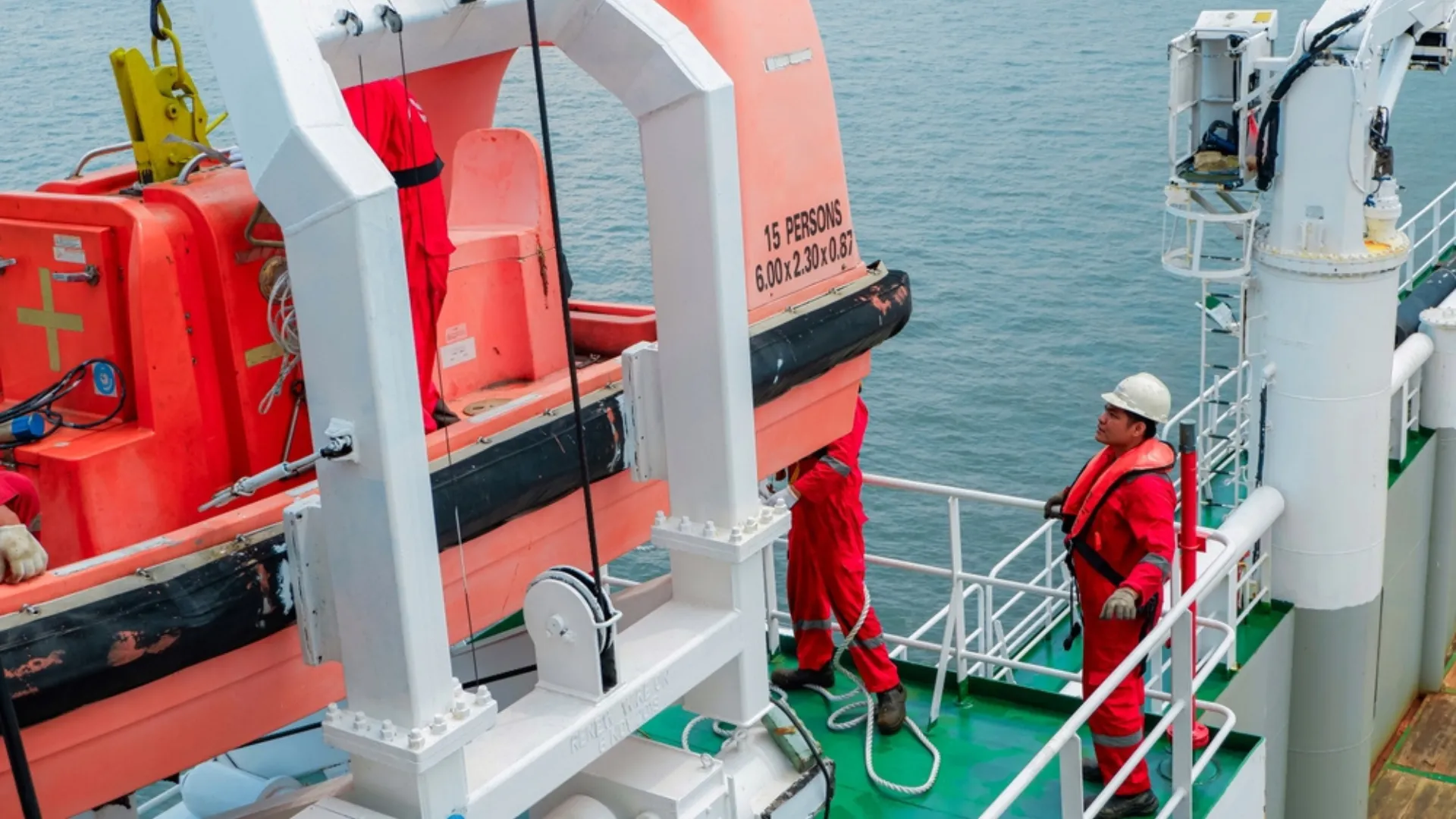
The operation of commercial vessels depends directly on the safe and efficient performance of the maritime crew, whose working environment is shaped by technical, organizational, and human factors. Historically, limitations in connectivity, access to information, and onboard operational support have negatively affected indicators such as productivity, operational continuity, and compliance with international labor welfare standards.
The incorporation of next-generation digital technologies has substantially transformed the infrastructure supporting the maritime crew, enabling improved resource management, operational traceability, and data-driven decision-making in real time.
Risk Management and Digital Fleet Assessment
Digital performance evaluation platforms, such as RightShip, which are committed to establishing global benchmarks in the maritime sector with the ultimate goal of achieving zero harm, have become key tools for risk management in maritime operations. These systems integrate technical information, operational history, safety indicators, and regulatory criteria to generate objective assessments of vessels and operators.
From the perspective of the maritime crew, these tools indirectly contribute to improved operating conditions by promoting higher standards of safety, maintenance, and risk management across commercial fleets.
What Is RightShip and How Does It Transform Maritime Management?
RightShip is a digital risk assessment and management platform used in the maritime industry to analyze the operational, environmental, and safety performance of vessels and operators. Its system integrates databases, predictive models, and regulatory compliance criteria to generate ratings that enable charterers, shipowners, and regulatory bodies to make evidence-based decisions regarding the selection, verification, and monitoring of maritime assets. In this context, RightShip has become a strategic instrument for standardizing risk management and promoting practices aligned with global sustainability and operational safety objectives.
In parallel with evaluation tools such as RightShip, advances in digital infrastructure have reshaped the working conditions of the maritime crew. Among these developments, satellite connectivity represents one of the most significant changes in quality of life and access to digital resources onboard over the past two decades. Until the early 2000s, communications were limited to high-cost satellite voice links and low-capacity email systems, restricting data transmission and limiting interaction with remote systems.
Today, maritime broadband solutions—including VSAT technologies and next-generation LEO/MEO services—provide transmission speeds comparable to terrestrial connections. This enables the maritime crew to use high-definition videoconferencing, access corporate digital platforms, stream content, and browse the web with minimal restrictions.
Bandwidth management has also undergone a structural evolution. Traditional restrictive policies, driven by the need to control operating costs, have gradually been replaced by broader and more equitable distribution models. The sustained reduction in cost per megabit and evidence of positive impacts on retention, performance, and maritime crew welfare have encouraged shipowners to adopt less restrictive schemes aligned with contemporary onboard human resource management guidelines.
Satellite Connectivity and Support for the Maritime Crew
Satellite connectivity represents one of the most significant advances in operational support for the maritime crew in recent decades. Early generations of onboard communication were limited to voice links and low-capacity data systems, restricting access to technical information, training, and communication with shore-based teams.
Current maritime broadband solutions, based on VSAT technologies and LEO/MEO constellations, allow the maritime crew to access corporate platforms, management systems, videoconferencing, and digital services with availability levels comparable to land-based environments. This improves both operational efficiency and quality of life onboard.
Digitalization of Maritime Crew Training
Learning platforms have significantly expanded professional development opportunities for the maritime crew. Maritime learning management systems enable access to technical courses, certifications, and refresher programs in navigation, machinery operation, safety, and leadership, even during periods at sea.
The incorporation of technologies such as augmented reality enhances onboard technical training, enabling the maritime crew to perform complex procedures with visual support, reduce operational errors, and receive specialized remote assistance in real time. Online learning platforms have democratized access to quality education for seafarers who traditionally faced significant barriers to professional development.
Automation and Reduction of Physical Workloads
The automation of operational tasks is helping to reduce the maritime crew’s exposure to repetitive, physically demanding, or high-risk activities. Key applications include autonomous cleaning systems, drones for structural inspections, and exoskeletons that reduce biomechanical loads during maintenance activities.
These technologies enhance safety, reduce fatigue, and optimize the allocation of the maritime crew’s time toward higher-value operational tasks.
Technological Integration and Evolution of the Maritime Environment
Digital Onboard Communication Systems
Internal communication for the maritime crew has evolved toward integrated digital platforms operating over the vessel’s Wi-Fi networks. These solutions facilitate operational coordination, task allocation, and real-time workflow management.
Digital management systems enable activity logging, intervention documentation, and improved traceability of operational information, contributing to more efficient daily work management for the maritime crew.
Wearable devices and monitoring systems allow the assessment of indicators related to the physical and mental well-being of the maritime crew, such as activity levels, rest patterns, and early signs of fatigue.
Integrating these data into management platforms supports preventive measures, reducing the likelihood of safety incidents and improving overall operational performance.
Digital Preparedness for Emergencies
Training the maritime crew through virtual reality simulations enables the controlled reproduction of emergency scenarios, strengthening response capabilities for fires, flooding, or evacuations.
During real events, real-time localization systems improve visibility of each maritime crew member’s position, optimizing action coordination and reducing response times.
Current trends point toward the integration of multiple digital solutions into unified ecosystems that comprehensively support the performance of the maritime crew. Advanced analytics and predictive models will enable the anticipation of operational risks, optimization of resources, and improved sustainability of maritime operations.
The digitalization of operational support not only redefines the working conditions of the maritime crew, but also consolidates itself as a key factor for safety, efficiency, and resilience in the global maritime industry.
Conclusions
The digitalization of operational support has become a structural factor in improving the safety, efficiency, and performance of the maritime crew, by integrating connectivity, automation, and data analytics into daily onboard processes.
The adoption of digital platforms focused on risk management, training, and welfare enables the maritime industry to optimize decision-making, reduce operational exposure, and strengthen the sustainability of the maritime crew’s working environment.
References
- https://rightship.com
- https://maritimetrainer.com/maritime-trainer-blog