
Table of Contents
- Why fuel matters more than efficiency
- Methanol: The strategy of major liner companies
- CMA CGM: Methanol Dual-Fuel in liner fleets
- Maersk: Supply pressure and industrial learning
- But how much CO₂ does methanol actually reduce?
- Ammonia: The Zero-CO₂ stack pathway
- How much CO₂ can ammonia reduce? Almost All If It’s green
- Risks and limitations: NOx, N₂O, and air quality
- What operators are doing: A strategic reading
- Conclusion
- References
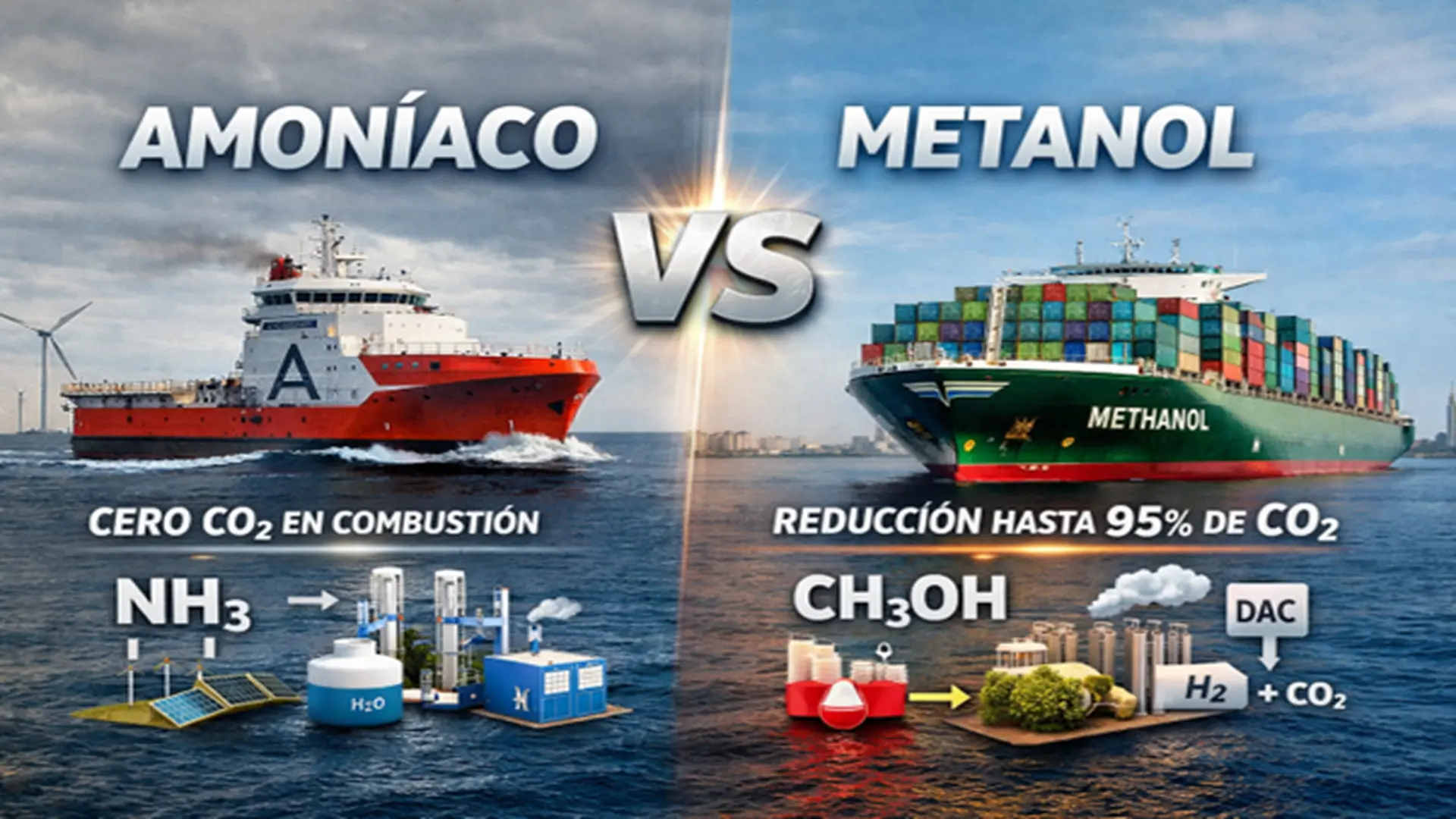
Maritime transport emits approximately 1.076 billion tons of GHG (CO₂e) per year (2018), and its CO₂ emissions reached 1.056 billion tons, according to the International Maritime Organization (IMO, 2020). This represents about 3% of total global emissions. For this reason, regulations are becoming increasingly strict and, to meet the sector’s climate strategy, including the net-zero target by 2050, shipping companies are turning to alternative fuels such as ammonia and methanol, highlighting two pathways that have been successfully implemented: methanol (due to its logistical maturity) and ammonia (because of its “zero-carbon” potential in combustion).
Why fuel matters more than efficiency
The IMO recognizes that by 2050, the majority of CO₂ reductions in the sector will come from fuel switching. The organization projects that approximately 64% of emissions reductions will be achieved through low-/zero-carbon alternative fuels (IMO, n.d.-a).
This does not negate efficiency improvements; rather, it complements them. Even with operational improvements, the real ceiling for decarbonization is reached when a vessel stops burning fossil molecules during operation.
The IMO has also established intermediate targets:
- At least a 40% reduction in carbon intensity by 2030, and
- Zero or near-zero emission fuels and technologies representing at least 5% (aspiring to 10%) of shipping energy consumption by 2030 (IMO, 2023).
Within this framework, shipping companies are not just purchasing ships—they are buying technological options for an increasingly strict regulatory future.
Methanol: The strategy of major liner companies
It is worth observing how large shipping corporations are implementing technology and fuel transitions in their fleets in order to remain competitive in the market. Recently, several vessels have been adapted or launched during the first quarter of the year, demonstrating corporate commitment to meeting regulatory requirements.
CMA CGM: Methanol Dual-Fuel in liner fleets
CMA CGM continues advancing with methanol dual-fuel container ships. The CMA CGM OSMIUM (13,000 TEU) was christened as a methanol dual-fuel vessel (Bunker Market, 2026).
This type of decision is particularly significant because it occurs in the liner shipping segment, where cargo volumes are highest.
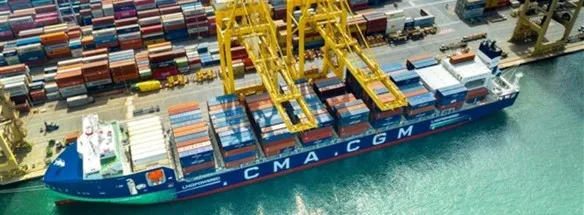
Additionally, CMA CGM announced that a series of 12 methanol dual-fuel container ships of 13,000 TEU will be delivered between 2025 and 2026, aligned with its roadmap toward Net Zero Carbon by 2050 (CMA CGM, 2025).
From an emissions perspective, methanol offers an immediate advantage: CO₂ emissions can be reduced if low-carbon methanol (bio-methanol or e-methanol) is used. However, if the methanol is fossil-based (“gray”), the climate benefit decreases dramatically because the CO₂ released during combustion remains fossil in origin (International Council on Clean Transportation [ICCT], 2021).
Maersk: Supply pressure and industrial learning
Maersk has also been a pioneer in operating methanol-powered vessels and scaling orders. Industry reports indicate that the company has ordered around 25 methanol dual-fuel container ships, with its first methanol feeder vessel delivered in 2023 (gCaptain, 2025).
However, the Maersk case also reveals a major Achilles’ heel: the availability of truly green methanol at scale.
At the same time, the growth of dual-fuel ships is becoming a systemic trend. According to sector coverage referencing the World Shipping Council, the number of dual-fuel vessels grew significantly in 2025, putting additional pressure on alternative fuel supply chains (The Maritime Executive, 2026).
But how much CO₂ does methanol actually reduce?
This is a crucial question. Technical literature and life-cycle analyses agree that methanol is an energy carrier whose carbon footprint depends entirely on its production pathway (fossil vs. renewable).
The ICCT, using well-to-wake modeling, shows that fossil methanol provides limited benefits, while e-methanol—produced from renewable hydrogen and biogenic or captured CO₂—can deliver deep emissions reductions.
Some industry analyses cited in media outlets report emissions reductions of up to 95% for fuels derived from green hydrogen, including methanol, when evaluated across the full life cycle and when the supply chain is genuinely low-carbon (TIME, 2024).
The conclusion is clear: methanol only significantly reduces CO₂ if shipping companies secure low-GHG methanol supply chains—not just dual-fuel engines.
Ammonia: The Zero-CO₂ stack pathway
Just as methanol has become a practical operational option for many shipping companies, ammonia is also gaining traction among other corporations.
Viking Energy (Equinor/Eidesvik): Real conversion
Ammonia offers a compelling promise: it contains no carbon, meaning its combustion can produce zero CO₂ emissions tank-to-wake. A notable example is the offshore vessel Viking Energy, whose conversion will allow it to operate on ammonia for Equinor, with an estimated emissions reduction of at least 70% (Equinor, 2024). Similarly, the Norwegian shipping company Eidesvik describes this project as a pioneering step that brings ammonia “from design to operation” (Eidesvik Offshore, 2026).
This case is particularly relevant because it occurs in an offshore operational environment, where routes are controlled and infrastructure is specialized, enabling real-world pilot projects with new fuels.
WinGD: From laboratory to industrial acceptance
Another critical step lies in main engine technology. WinGD recently announced the completion of Type Approval Testing (TAT) and Factory Acceptance Testing (FAT) for its two-stroke ammonia marine engine, marking progress toward zero-carbon shipping (WinGD, 2026). From an operator’s perspective, this reduces technological risk. Without validated engines, fleets cannot be deployed. Once engines receive certification, the pathway opens for orders and industry scaling.
How much CO₂ can ammonia reduce? Almost All If It’s green
As with methanol, the color of the fuel matters—but in ammonia’s case the distinction is even more critical. Today, most ammonia production is fossil-based (“gray ammonia”), typically derived from natural gas. As a result, the well-to-wake emissions balance may not be zero. Life-cycle studies highlight major differences between gray and green production pathways for ammonia, methanol, and other fuels (Comparative analysis…, 2024).
In other words: “green” ammonia can indeed approach net zero, but fossil ammonia can shift emissions from the ship to the production plant.
Risks and limitations: NOx, N₂O, and air quality
Reducing CO₂ is not enough if pollutants skyrocket. It would be a contradiction. Evidence warns that ammonia can increase air pollution risks if adopted without controls: research and technical reviews highlight challenges of NOx, unburned ammonia, and the potential for N₂O (a potent GHG) in exhaust (MDPI, 2023). A study released by MIT in accordance with its regular publication in 2024 highlights potential impacts on public health if ammonia is burned without adequate regulations and abatement systems.
Therefore, ammonia’s climate contribution depends on two critical layers:
- Green production, to reduce total CO₂ emissions, and
- Local emission controls, to avoid replacing CO₂ with other environmental harms.
What operators are doing: A strategic reading
There is a saying that goes, “A ship that stands still earns no freight.” And perhaps few people know that a ship can generate up to $6 million per month. This is a striking figure, but if the machinery is not updated to comply with IMO environmental and regulatory standards, it is essential and necessary to adapt ships to these circumstances and requirements for the good of all. This has led to the development of strategies for this purpose.
- Container shipping companies (liners): they prioritize methanol because there is already a more immediate adoption route (engines, expanding bunkering, dual-fuel) and because they can sign supply contracts with e-methanol producers. The CMA CGM case illustrates the pattern: deployment of large-capacity ships and corporate narrative for 2050 (CMA CGM, 2025; Bunker Market, 2026).
- Offshore operators and nearby industrial ecosystems: these become laboratories for ammonia, where pilots such as Viking Energy allow technology to mature with the support of large buyers/operators (Equinor, 2024; Eidesvik Offshore, 2026).
- Manufacturers and class: when a player such as WinGD achieves acceptance/type testing for ammonia engines, it accelerates the sector’s learning curve and reduces risk aversion (WinGD, 2026).
- The regulator: the IMO is building a framework to evaluate fuels from a comprehensive life cycle perspective (IMO, n.d.-b). This puts pressure on operators to demonstrate real CO₂ reduction, not just “zero at the stack.”
Conclusion
Methanol dominates adoption today because it is “implementable” and is already entering commercial fleets. Meanwhile, ammonia promises the greatest CO₂ reduction in operation, but requires validated engines, NOx/N₂O controls, and, above all, a truly green supply. In both cases, the decisive factor is not the name of the fuel, but its well-to-wake climate intensity and the ability of operators to close the loop: ship, fuel, and regulation. If they succeed, the impact could be enormous: the IMO anticipates that alternative fuels will account for most of the CO₂ reduction in shipping by 2050. And that is a big step toward the future.
References
- Bunker Market. (2026, February 26). CMA CGM Names 13,000-TEU Methanol Dual-Fuel Vessel CMA CGM OSMIUM.
- CMA CGM. (2025). Maiden call of CMA CGM IRON in Singapore: first delivery of a South Korean-built series of 12 new generation dual-fuel methanol 13,000 TEU vessel.
- Comparative analysis among different alternative fuels for ship propulsion (Well-to-Wake). (2024). Heliyon.
- Eidesvik Offshore. (2026). Viking Energy makes history as first ammonia-powered offshore vessel.
- Equinor. (2024, August 26). Equinor to use the world’s first ammonia-powered supply vessel.
- gCaptain. (2025). Maersk Names First of Six New 17,480 TEU Methanol-Powered Containerships.
- International Council on Clean Transportation (ICCT). (2021). A step forward for “green” methanol and its potential to deliver deep GHG reductions in maritime shipping.
- International Maritime Organization (IMO). (2020). Fourth IMO Greenhouse Gas Study 2020.
- International Maritime Organization (IMO). (2023). 2023 IMO Strategy on Reduction of GHG Emissions from Ships.