
Table of Contents
- What are methane emissions and why is it important to reduce them?
- Main sources of methane in the atmosphere
- Environmental impact and operational losses
- LDAR programs to detect methane emissions
- Optical Gas Imaging (OGI) and detection technologies
- Industrial applications of methane detection
- How methane emissions are measured and reported
- Emissions inventories and regulatory reporting
- How to reduce methane emissions in the energy industry
- Operational and environmental benefits
- Conclusions
- References
- Frequently Asked Questions (FAQs)
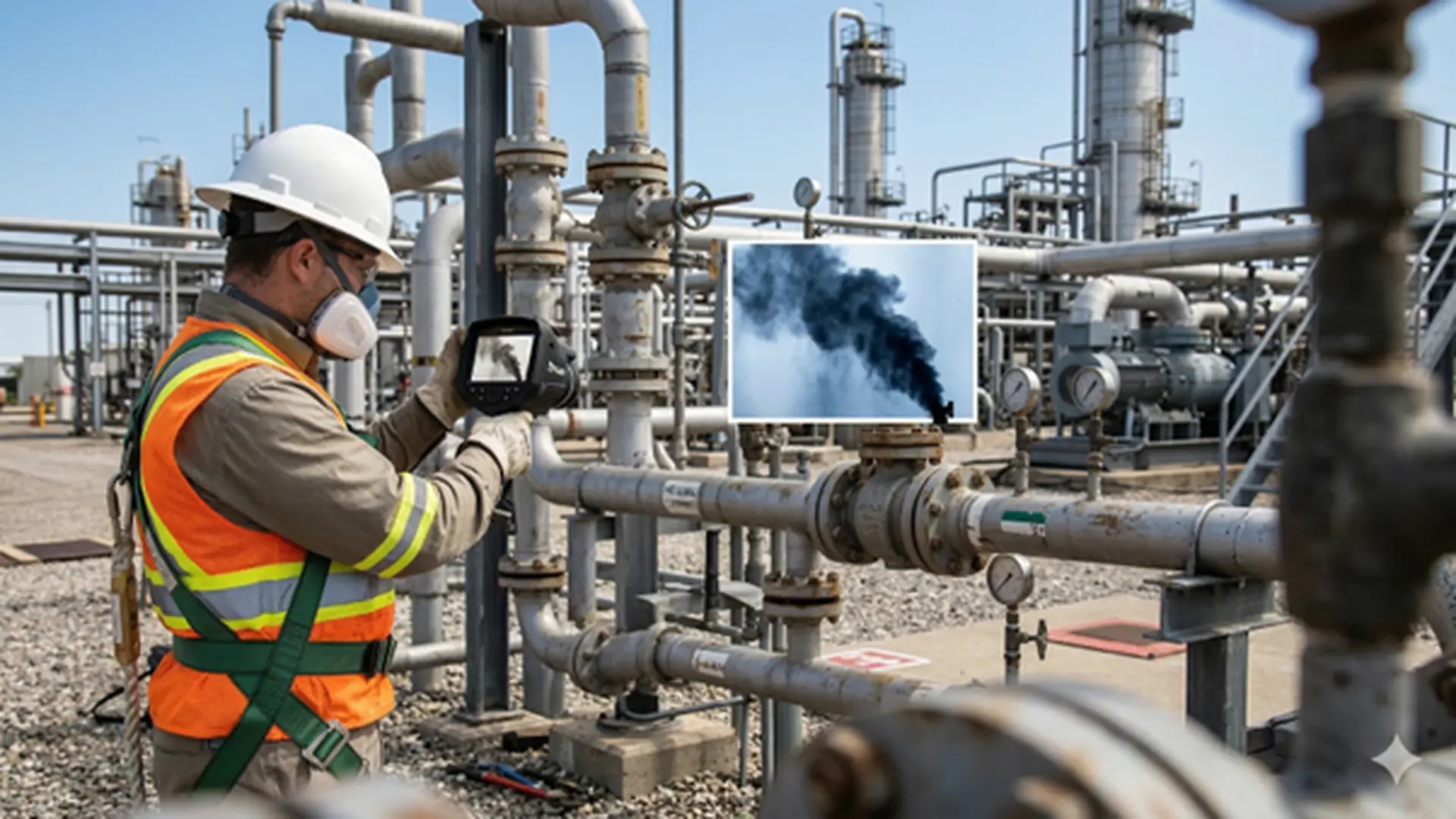
Methane emissions represent one of the most relevant environmental challenges for the energy sector. This greenhouse gas has a considerably higher warming potential than carbon dioxide over short time horizons. A significant portion of these emissions originates from undetected leaks in hydrocarbon production, transportation, and storage systems.
In response to this scenario, the energy industry has adopted advanced technologies to detect and control fugitive emissions. Leak detection programs (LDAR), optical gas imaging cameras (OGI), and continuous monitoring systems allow operators to identify leaks, quantify emissions, and improve environmental management in complex industrial facilities.
What are methane emissions and why is it important to reduce them?
Technical definition of methane emissions
Methane emissions are releases of methane gas (CH₄) into the atmosphere that may originate from both natural processes and industrial activities. In the energy sector, they mainly arise from leaks in equipment, transportation systems, and hydrocarbon storage facilities, significantly contributing to global warming.
Methane has a considerably higher global warming potential than carbon dioxide over short-term time horizons. For this reason, its control has become a priority in international climate mitigation strategies.
According to the Global Methane Tracker report from the International Energy Agency (IEA), the energy sector represents one of the main sources of anthropogenic methane emissions worldwide.
What is methane gas?
Methane gas is a hydrocarbon composed of one carbon atom and four hydrogen atoms (CH₄). It forms naturally through biological and geological processes and is also generated during industrial activities related to the extraction and use of fossil fuels.
In the energy industry, methane is the main component of natural gas used for power generation, heating, and multiple industrial processes.
Understanding the properties of methane gas is essential to analyze the origin of methane leaks in energy systems and assess their environmental impact.
Why does methane have a high warming potential?
Methane is considered a high-intensity greenhouse gas due to its ability to absorb infrared radiation in the atmosphere. This property contributes to global warming by trapping heat within the Earth’s climate system.
Several international studies indicate that reducing methane releases can generate significant climate benefits within relatively short timeframes.
Main sources of methane in the atmosphere
These emissions originate from various human activities associated with energy, agriculture, and waste management sectors. In particular, oil and gas operations represent one of the most relevant industrial sources due to leaks in equipment and transportation systems.
Table 1: Main sources of methane leaks
| Sector | Emission source | Emission examples |
|---|---|---|
| Oil and gas | Leaks in equipment and transport systems | valves, compressors, pipelines |
| Coal mining | Gas release during extraction | underground mines |
| Agriculture | Enteric fermentation in livestock | livestock production |
| Waste management | Organic decomposition | landfills |
| Wastewater | Anaerobic biological processes | treatment plants |
According to the International Energy Agency (IEA), the energy sector represents a significant proportion of emissions of this gas, especially in oil and gas operations.
Who are the largest methane emitters?
The largest global methane emitters correspond to three main sectors:
- Energy (oil, gas, and coal)
- Agriculture
- Solid waste and wastewater
According to data from the Environmental Protection Agency (EPA) and the IEA, the oil and gas sector accounts for a significant share of methane leaks associated with industrial activities.
Fugitive methane emissions in industrial facilities
Methane emissions in energy facilities usually occur as fugitive emissions. These correspond to unintentional leaks that occur during normal operation of equipment and systems, making it essential to implement industrial inspection programs in oil and gas to identify and control leaks in energy facilities.
Fugitive emissions may result from component wear, seal failures, or defective connections in pressurized systems.
What industrial equipment generates methane leaks?
Methane leaks may occur in multiple components within industrial facilities.
The most common equipment includes:
- Industrial valves
- Compressors
- Pumps
- Storage tanks
- Connections and flanges
Early detection of these leaks is essential to reduce methane releases and avoid product losses.
Environmental impact and operational losses
Fugitive emissions generate both environmental and operational impacts.
Environmental impact
- Increase in greenhouse gases
- Contribution to climate change
Operational impact
- Loss of marketable product
- Reduction in facility efficiency
- Potential safety risks
For these reasons, methane leak detection and control has become a priority for the energy industry, especially within mechanical integrity programs in energy facilities.
LDAR programs to detect methane emissions
LDAR (Leak Detection and Repair) programs represent one of the most widely used methods for controlling methane emissions in industrial facilities. In Figure 1, engineers can be seen performing inspection and recording activities.
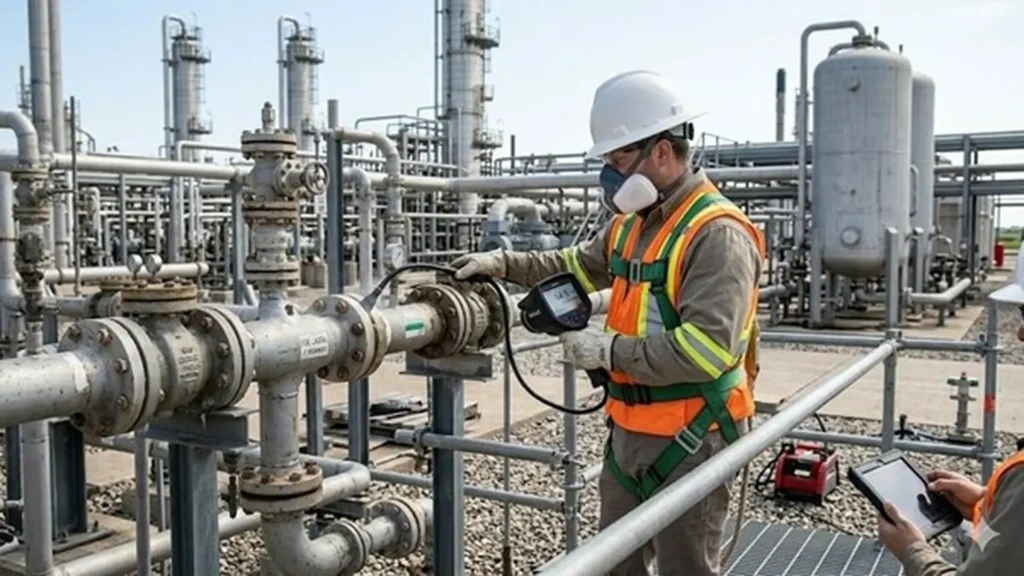
These programs combine periodic inspections with repair processes aimed at systematically identifying and correcting leaks.
How LDAR programs work
An LDAR program generally includes four stages:
- Leak detection
- Emission measurement
- Component repair
- Post-repair verification
This approach effectively reduces methane leaks in oil and gas facilities.
Implementation of LDAR programs in facilities
Implementing LDAR requires operational planning and specialized inspection tools.
Common activities include:
- Periodic equipment inspections
- Recording detected leaks
- Prioritizing repairs
- Verifying effectiveness
These programs help keep methane emissions under control and improve operational efficiency.
Technological solutions for leak management
Digital platforms streamline the implementation of LDAR programs in the industry.
Technological tools such as Detect360 and Repair360 allow you to record inspections, manage repairs, and track detected leaks.
Specialized companies in the energy sector, such as TEAM GROUP, provide technical services for the detection and control of methane emissions in industrial facilities, ensuring operational integrity.
Optical Gas Imaging (OGI) and detection technologies
Advanced detection technologies allow visualization of methane leaks that are not visible to the naked eye. Among the most widely used tools are Optical Gas Imaging (OGI) cameras.
Methane releases can be detected using various technologies applied in industrial inspection, making it possible to locate leaks in equipment and energy systems.
Table 2: Technologies used to detect methane emissions
| Detection technology | Measurement method | Industrial application | Main advantage |
|---|---|---|---|
| OGI (Optical Gas Imaging) | Infrared camera | LDAR inspections in refineries and gas plants | Direct visualization of leaks |
| Portable methane sensors | Direct concentration measurement | Inspection of valves and equipment | High measurement accuracy |
| Fixed monitoring sensors | Continuous detection | Permanent monitoring in plants | Early leak detection |
| Drones with methane detectors | Remote sensors | Inspection of pipelines and large facilities | Coverage of large areas |
| Monitoring satellites | Remote atmospheric observation | Regional emission assessment | Identification of massive emissions |
These technologies make it possible to identify leaks responsible for methane emissions and support the implementation of LDAR programs in energy facilities.
How OGI cameras work
OGI cameras use infrared sensors to identify hydrocarbon gases in the atmosphere. These cameras detect differences in infrared radiation absorbed by the gas, allowing leaks to be visualized in real time.
Thanks to this capability, OGI technology has become a key tool for detecting methane during industrial inspections.
Advanced sensors and continuous monitoring
In addition to OGI cameras, other technologies enable continuous monitoring of methane emissions, as shown in Figure 2.
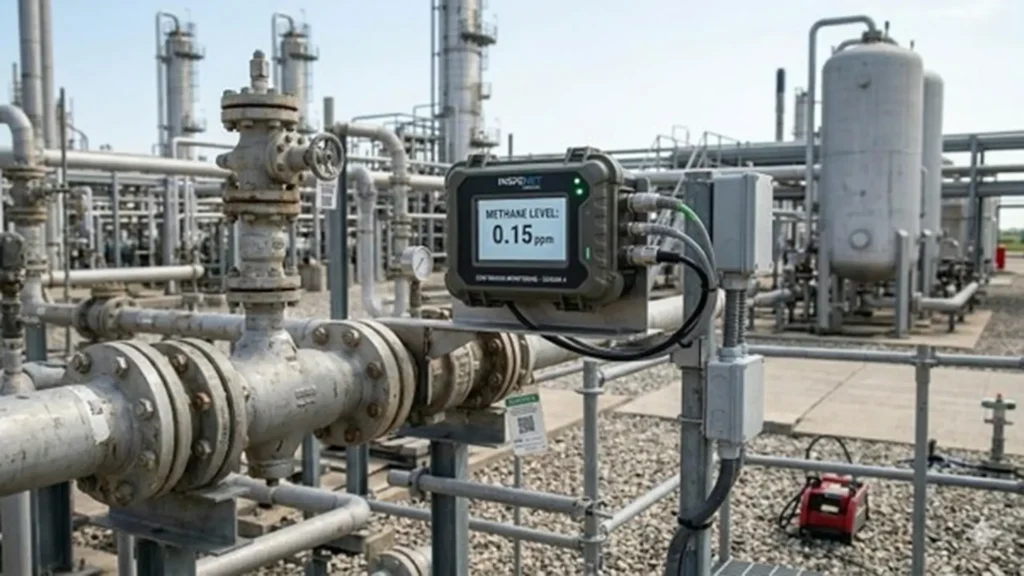
Among these technologies are:
- Fixed sensors installed in industrial plants
- Inspection drones
- Environmental monitoring satellites
These technologies facilitate the detection of leaks responsible for methane emissions in complex industrial facilities.
Industrial applications of methane detection
Detection technologies are used in various industrial environments:
- Refineries
- Gas processing plants
- Compression stations
- Storage terminals
Their use allows operators to quickly locate methane leaks and improve operational management of facilities.
How methane emissions are measured and reported
Accurate measurement of methane leaks is essential to develop greenhouse gas inventories and comply with environmental regulations.
Several methods allow estimation or quantification of emissions in energy facilities.
Methods for quantifying emissions
Two main approaches exist to quantify emissions:
Direct measurement
- Gas sensors
- Portable measurement equipment
Indirect estimation
- Emission factors
- Inventory models
Both methods are used to calculate methane emissions in different industrial contexts.
Emissions inventories and regulatory reporting
Many countries require periodic reporting of industrial emissions.
These inventories are often based on methodologies developed by international organizations such as the EPA or the IEA and allow evaluation of trends and development of strategies to reduce methane emissions in the energy sector.
These reports help monitor progress in methane reduction.
Verification and auditing of emissions
Independent verification is essential to ensure the reliability of reported data.
Technical audits review:
- Measurement methodologies
- Operational records
- Emission estimates
This strengthens transparency in methane emissions reporting.
How to reduce methane emissions in the energy industry
Reducing methane releases requires combining detection technologies with maintenance and operational management strategies.
Energy companies implement various measures aimed at minimizing leaks and improving emissions control. Companies such as BP, Shell, ExxonMobil, TotalEnergies, and Equinor have developed advanced monitoring programs, LDAR inspections, and remote detection technologies to reduce methane emissions in their operations.
Technologies to reduce fugitive emissions
Key solutions include:
- LDAR programs
- Continuous emissions monitoring
- Preventive equipment maintenance
- Improved seals and connections
These measures significantly reduce emissions. Technology companies such as Teledyne FLIR, known for its OGI cameras, GHGSat, dedicated to satellite monitoring of methane emissions, and SeekOps, specialized in drone-mounted sensors for leak quantification, have driven advanced solutions for early emission detection in the energy sector.
Industrial management of methane emissions
Effective management requires integrating monitoring programs into corporate environmental management systems.
Companies may implement:
- Environmental management systems
- Industrial inspection programs
- Emissions indicator monitoring
These strategies help control methane releases systematically.
Operational and environmental benefits
Reducing methane emissions generates multiple benefits:
- Reduced environmental impact
- Improved operational efficiency
- Regulatory compliance
- Reduced gas losses
These advantages make emissions control a priority for the energy industry.
The control of methane emissions has become a priority within sustainability strategies in the energy sector.
Conclusions
Methane emissions represent a significant technical and environmental challenge for the energy industry. A substantial portion of these emissions originates from operational leaks in hydrocarbon production, transportation, and storage facilities, highlighting the need to strengthen detection and control systems within industrial asset management.
The implementation of LDAR (Leak Detection and Repair) programs, the use of OGI (Optical Gas Imaging) technologies, and the incorporation of advanced monitoring systems allow leaks to be detected with greater precision, emissions to be quantified, and environmental management of facilities to be improved. Integrating these tools into corporate emissions management strategies not only helps reduce environmental impact but also decreases operational losses and strengthens regulatory compliance in the energy sector.
At Inspenet, emerging technologies, inspection methodologies, and management strategies applied to the energy and industrial sectors are analyzed.
References
- American Petroleum Institute. (2016). Damage mechanisms affecting fixed equipment in the refining industry (API RP 571). API Publishing.
- Environmental Protection Agency. (2024). Methane emissions.
- European Union. (2024). Regulation (EU) 2024/1787 on methane emissions reduction in the energy sector.
- Intergovernmental Panel on Climate Change. (2021). Climate change 2021: The physical science basis.
- International Energy Agency. (2025). Global methane tracker 2025.
- International Organization for Standardization. (2015). Industrial valves—Measurement, test and qualification procedures for fugitive emissions (ISO 15848-1).
- Pandey et al. (2022). Daily detection and quantification of methane leaks using Sentinel satellites.
- Rashid et al. (2023). Continuous methane leak monitoring and sensor placement.
Frequently Asked Questions (FAQs)
What are fugitive methane emissions?
Fugitive methane emissions are unintentional gas leaks that occur during the operation of industrial facilities. They usually originate in valves, compressors, flanges, or tanks. In the oil and gas sector, these leaks represent an important source of methane emissions and are controlled through detection and repair programs.
What technologies detect methane leaks?
Leaks responsible for methane emissions can be detected using optical gas imaging (OGI) cameras, portable sensors, continuous monitoring systems, and drones equipped with gas detectors. These technologies allow identification of leaks in industrial equipment and facilitate the implementation of emissions control programs.
What is an LDAR program?
An LDAR (Leak Detection and Repair) program is an inspection system that detects, measures, and repairs gas leaks in industrial facilities. It is based on periodic inspections of equipment such as valves, pumps, and compressors to reduce fugitive emissions and improve operational efficiency.
How do OGI cameras work?
OGI (Optical Gas Imaging) cameras use infrared sensors to visualize hydrocarbon gases that cannot be seen with the naked eye. These cameras detect infrared radiation absorption from methane, allowing leaks to be observed in real time during industrial inspections.
Why is methane a powerful greenhouse gas?
Methane is a powerful greenhouse gas because it absorbs infrared radiation and traps heat in the atmosphere. According to the International Energy Agency (IEA), its warming capacity is significantly greater than that of carbon dioxide over short periods, making methane emissions reduction a priority.