HomeArticlesEnergymaritime terminals and monobuoys

maritime terminals and monobuoys

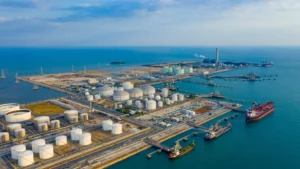
The marine terminals sector handles the reception, storage, measurement, and transfer of crude oil, refined products, and NGLs between vessels, pipelines, and onshore tanks. Its role within the energy value chain is to ensure safe, efficient, and fully traceable ship–shore operations in environments with elevated operational and environmental risks.

Across the United States, Latin America, and Europe, marine terminals operate under strict regulatory frameworks, OCIMF/API standards, and advanced monitoring technologies to maintain continuity, asset integrity, emissions control, and maritime safety.

What you’ll find in this section

This section provides high-value technical content related to marine terminal operations. Key topics include:

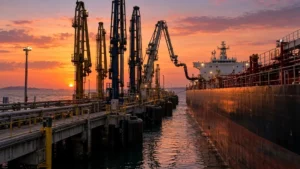
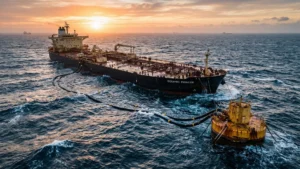
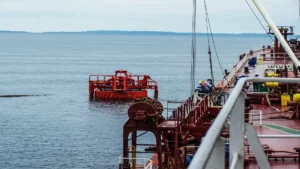
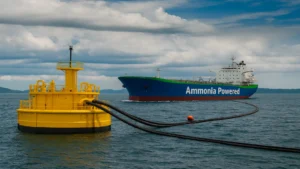
  • Transfer operations: loading/unloading, SPM/CBM systems, loading arms, and ship–shore procedures.
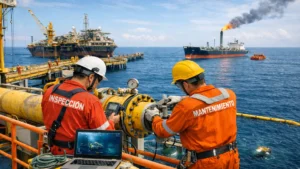
  • Integrity & reliability: corrosion control, coatings, inspection programs, and asset management.
  • Custody transfer and measurement: fiscal metering, density systems, API MPMS, and calibration.
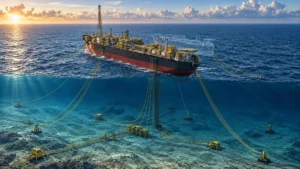
  • Critical infrastructure: tanks, subsea lines, pumping systems, manifolds, and SCADA oversight.
  • Standards and compliance: OCIMF, ISGOTT, MARPOL, API, and environmental regulations.
  • Maritime safety: spill response, emergency procedures, HSE, and operational risk mitigation.
  • Innovation: digitalization, IIoT, advanced sensors, and remote monitoring.

The section includes technical articles, case studies, analyses, and operational insights that shape the maritime energy logistics landscape.

Marine terminals are strategic nodes in the global energy supply chain. Their performance influences operational continuity, safety, environmental protection, and international trade. Technical challenges, structural integrity, corrosion, maritime risks, emissions, and regulatory compliance, require applied engineering and informed decision-making.