
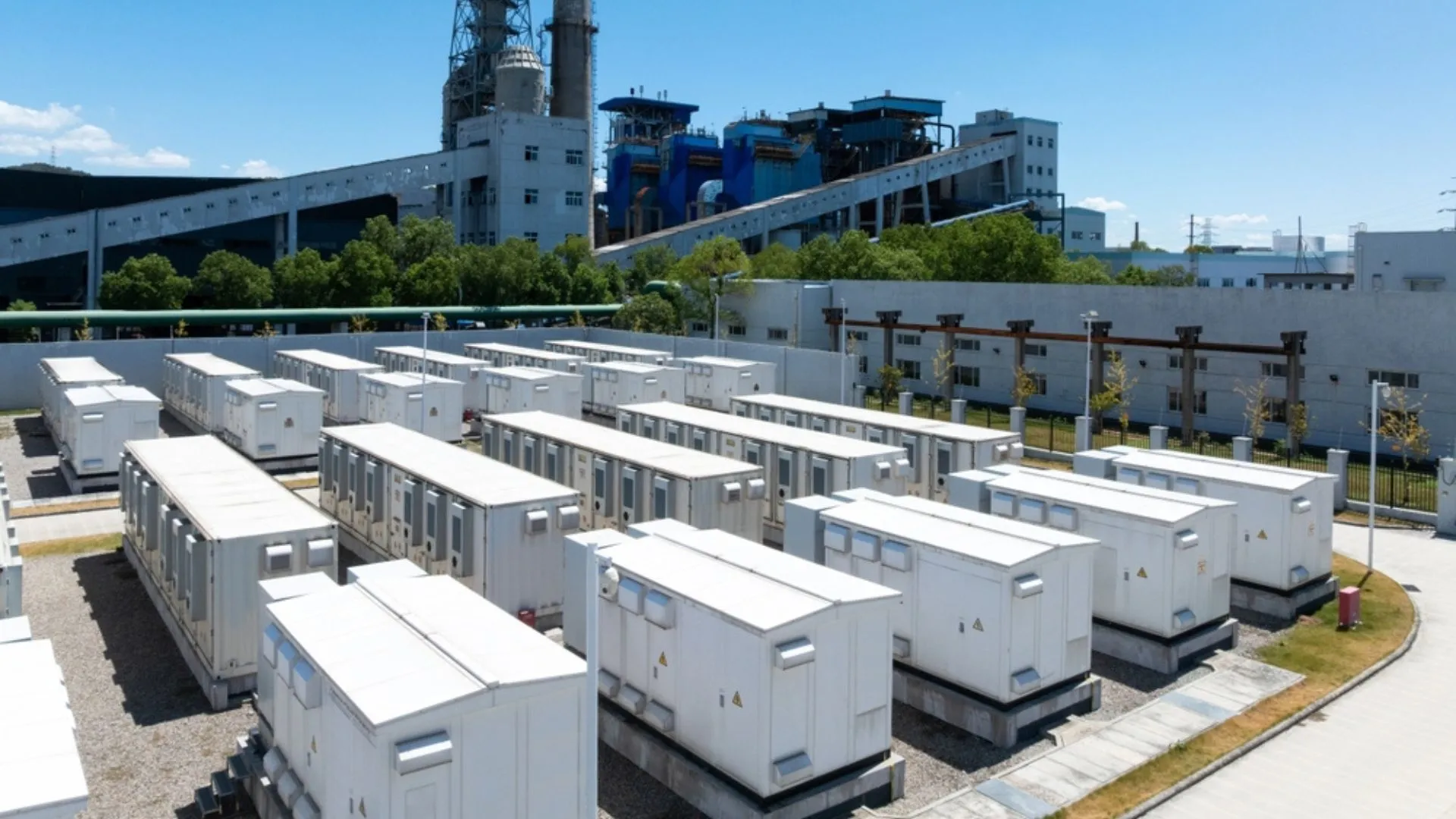
The global market for energy storage has entered a stage of maturity marked by regulatory changes, technological advances and new supply chain strategies. Forecasts for 2026 point to a consolidation of trends that will redefine the role of batteries in the global energy transition.
Global reconfiguration in the supply chain
China’s share remains dominant in all stages of battery supply battery supplyfrom refining critical materials to system integration. However, commercial pressures are forcing manufacturers to diversify geographies. Southeast Asia, the MENA region and Europe are emerging as new manufacturing hubs, while in the US, corporate structures are expected to be redefined to circumvent trade restrictions.
This reorganization will have direct effects on component availability and pricing in the short term, especially in markets with stricter local content requirements.
Promotion of alternative technologies without lithium
The increasing complexity of lithium access is paving the way for lithium-free storage solutions. lithium-free storage solutions. Technologies such as sodium-ion batteries, redox flow systems and iron-air devices are receiving renewed interest from both industry and government.
Markets such as Germany, Australia and California are leading bidding processes that contemplate non-conventional solutions. This shift responds not only to the need for technological diversification, but also to sustainability and strategic security requirements.
New rules of the game in key markets
In 2025, China abolished the obligation to accompany renewables with storage, opting instead for market mechanisms. This decision introduces uncertainty in project financing and could change the pace of growth in 2026. For its part, the United States is maintaining tax incentives for battery systemsbut with conditions that exclude equipment with Chinese components, which complicates logistics.
This regulatory duality between the two most influential economies poses contrasting scenarios and accelerates the repositioning of manufacturers and operators.
Expanding geographies: europe, the middle east and beyond
Public tenders in Europe and the Middle East are boosting the uptake of large-scale storage. large-scale storage. Ireland, Spain and Italy stand out for their acceleration in the awarding of projects, while in the Gulf there is growing interest in solutions that strengthen grid stability in high-demand contexts.
The year 2026 could mean the definitive move of energy storage from technical experimentation to a critical infrastructure for energy management.
Data centers and distributed demand
The rise of the data centers around the world is driving demand for highly reliable storage solutions. These environments require backup capacity and continuous stability, which is positioning storage as an essential component of the digital infrastructure.
At the same time, distributed generation is increasingly integrating storage solutions into microgrids, households and small industries, expanding the application map beyond large grid operators.
Source: Woodmac
Photo: Shutterstock