
The Port of Rotterdam is consolidating its role as the European epicenter of the energy and raw materials transition, with ten strategic projects already under construction or in advanced stages of implementation.
Unlike other energy hubs, the port’s focus is not limited to decarbonization goals, but is committed to heavy industrial infrastructure, capable of sustaining the competitiveness of the chemical, logistics and maritime cluster.
The most relevant fact is that these projects form an integrated system (hydrogen, CO₂ capture, circular olefins and alternative fuels) with the stated goal of achieving a CO₂ neutral port by 2050.
Industrial-scale green hydrogen as a backbone
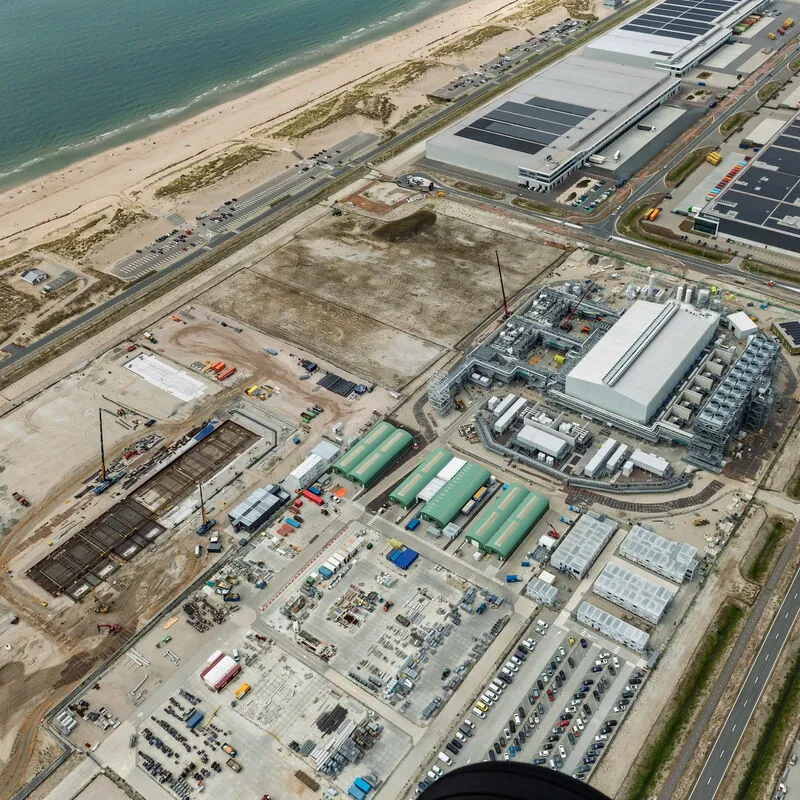
Hydrogen is the technical pillar of the strategy. Air Liquide is building ELYgator, a 200 MW green hydrogen plant, scheduled to come on line by the end of 2027, one of the largest capacities announced in Europe.
In addition, Shell’sHolland Hydrogen I, located in Maasvlakte, will be the first facility to inject green hydrogen into the developing national grid, connecting renewable production with industrial demand.
Projects such as HyCC’s H2Next reinforce this commitment, positioning Rotterdam as a node where hydrogen ceases to be a pilot and becomes an energy and chemical feedstock on a commercial scale.
Capture of CO₂, circular olefins and safe ammonia.
The transition is not limited to hydrogen. The Porthos project has already completed the installation of its 20 km marine pipeline, which will transport captured CO₂ to reservoirs under the North Sea, enabling decarbonization without deindustrialization.
In parallel, Blue Circle Olefins will develop a 100% circular olefins plant, capable of reducing more than 80% of the life cycle emissions of plastics such as PE, PP and PVC compared to traditional fossil processes.
The port is also making progress in the safe supply of ammonia, following successful ship-to-ship trials, a critical step in enabling this energy vector as a clean and scalable marine fuel.
Zero-emission maritime and inland waterway transport already underway
The final link in the transition is transportation. Rotterdam is pushing shore power for cruise ships and container terminals, reducing local emissions and fuel consumption during berthing.
In inland navigation, pioneering projects integrate interchangeable batteries to make electric river transport scalable, attacking one of the most difficult segments to decarbonize.
The most striking fact is that Samskip is building the world’s first container carriers powered by liquid hydrogen, with operation planned from 2027 and with Rotterdam as the supply point, marking a global milestone in clean shipping.
Source:https://www.portofrotterdam.com/
Photo: Martens Multimedia.