
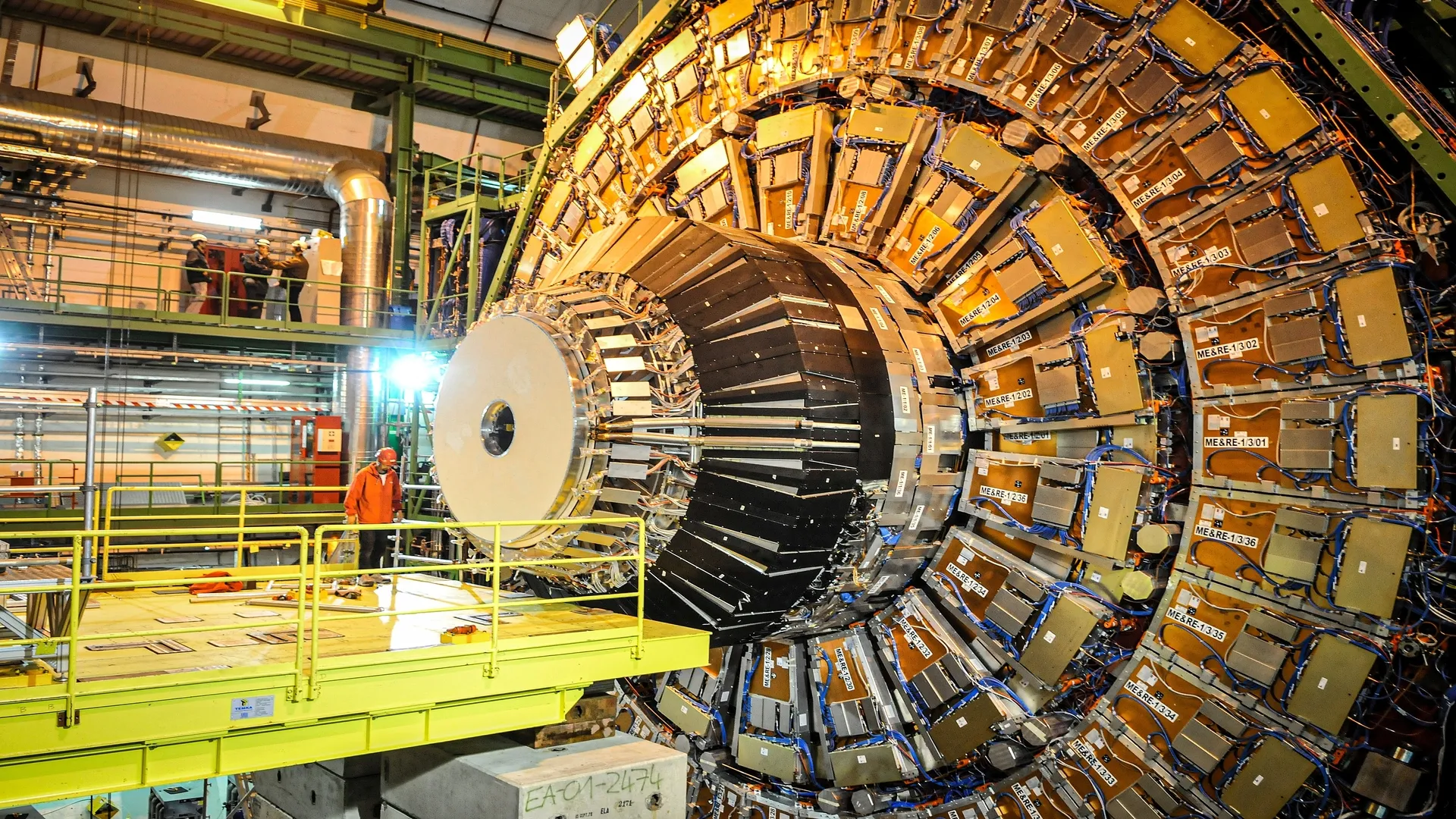
CERN has begun reusing the heat generated by its Large Hadron Collider (LHC) to provide heating for homes and businesses in the French town of Ferney-Voltaire. This new system, operational from January 2026, marks a breakthrough in energy sustainability for one of the most complex scientific facilities on the planet.
A science-driven heating system
The LHC, with its 27-kilometer circumference and cryogenic cooling systems, generates large amounts of heat during its operation. Traditionally, the heat was dissipated through cooling towers, however, thanks to a new heat exchange network installed at LHC Point 8, near Ferney-Voltaire, the hot water that was previously discarded now transfers its energy to the local heating network.
Two 5 MW heat exchangers make it possible to send this thermal energy to thermal energy to the city, reducing the need for gas and other fossil fuel sources. In this first phase, the system provides up to 5 MW of thermal power, although it is planned to double this capacity as CERN’s accelerators are optimized.
Direct benefit for thousands of households
The new heating network supplies a developing residential and commercial area, equivalent to several thousand homes. This system not only represents a cleaner alternative, it also avoids the emission of thousands of tons of CO₂ annually.
Although the LHC will go into technical pause in the summer of 2026 as part of the Long Shutdown 3 (LS3) maintenance plan, part of its facilities will continue to generate useful heat. This will make it possible to maintain a supply of between 1 and 5 MW to the grid throughout the upgrade period, with the exception of a few months.
Part of a broader environmental strategy
This initiative is part of CERN’s energy strategy, aimed at reducing the environmental impact of its activities. The organization complies with ISO 50001 standards and has implemented similar projects in other areas of its infrastructure.
These include the new data center in Prévessin data center at Prévessinwhich will reuse its own heat to heat CERN buildings starting in the winter of 2026/2027. It is also planned to capture thermal energy in the cooling towers of LHC Point 1 to power the Meyrin site.
Together, these actions are estimated to save between 25 and 30 GWh per year starting in 2027.
A connection between science, community and sustainability
Beyond its fundamental discoveries in physics, CERN demonstrates how scientific infrastructure can have a direct impact on the well-being of neighboring communities. By channeling waste heat from its facilities to French homes, it is taking a firm step towards a more efficient and environmentally friendly model.
Source: CERN
Photo: Shutterstock