
Inspenet. February 8, 2026
Confirmed facts
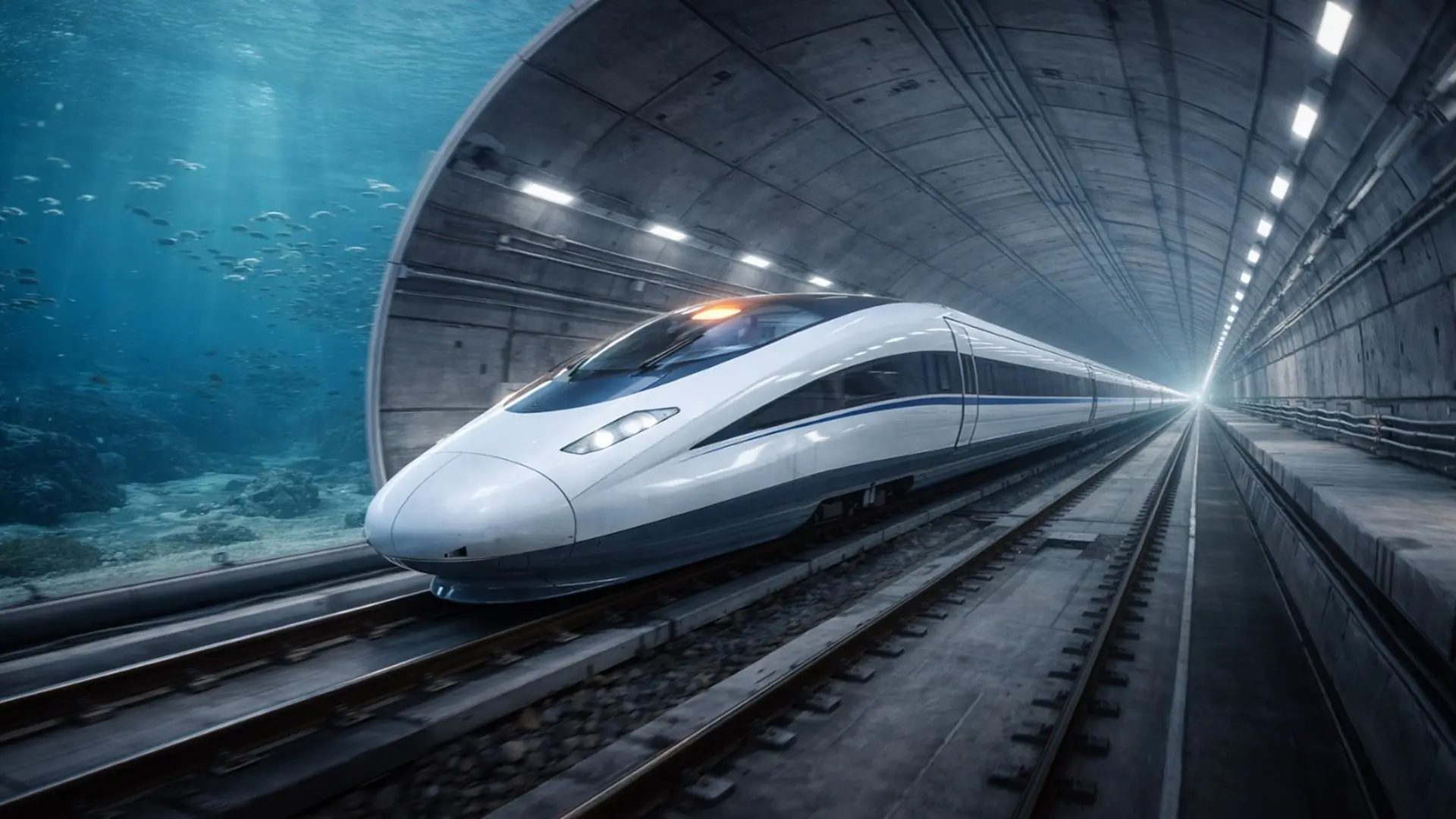
Authorities and engineering consortia have initiated the construction phase of a high-speed submarine railway tunnel that will cross a key maritime corridor in northern China. The alignment comprises more than 120 km of total length beneath the seabed, with operating standards for high-speed trains.
The project has a multi-year budget of tens of billions of dollars and is positioned as strategic infrastructure to strengthen interregional connectivity, with a phased execution horizon.
Technical context of the asset
The construction solution combines large-diameter mechanized excavation, high-performance segmental linings, redundant ventilation, drainage, and fire protection systems. The design incorporates structural resilience criteria for continuous operation in a marine environment, with control of water ingress, corrosion, and material fatigue.
Additionally, the integration of high-speed rail systems requires strict geometric tolerances, power platforms, and signaling systems compatible with sustained operation and predictive maintenance in a limited-access environment.
Operational importance of the area
The submarine corridor connects industrial and port hubs with high cargo and passenger flows. Reducing land–sea transit time has a direct impact on logistics, regional supply chains, and operational reliability for mobility-intensive industrial sectors.
The alignment’s location in an exposed marine environment requires coordinating construction windows with oceanographic conditions and establishing safety protocols for simultaneous works at underground faces.
Geopolitical / regulatory context
The initiative is part of the country’s strategic infrastructure investment agenda, aimed at closing connectivity gaps and strengthening key economic corridors. The scale of the project requires inter-institutional coordination, specific environmental permits, and adherence to regulatory frameworks for submarine railway operation.
Market impact
The advancement of this type of megaproject reinforces demand for advanced engineering solutions, high-capacity tunneling equipment, specialized materials, and structural integrity services. For industrial suppliers, opportunities open in power systems, ventilation, structural monitoring, geotechnical instrumentation, and condition-based maintenance.
What’s next?
The next phases include consolidating the excavation fronts, deploying TBM equipment, and implementing seismic and deformation monitoring systems during construction. The definitive commissioning schedule will depend on performance in the initial stages and on geotechnical risk management in the most complex sections.