The recent development of a master's degree program in Mechanical Engineering Sciences at the Azuero Regional Center marks a significant change in Panama's educational landscape. Led by Dr. Nacarí Marín Calvo, a full-time professor at the Technological University of Panama (UTP), this program is being implemented for the first time outside the capital city, with the objective of training high-level professionals in a region traditionally characterized by an agricultural economy.
With the support of SENACYT (National Secretariat of Science, Technology and Innovation), the master's program offers full scholarships, monthly stipends and resources for laboratory equipment. This support allows students to dedicate themselves full time to their training, a fundamental condition for the development of research applied to local problems.
One of the most striking aspects of the program is the variety of topics that students address in their theses, from the design of solar dryers with phase change materials to the application of artificial intelligence in exoskeletons, the projects are not only innovative, but also designed to respond to specific needs in Panama.
The students also research robotic solutions and develop automation tools with a local focus. The idea, according to Dr. Marín, is for the young people to apply their knowledge in real contexts and, eventually, to be able to continue their doctoral studies abroad and then return to contribute to the development of their communities.
Participation in events such as AMPP LATINCORR allows students to learn first-hand about current industry challenges. This type of meeting opens spaces for dialogue with experienced professionals, strengthens practical learning and contributes to networking.
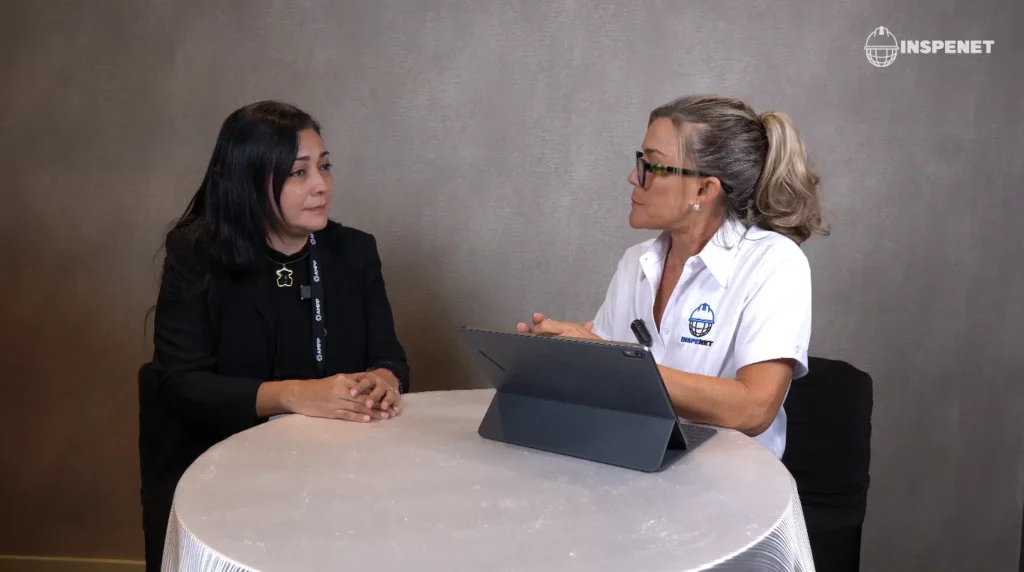
During the interview conducted at this event, Dr. Marín highlighted the importance of exposing students to real scenarios, in which they can understand applied engineering problems, especially in fields such as corrosion and energy efficiency, and the development of emerging technologies.
Although female participation in the program is still limited, the presence of figures such as Dr. Marín represents a step towards greater inclusion. Currently, one of the six people enrolled in the program is a woman, but the trend points to greater openness.
The program also represents an economic opportunity for many students, as the scholarship allows them to study and, in a sense, work at the same time. In addition, UTP can access funds to upgrade its facilities and foster international experiences through internships, which broadens the professional vision of the participants.
One of the main challenges of the program is to stay aligned with global trends in mechanical engineering. Automation, robotics and artificial intelligence are areas that are already being addressed in students' theses, but require constant updating of content, methodologies and resources.
The program currently has six students, but the next cohort, scheduled for March, could include up to ten. This gradual growth guarantees personalized attention, while reinforcing the local impact of the project.
For more content about LatinCORR 2025, please visit our YouTube channel and our LinkedIn profile.
Source: Inspenet.