
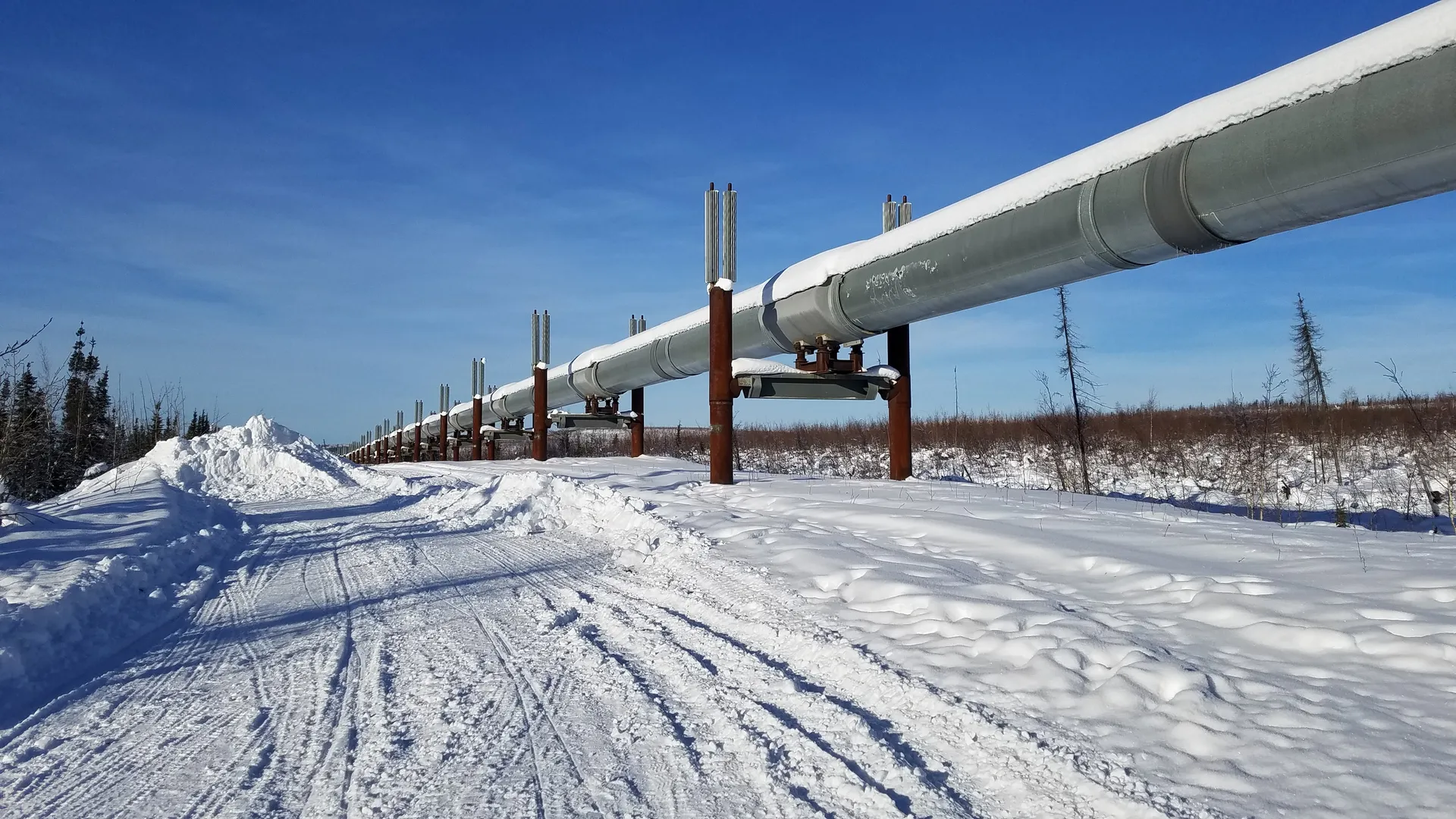
The severe winter storm Fern crippled part of the U.S. energy infrastructure over the past weekend, causing temporary losses of up to 2 million barrels per day (bpd) in crude oil production, representing about 15% of the national total.
Analysts such as Energy Aspects confirmed that peak outages were reached on Saturday. Although a gradual recovery is expected, the impact has exposed the industry’s vulnerability to extreme weather events.
Impact on crude oil production
The Permian Basin, one of the most important regions for oil production in the US, suffered most of the damage. Estimates indicate a loss of up to 1.5 million bpd, resulting from frozen equipment, blocked hatches and mechanical failures due to low temperatures.
Companies such as Chevron reported frozen hatches at its Midland, Texas, facility. ConocoPhillips reduced its production by at least 175,000 bpd, according to sources close to the operation.
Impact on natural gas
Winter storm Fern also hit natural gas production very hard, with the natural gasThe effects were felt immediately in the markets; gas futures rose nearly 30% in a single day, reaching $6.80 per million dollars per million dollars per day (bcfd). The effects were immediately felt in the markets; gas futures rose nearly 30% in a single day, reaching $6.80 per million BTU, their highest level since December 2022.
In North Dakota, the country’s third largest oil producer, production fell between 80,000 and 110,000 bpd, while wellhead gas also suffered significant declines.
Refineries paralyzed by extreme cold
Several refineries on the Gulf Coast and in the Midwest were forced to suspend operations. ExxonMobil shut down units at its Baytown, Texas petrochemical complex and Cenovus Energy reported mechanical failures at its 172,000 bpd capacity Lima, Ohio plant, whose restart could be delayed until the end of the week.
Outages were also reported at facilities of companies such as Occidental Petroleum and Targa Resources, with at least a dozen failures at compressor stations and natural gas processing plants.
The electrical system under pressure
More than 810,000 customers remained without power Monday as a direct result of the weather event. Southeastern and Gulf Coast states were the hardest hit, including Texas.
The PJM Interconnection power grid, the largest in the country, reported generation outages equivalent to 16% of its committed capacity, which represented some 22.4 GW out of service. Despite this pressure, demand was met, although spot electricity prices climbed to US$200 per MWh on average.
In areas such as New England, daily prices rose 82%, while in PJM West (Pennsylvania and Maryland) increases exceeded 360%, reaching the highest levels since January 2014.
Recovery underway, but with caveats for the future
According to forecasts, full production could be fully restored by January 30, weather permitting. Even so, this new episode makes clear the need to strengthen the prevention prevention and response protocols and response protocols throughout the energy chain.
Meanwhile, the market is closely watching operations in the Permian Basin, refinery performance and the evolution of the power grid in the regions most affected by the winter storm.
Source: Reuters
Photo: Shutterstock