
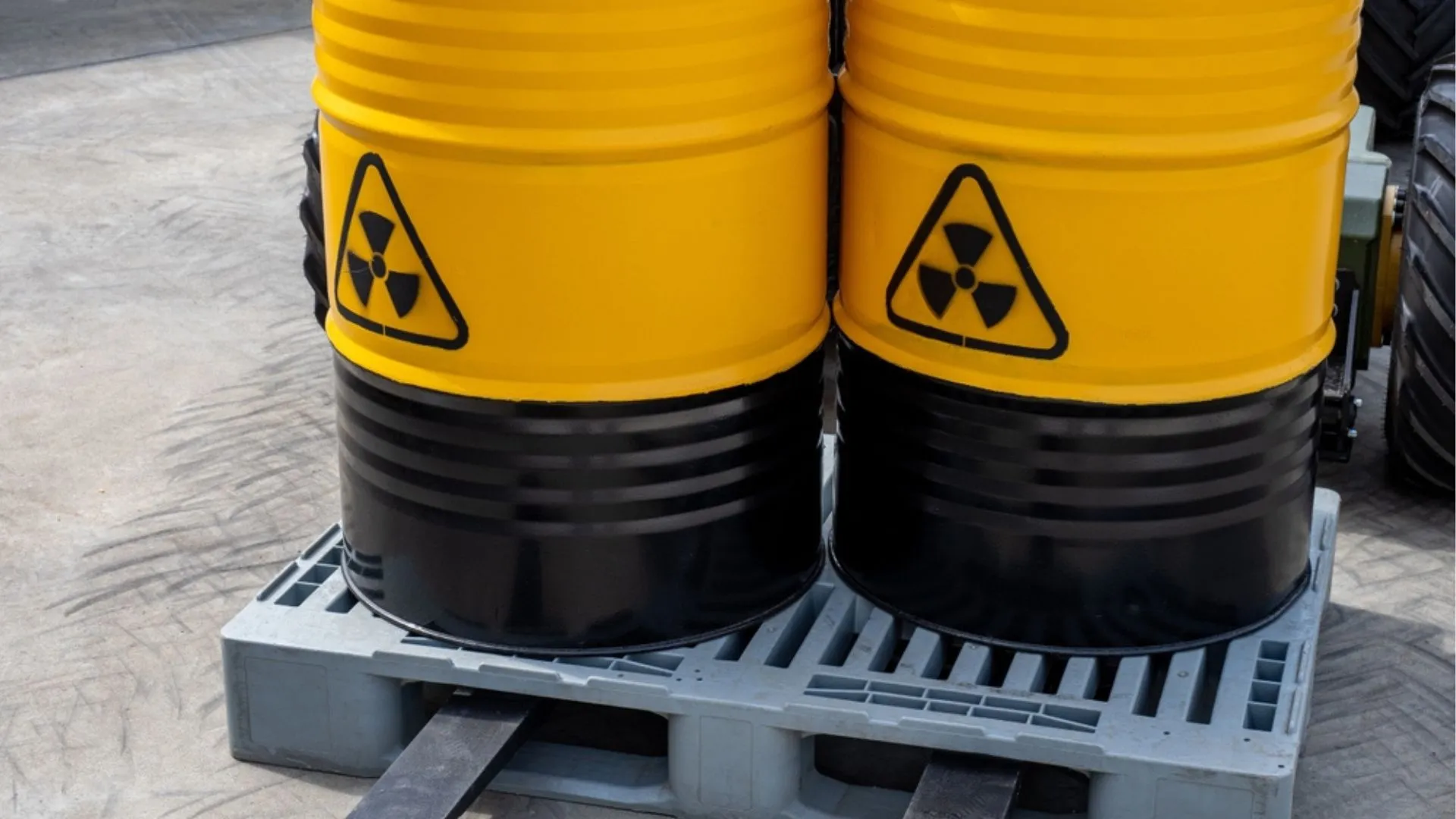
The U.S. Department of Energy is contemplating a new strategy to expand its nuclear capacity: offering incentives to states that agree to host nuclear waste in secure facilities. The proposal, which has not yet been officially confirmed, would mark a shift away from the single centralized model that was attempted with the failed Yucca Mountain project in Nevada.
A strategy to unlock nuclear development
The U.S. nuclear industry has been constrained for decades by a lack of consensus on where to store its waste. Currently, these materials remain at the plants themselves, stored temporarily in ponds and containers. The new approach seeks to address that barrier by allowing individual states to voluntarily participate in agreements that would allow them to build subway confinement facilities in exchange for energy and financial benefits.
According to sources familiar with the plan, the Department of Energy will begin discussions this week to identify states interested in participating. These agreements could include additional incentives for waste reprocessing and uranium enrichment projects. uranium enrichmenttechnologies that, while controversial, could significantly reduce the volume of waste.
Nuclear waste storage and political context
Since the political closure of the Yucca Mountain project under the Obama administration, the country has no permanent site for radioactive waste. The current proposal puts forward a decentralized solution based on state cooperation, following the principle of “informed consent”.
The Trump administration has expressed interest in quadrupling U.S. nuclear capacity to 400 gigawatts by 2050, driven by growth in electricity demand, especially from the expansion of data centers linked to artificial intelligence and cryptocurrencies.
However, some sectors continue to show reluctance, citing safety risks associated with reprocessing, such as the potential diversion of radioactive materials for non-peaceful uses. Nuclear nonproliferation organizations warn of the technical and geopolitical challenges of reintroducing this practice on a large scale.
Energy transition and global competition
The proposal is part of a global race to secure clean and secure energy sources. While countries such as France, China and Russia continue to invest in reprocessing and deep geological storage, the United States is seeking to regain leadership in the sector with a policy based on state incentives and local participation.
The success of this approach will depend on the willingness of the states to assume responsibility for managing highly toxic waste and the ability of the federal government to build confidence in its long-term safety plans.
For now, the Department of Energy has indicated that there are no official decisions, but signs point to an opening towards a more flexible model. an opening toward a more flexible, negotiated model negotiated model that could redefine America’s nuclear future.
Source: Reuters
Photo: Shutterstock