
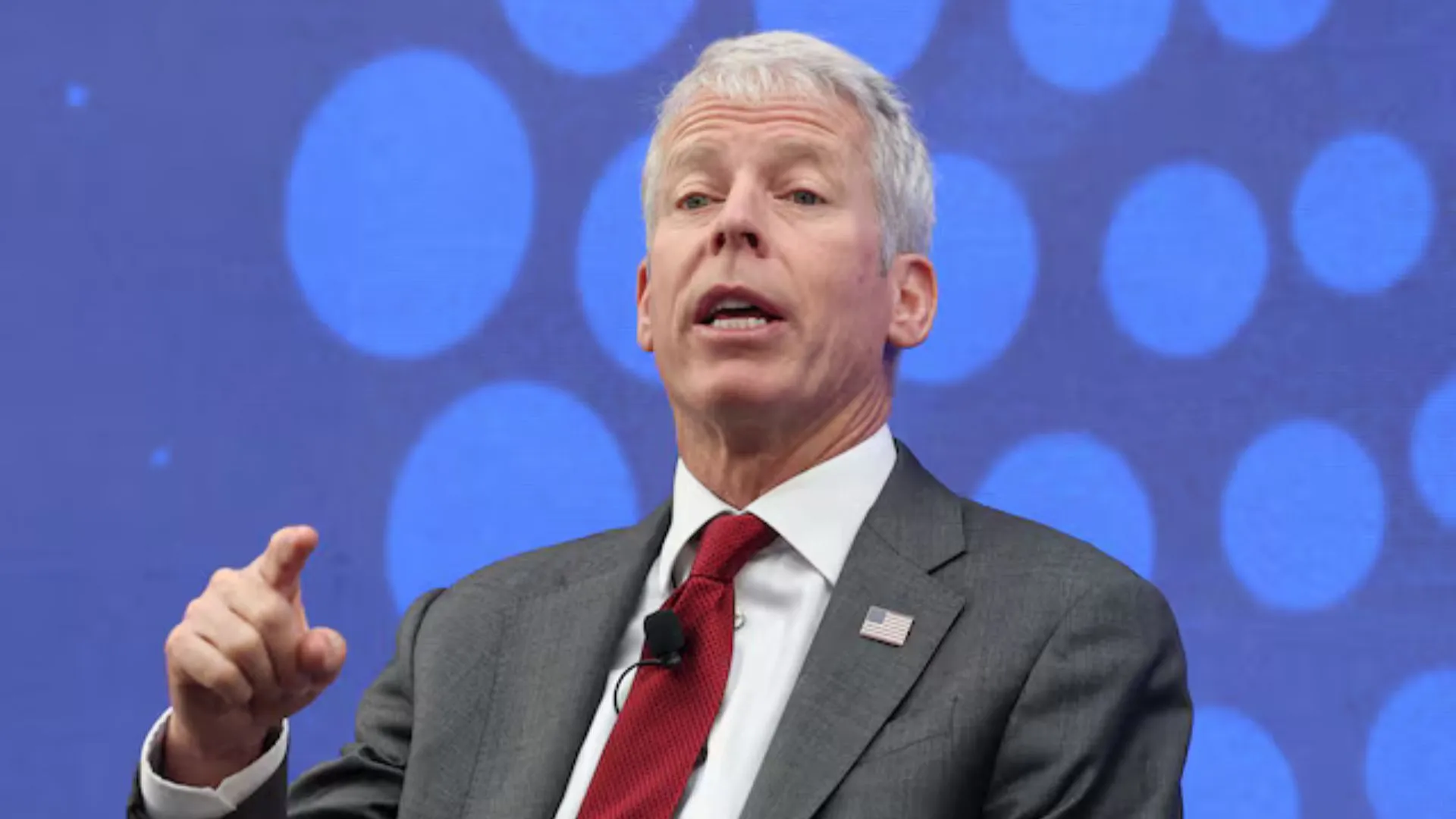
Speaking at the World Economic Forum, held each year in the Swiss city of Davos, U.S. Secretary of Energy Chris Wright surprised by calling for a doubling of world oil production as a direct response to global energy poverty. His speech marked a sharp contrast to the dominant approaches of recent years, which have focused on decarbonization and energy transition.
Criticism of green energy and environmental regulations
Wright did not hesitate to point to the European Union and the state of California as examples of environmental policies that, in his words, have proven inefficient and costly. In his conversation with Vicki Hollub, CEO of Occidental Petroleum, he insisted that the world will be dependent on oil for decades to come and that investing in fossil fuels remains crucial to ensure energy security.
The secretary argued that corporate environmental regulations in Europe – such as those relating to methane – could hinder energy cooperation with the United States. These rules require exporters to report associated emissions, which Wright said makes it difficult for exports of liquefied natural gas (LNG). (LNG).
California at the center of the energy debate
Both Wright and Hollub directly criticized California’s policies. Hollub attributed Occidental’s exit from the state to excessive regulations, while Wright pointed out that these measures have raised energy prices for consumers. Two key refineries are close to closing, representing 17% of Occidental’s gasoline refining capacity. gasoline refining capacity California’s gasoline refining capacity.
Currently, crude oil production in the state has fallen to 300,000 barrels per day, well below its historical peak of 1.1 million in 1985. This drop, coupled with California’s logistical isolation from other refining centers, has led to volatility in fuel prices.
Pressure on the EU and regulatory pushback
In Europe, pressure from industry and certain governments has led to a reduction in corporate sustainability requirements. Although this is intended to facilitate energy trade, some investors have warned that reduced transparency could make it difficult to assess real commitments to decarbonization.
Wright believes that to avoid a prolonged energy crisis, a pragmatic policy is required: expanding oil, reducing regulatory barriers and improving transatlantic cooperation.
Doubling oil production and its global impact
The International Energy Agency estimates that the current oil supply is around 107.4 million barrels per day. Given that figure, Wright argues that doubling that capacity is necessary to address energy poverty in many regions of the world.
The declaration has reignited the global debate on the feasibility of a balanced economic, environmental and social energy transition.
Source and photo: Reuters