
Table of Contents
- What is an oil terminal, and what is its operational function?
- Role in the energy supply chain
- Operational sustainability in modern oil terminals
- Types of oil terminals and their classification
- Operations at an oil storage terminal
- Critical assets in an oil terminal
- Instrumentation, automation, and safety systems
- What does integrity mean in the context of a terminal?
- Conclusions
- References
- Frequently Asked Questions (FAQs)
An error during a loading maneuver, an incorrectly positioned valve, or a pipe with undetected corrosion at an oil terminal are unlikely to attract immediate attention, despite their high operational risk potential… until the facility shuts down. At that point, what appeared to be a “simple” logistics facility reveals its true nature: one of the most critical, complex, and exposed assets in the energy chain.
Oil terminals are not just hydrocarbon storage facilities; they are industrial ecosystems where precision engineering, process safety, and asset management converge to sustain the global energy flow. At these facilities, asset management is integrated with criteria for operational sustainability, advanced automation, and risk control, raising the standard for performance and reliability.
Understanding what it is, how it works, and what its critical assets are is the first step in managing these facilities with high operational capacity criteria and not just from a mere regulatory compliance standpoint.
What is an oil terminal, and what is its operational function?
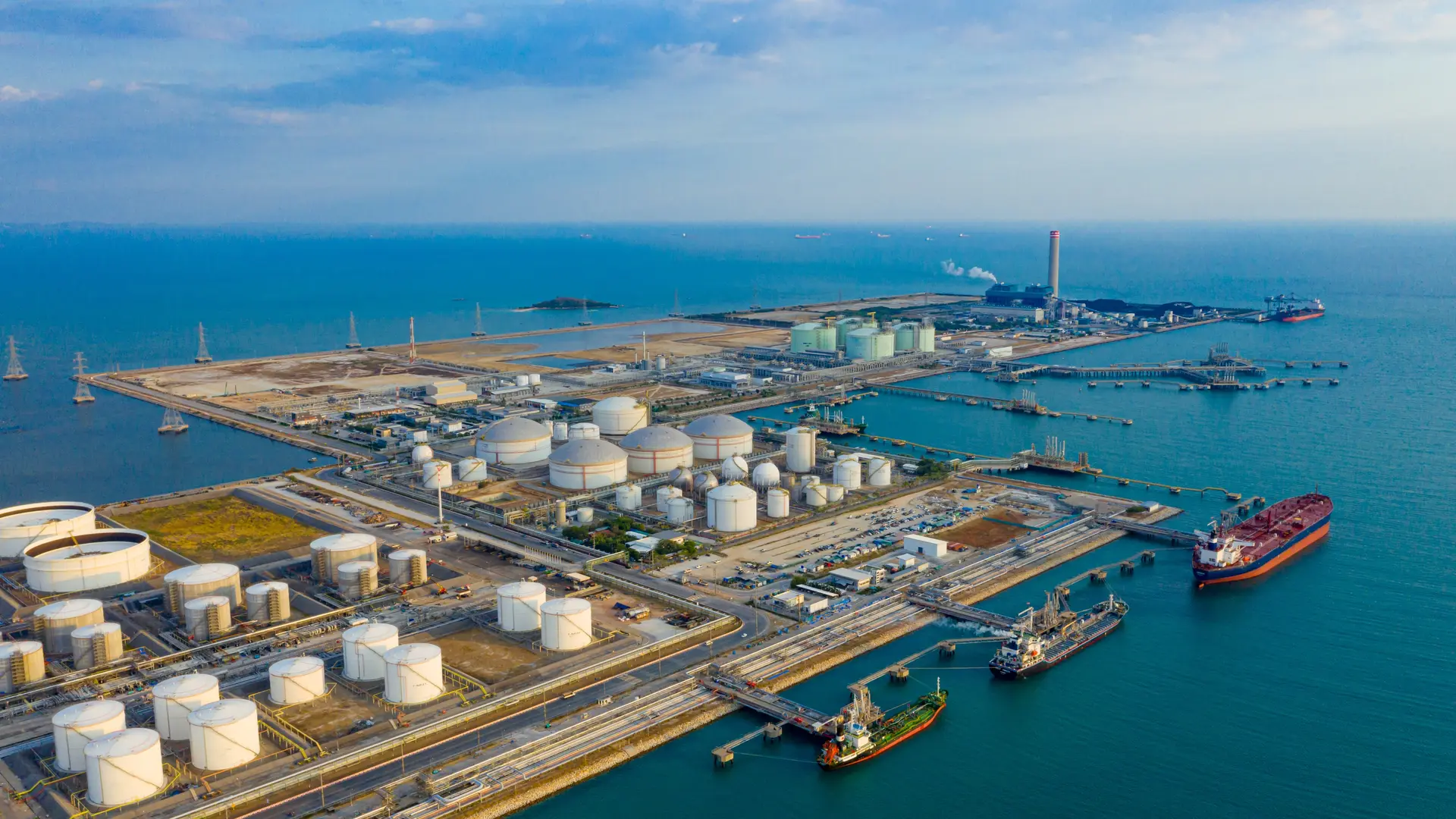
An oil terminal is an industrial facility designed to receive, store, transfer, and dispatch crude oil and oil products in a safe, controlled, and efficient manner. It is the hub that allows for the decoupling of production and consumption.
Unlike a refinery, the terminal does not chemically transform the product, limiting itself to physical operations such as storage, blending, and conditioning; its added value lies in ensuring availability, operational flexibility, and logistical continuity of supply in the face of market fluctuations.
Depending on its geographical location, logistical connectivity, and commercial purpose, a terminal can perform functions such as:
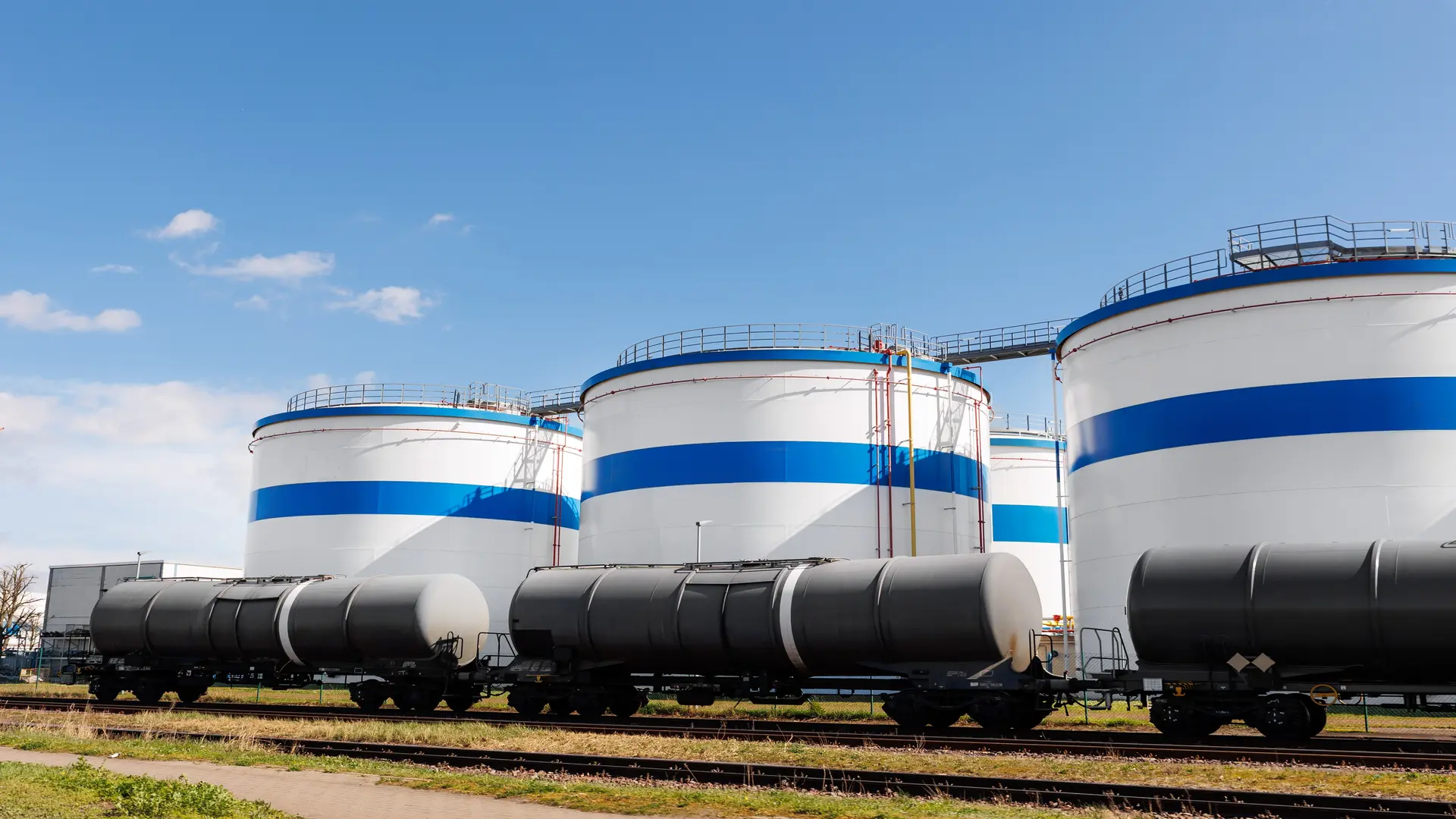
- Receiving crude oil or refined products from long-distance pipelines, deep-draft oil tankers, or railroad cars.
- Operating as a storage tank terminal for strategic (national reserves) or commercial (custody transfer) purposes.
- Blending, segregation, and product conditioning (additive injection) processes to meet final market specifications.
- Controlled and monitored dispatch to ships, tanker trucks, or rail cars for final distribution.
Role in the energy supply chain
From the perspective of the global energy system, the terminal acts as the physical hub connecting the upstream (exploration and production), midstream (transportation), and downstream (refining and marketing) sectors.
A local failure at an oil terminal can spread rapidly, creating a domino effect throughout the supply chain; this can affect crude oil prices and fuel availability at gas stations.
Operational sustainability in modern oil terminals
In a modern oil storage terminal, sustainability is not managed as an abstract corporate concept, but as an operational variable directly linked to efficiency, loss control, and regulatory compliance.
Reducing fugitive emissions, preventing spills, and optimizing energy consumption are part of the terminal’s design and daily operations, making energy efficiency an operational KPI and relying on increasingly integrated automation and control systems.
One of the main focuses is the control of Volatile Organic Compounds (VOCs) during storage and transfer. To this end, vapor recovery systems (VRUs), controlled thermal destruction technologies, and high-efficiency seals on floating roofs are used. Added to this are vapor balancing practices during truck and ship loading, which reduce emissions, product losses, and fire risks.
Operational sustainability is also supported by spill prevention through secondary containment, controlled drainage, and continuous monitoring of oily water, reinforcing asset integrity and the social license to operate.
Types of oil terminals and their classification
Terminals differ in terms of the product they handle, their logistical function, and the predominant mode of transfer. This classification makes it possible to identify where risks are concentrated and which assets are a priority.
From a maritime perspective, an oil storage terminal is classified according to its mooring and transfer configuration into jetty terminals, offshore terminals using single pontoons (SPM), and ship-to-ship (STS) systems.
According to their logistical function
Import terminal
Generally located in coastal areas or deep waterways. They function as the gateway for energy to a country or region with a hydrocarbon deficit; they have large drafts to receive supertankers (VLCC or Suezmax) and require high-capacity pumping systems to quickly unload ships into onshore tanks.
Export terminal
Strategically designed to transport domestic oil field production to international markets, reliability is a matter of national security here. In this context, the availability of buffer storage capacity is critical to avoid interruptions in continuous oil well production due to vessel delays caused by adverse weather conditions or logistical constraints.
Distribution terminal
These bring the refined product closer to the final consumption centers (cities, airports, industrial areas). They are high-traffic land facilities. They are characterized by a high rate of dispatch via tanker trucks (loading racks) and require automated access control and on-site billing systems.
By product
Crude oil terminals
They handle large storage volumes and large-diameter tanks. Crude oil contains water and sediments, which cause sludge to settle at the bottom; therefore, the tanks require agitation systems (mixers) and frequent cleaning to prevent loss of useful capacity due to the accumulation of sludge (oily sludge).
As a technical supplement, the following video from Inspenet TV shows a passive mixing technology in industrial tanks, based on the Venturi principle, which improves product homogenization without additional energy consumption.

Refined product terminals
They handle different products simultaneously (gasoline with different octane ratings, jet fuel, diesel, biofuels). They have high turnover. They maintain extreme precision in dispatching. The complexity lies in avoiding contamination between incompatible products and maintaining quality (specification) until delivery.
According to the predominant mode of transfer
Maritime terminal
Docks, jetties, and maritime loading arms concentrate the risk profile due to high mechanical demands, relative ship/structure movements, and variable environmental conditions during loading and unloading operations.
Pipeline terminal
Criticality focuses on pumping systems, hydraulic transient control, manifold operation, and operational isolation, which are essential for preventing overpressure and containment loss events.
Rail and truck terminal
These terminals have high operational cyclicality and multiple connection points. Risk management focuses on loading racks, hoses, valves, fiscal metering, and strict alignment control to prevent operational errors and spills.
Operations at an oil storage terminal
The operation of a terminal is based on a continuous cycle of fluid movement and rest, where precision is mandatory and errors are not permitted. Terminal operations are divided into three macro stages:
Product reception
The operating cycle begins with reception, which may come from pipelines, oil tankers, tank trains, etc. This stage is critical because it defines the quantity and quality of the inventory that enters the plant’s balance sheet.
It involves high-precision custody transfer metering systems, flow control, and secure routing through manifolds. Terminal operations at this stage are critical: an error can result in cross-contamination of products (e.g., mixing diesel with gasoline in a tank), degrading the commercial value of the entire batch.
In addition, incorrect measurements at receipt result in massive financial losses due to volume discrepancies and legal disputes between the sender and receiver of the product.
Storage and inventory management
Once received, the product is stored in the storage tank terminal, which requires constant monitoring of levels (radar), average temperature, and vapor pressure.
Inventory management requires preventing product stratification and ensuring homogeneity. The actual availability of the terminal depends directly on the mechanical integrity of its tanks and accessories.
A tank out of service due to unplanned maintenance reduces installed commercial capacity, limiting flexibility to receive new shipments and generating opportunity costs.
Transfer and dispatch
Dispatch is the phase of greatest mechanical, hydraulic, and operational stress. Products are transferred by high-capacity pumping systems to the final delivery points. Here, the reliability of dynamic and static equipment, such as the marine loading arm, is critical. This equipment defines the throughput or loading speed.
Any delay at this stage impacts compliance with vessel laytime, generating demurrage fines that can amount to tens of thousands of dollars per day.
Critical assets in an oil terminal
Although there are multiple auxiliary systems in a terminal, such as firefighting water, compressed air, and industrial services, four physical asset systems concentrate the greatest technical and operational risk due to their direct impact on capacity, safety, and service continuity.
Storage tanks
The set of tanks that make up a marine terminal represents the largest capital investment (CAPEX) and the main determinant of an oil terminal’s operational capacity. These structures are designed according to standards such as API 650, and their condition directly defines the commercial availability of the terminal.
Their integrity is constantly threatened by internal corrosion associated with free water settling out of crude oil, sediment accumulation, and bacterial activity at the bottom. This is compounded by external corrosion linked to the saline environment at coastal terminals and the deterioration of coating or cathodic protection systems.
In addition, mechanical aspects such as differential soil settlement, hull ovalization, or abnormal floating roof behavior can limit maximum filling height, reduce effective capacity, and create operational constraints.
Piping systems and manifolds
Pipes form the arterial network connecting tanks, pumps, manifolds, and loading points. In large-scale terminals, this network can extend for tens of kilometers and operate under highly dynamic conditions.
Frequent changes in pressure, flow rate, and temperature (thermal expansion) expose pipes to mechanical fatigue, stress on supports, and stress concentrations at joints and welds. The most common damage mechanisms include internal corrosion, erosion-corrosion due to turbulent flow, and localized deterioration at welds.
Loading systems
Loading systems, including the articulated marine loading arm and flexible hoses, constitute the most exposed interface from an operational and environmental standpoint. During operation, they are subjected to cyclic mechanical stresses, relative movements between the ship and the dock (tides, waves), hydraulic transients (water hammer), and a highly corrosive marine environment.
A failure of an arm or hose during transfer causes immediate shutdowns of the operation, resulting in direct spills into the water body and amplifying the environmental, economic, and reputational impact of the event.
Pumping systems
Pumping systems are a critical asset for terminal operational reliability, defining actual throughput and conditioning the hydraulic behavior of the entire facility.
Loading, unloading, and transfer pumps are directly associated with phenomena such as water hammer, vibrations, cavitation, and overpressure, which can accelerate the deterioration of pipes, manifolds, and loading systems. Their unavailability, even without loss of containment, can completely paralyze terminal operations. This impacts the efficiency, safety, and useful life of upstream and downstream connected systems.
Instrumentation, automation, and safety systems
In a modern storage terminal, instrumentation, automation, and safety systems are not managed as separate mechanical assets, but as a mandatory cross-functional system that enables the control and protection of all the above physical systems.
Certified fiscal measurement, automatic valve and pump control, and Terminal Management Systems (TMS) reduce dependence on human factors and ensure traceability, repeatability, and operational control.
Added to this are API 2350-compliant overfill prevention systems and Safety Instrumented Systems (SIS), which act as final barriers or “last line of defense” when operational control fails, bringing the facility to a safe state.
What does integrity mean in the context of a terminal?
In the context of an oil terminal, “integrity” goes beyond the simple absence of leaks. It is defined as the system’s ability to contain the fluid under all anticipated operating conditions, and some unforeseen conditions throughout its life cycle.
Mechanical integrity ensures that equipment (tanks, pipes, pumps, and loading systems) is fit for service, maintaining its physical properties. However, integrity also encompasses the functionality of safety systems (instrumentation, relief valves) that must act when process control fails.
An integrity terminal is not one that never fails, but one that manages its safety barriers so that risk is kept at acceptable levels (ALARP), ensuring that hydrocarbons remain within the containment system from receipt to dispatch.
In modern terminals, this integrity increasingly relies on real-time data, automation, and functional protection systems that reduce the likelihood of major events.
Conclusions
An oil terminal should be conceived as an integrated operating system. Overall reliability is not associated with a single piece of equipment, but rather with the combined performance of its storage tanks, pipeline networks, loading systems, and pumping systems. The integrity and operational efficiency of these critical assets define the terminal’s effective capacity, the level of risk control, and the logistical continuity of operations.
Managing a terminal with technical criteria based on risk and asset condition is the only way to reduce unplanned downtime, protect the environment, and ensure the stability of the energy supply.
References
- B, Zimberg. E, Camponogara, E, Ferreira. (2015). Reception, mixture, and transfer in a crude oil terminal. https://doi.org/10.1016/j.compchemeng.2015.07.012
- https://es.wikipedia.org/wiki/Terminal_petrolera
Frequently Asked Questions (FAQs)
How big are oil terminals?
They vary enormously in size, from small distribution terminals with a capacity of 50,000 barrels to gigantic strategic reserve terminals or export hubs that store well over 20 million barrels, occupying hundreds of hectares of land.
What are the uses of oil in a terminal?
At the terminal, oil is not “used” for consumption, but rather managed: it is stored to meet future demand, blended to obtain specific qualities, held in custody for commercial ownership changes, and consolidated to optimize mass transportation logistics.
What is the purpose of an oil terminal?
They serve as buffers in the supply chain, allowing oil production to remain constant even when consumption fluctuates, and facilitating the change of transport mode (e.g., from ship to pipeline) in a safe and measured manner.
What is the difference between a terminal and a refinery?
The main difference is the process: the refinery chemically and physically transforms crude oil into derivatives (gasoline, plastics), while the terminal only handles logistics: receiving, storing, and dispatching the product without chemically altering it.