
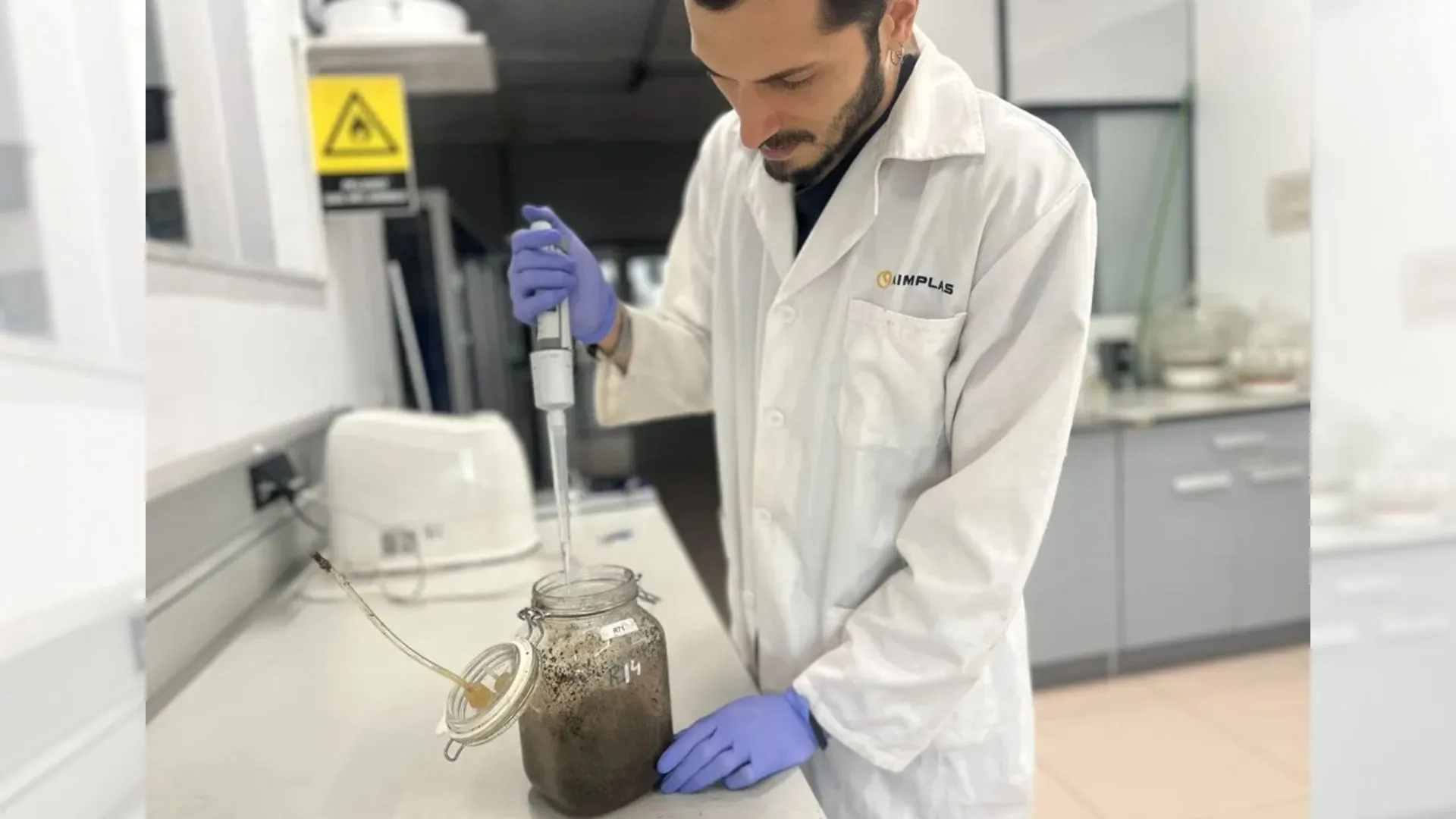
The production of bioplastics compostable is growing worldwide as an alternative to petroleum-derived materials. However, their correct degradation in composting plants or anaerobic digesters remains a technical challenge. Often, these systems do not have the necessary microbial conditions to ensure complete decomposition.
In order to solve this limitation, the AIMPLAS technology center is leading the MICROFAGO project, which proposes the use of specific combinations of microorganisms and natural phages to facilitate the biodegradation of bioplastics in existing treatment infrastructures, without the need for costly modifications.
Microbially supported biodegradation of bioplastics
The process proposed by MICROFAGO is based on a double mechanism. On the one hand, phages designed to attack bacteria that hinder decomposition are applied. On the other hand, a consortium of microorganisms specialized in degrading compostable polymers is introduced to reinforce the biological activity of the system.
This approach allows maintaining optimal conditions for biodegradation without altering plant performance. The selection and scaling of biological agents is carried out at laboratory, pilot and industrial levels, ensuring the technical feasibility of the process.
Scientific-business collaboration and institutional backing
At MICROFAGO involves entities such as the University of Valencia, Darwin Bioprospecting Excellence, Evolving Therapeutics and the waste management company Girsa. The project has the financial support of IVACE+i and FEDER funds, which reinforces its projection within the framework of the circular economy.
AIMPLAS’ strategy seeks to align the development of biotechnological biotechnological solutions with the operational needs of the sector.
The key is to introduce this technology in the real conditions of the industrial environment.
explained Giovanni Gadaleta, AIMPLAS researcher.
Environmental impact and value for the waste sector
The incorporation of this technology into current processes could significantly improve the efficiency of composting biodegradable plastics, accelerating their conversion into biomass and reducing the risk of persistent fragments.
For treatment plants and management companies, it is a solution that provides immediate value: it allows composting standards to be met without investing in new infrastructure, while reducing the environmental impact of the waste, and it is a solution that provides immediate value: it allows composting standards to be met without investing in new infrastructure, while reducing the environmental impact of the waste. environmental impact environmental impact of the waste.
MICROFAGO represents a relevant technical step towards the consolidation of more sustainable systems for handling compostable materials, integrating science and direct application in a real operational environment.
Source and photo: AIMPLAS