

Table of Contents
- Energy efficiency as the operational core of downstream
- Regulatory framework and energy efficiency in eefineries
- Main sources of energy inefficiency in refineries
- Operational strategies to improve energy efficiency
- Process Electrification and Energy Efficiency
- Digital twins and energy optimization
- Green hydrogen and the energy transition
- CCS and asset integrity
- Emissions regulations and standards from 2026
- Complementary material: Offshore risk simulation
- Conclusions
- References
- Frequently Asked Questions (FAQs)
- Why is energy efficiency key for refineries in 2026?
- How does energy efficiency impact a refinery's profitability?
- What role do digital twins play in refinery efficiency?
- Is the electrification of processes in existing refineries feasible?
- How does green hydrogen contribute to reducing emissions?
- What risks does the integration of CCS in refineries introduce?
- Why are non-destructive tests key to energy efficiency?
- How do upstream and midstream operations influence refinery efficiency?
- What regulations promote energy efficiency in refineries?
- Why is energy efficiency a financial strategy and not just an environmental one?
Energy efficiency is defining refinery profitability as we move into early 2026. Operational decarbonization demands the optimization of thermal resources to reduce emissions. This shift responds to global regulations and EPA standards, allowing operators to lower costs and ensure the viability of their industrial assets in competitive environments. The integration of technology and real-time monitoring facilitates precise solutions. Sector leaders are using these advancements as a technical benchmark to solve current operational problems. This exchange of knowledge strengthens sustainability throughout 2026, aligning profitability with the industry’s current environmental requirements.
Energy efficiency as the operational core of downstream
Starting in 2026, the energy sector faces growing pressure to maintain operational continuity under stricter environmental regulations and highly competitive energy markets. In this context, optimizing energy performance has become a strategic factor for refineries and industrial operators, as it allows for cost reduction, compliance with emission limits, and the preservation of asset profitability without compromising safety or process reliability.
Energy efficiency has consolidated as the operational axis upon which modern refineries structure their technical and strategic decisions. In an environment of tight margins, regulatory pressure, and increasing decarbonization goals, optimizing energy use is one of the most effective variables for simultaneously improving profitability and environmental performance.
In practice, leading refineries use indicators such as the Energy Intensity Index (EII) and carbon intensity per barrel processed to evaluate the daily performance of their units, prioritize investments, and justify operational adjustments. This approach allows them to identify energy losses, anticipate thermal deviations, and sustain continuous improvements in refinery efficiency.
From 2026 onward, energy performance is no longer managed as a one-off project but is integrated as a permanent criterion for industrial competitiveness, aligning operational continuity, regulatory compliance, and financial sustainability in modern downstream operations.
This analysis addresses how refineries are solving concrete operational problems to meet international environmental regulations without compromising the continuity of their assets.
Regulatory framework and energy efficiency in eefineries
The current regulatory framework has established energy performance as a core operational requirement for refineries, moving beyond a mere environmental obligation. Starting in 2026, regulations in the United States, Europe, and Latin America are evolving toward continuous control schemes, where energy performance and emissions are measured and compared systematically.
In the United States, EPA guidelines drive the use of Continuous Emissions Monitoring Systems (CEMS) and the tracking of indicators such as carbon intensity per barrel processed. In Europe, regulatory compliance is directly linked to efficiency, access to financing, and operational continuity, accelerating the adoption of energy optimization practices.
In Latin America, although regulatory frameworks are heterogeneous, there is a clear convergence toward international standards. Many operators are aligning their practices with API and EPA benchmarks to ensure competitiveness and technical standardization, using energy efficiency as a common element across regions.
This regulatory approach requires that energy performance optimization not be limited to the downstream sector but also consider the operational interaction between Upstream and Midstream, where crude conditions, transport, and prior handling directly influence energy consumption and refinery emissions.
Main sources of energy inefficiency in refineries
The primary losses associated with energy performance in refineries do not usually originate from obvious failures, but rather from progressive operational deviations that remain within “acceptable” operating parameters. In refineries across the U.S., Europe, and Latin America, these cumulative inefficiencies represent one of the most frequent causes of increased energy consumption and emissions.
Common patterns include the degradation of heat exchangers due to fouling or corrosion, the operation of furnaces and boilers outside their optimal point, and a lack of energy integration between process units. These conditions reduce refinery efficiency by forcing thermal systems to compensate through higher energy consumption.
By identifying and correcting these inefficiencies, energy performance can be improved without requiring immediate investment in new technologies, making it the starting point for any operational optimization strategy.
Operational strategies to improve energy efficiency
Optimizing energy performance in refineries begins with high-impact operational actions focused on optimizing energy use and reducing thermal losses. The most successful operators prioritize adjustments to critical equipment, energy balance between units, and stable control of process conditions, achieving measurable improvements without affecting operational continuity.
Strengthening process control and incorporating preventive engineering programs allow these improvements to be sustained over time. This operational focus reduces energy overconsumption, decreases associated emissions, and establishes the necessary technical foundation for the progressive adoption of advanced technologies that reinforce refinery efficiency.
Process Electrification and Energy Efficiency
Process electrification is positioning itself as one of the most effective ways to improve energy efficiency in refineries, especially for high-consumption thermal equipment such as process furnaces and heaters. By replacing combustion systems with electric technologies, operators reduce thermal losses and eliminate direct emissions associated with fossil fuel use.
In European refineries, partial electrification projects in preheating furnaces have achieved 5% to 10% reductions in the energy consumption of these units, alongside an immediate decrease in CO₂ and NOx emissions. In the United States, the electrification of auxiliary systems and modular heaters is being used as a retrofitting solution, allowing for improved thermal control without affecting operational continuity.
Key operational benefits include the ability to precisely modulate electrical power, adjusting energy consumption to the actual demand of the process. This feature facilitates integration with digital twins and advanced control systems, optimizing efficiency in refineries and reducing the excessive consumption typical of conventional combustion systems.
As of 2026, electrification is consolidating as a selective solution within the energy transition, focused on high-impact energy units. The effectiveness of these strategies increases when energy planning incorporates variables from Upstream and Midstream, allowing for better synchronization between feed quality, energy logistics, and the thermal performance of electrified units.
Digital twins and energy optimization
New technologies such as digital twins have become an operational tool for improving energy efficiency in refineries, enabling continuous monitoring of the thermal performance of critical assets. Their main contribution is not theoretical simulation, but rather the early detection of energy losses associated with equipment degradation and process deviations.
In U.S. and European refineries, the use of Digital Twins applied to heat exchangers and distillation units has allowed for energy consumption reductions of 3% to 7% by optimizing operating conditions and scheduling cleanings before deterioration impacts thermal yield. These systems use indicators such as thermal efficiency drops, ΔT variations, and specific energy consumption to prioritize corrective actions.
From 2026, Digital Twins are evolving into decision-support platforms, integrating with preventive engineering and asset management programs. This convergence sustains refinery efficiency improvements, reduces associated emissions, and prepares the digital infrastructure necessary for incorporating more advanced decarbonization technologies.
Green hydrogen and the energy transition
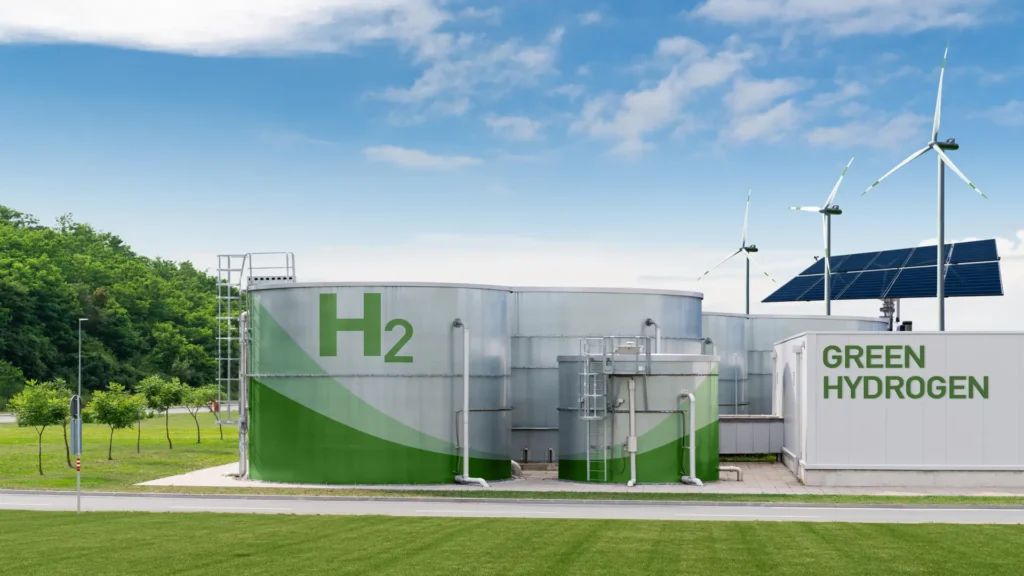
Green hydrogen is used in refineries as a selective solution to reduce carbon intensity in hydrotreating processes, contributing to energy efficiency without significantly modifying existing unit configurations. Its adoption focuses on partially replacing gray hydrogen, especially in facilities with access to low-carbon electricity.
In European and U.S. refineries, the partial integration of green hydrogen has allowed for 10% to 20% reductions in the carbon footprint of these processes. However, implementation requires strict mechanical integrity controls due to the risk of embrittlement, reinforcing the role of preventive engineering and Non-Destructive Testing (NDT) to guarantee safety and operational continuity.
CCS and asset integrity
Carbon Capture and Storage (CCS) systems are applied in refineries as a complementary solution to reduce emissions in high-carbon intensity processes, especially in facilities processing heavy or complex crudes. Their contribution to energy efficiency does not lie in decreasing consumption, but in mitigating residual emissions that cannot be eliminated through operational optimization alone.
In European and North American refineries, CCS projects have enabled the capture of 60% to 90% of the CO₂ generated in specific units, keeping operations within regulatory limits. However, the technical and economic viability of these systems depends directly on robust mechanical integrity programs, given the corrosion risks associated with dense-phase CO₂.
The implementation of CCS requires risk-based asset management, appropriate material selection, and systematic application of non-destructive testing, ensuring the reliability of pipelines, vessels, and injection systems. In this context, CCS is established as an effective tool when integrated on a solid foundation of efficiency and operational control.
Emissions regulations and standards from 2026
For decision-makers and industry executives, environmental compliance in 2026 is based on a framework of absolute technical transparency. Standards established by the EPA and regional agreements in Latin America now require Continuous Emissions Monitoring (CEMS) with direct integration into regulator platforms. Measuring carbon intensity per barrel of fuel produced is the key indicator defining a refinery’s position on the global sustainability index.
API technical specifications for this year introduce the concept of the “Operational Emissions Limit.” This parameter forces plants to adjust their processing throughput if energy performance management systems detect a deviation in thermal yield that increases the CO₂ footprint above daily limits. This level of technical control ensures that process interrelations in Upstream and Midstream are aligned with the operator’s total portfolio decarbonization goals.
The following mandatory technical compliance parameters are detailed for the first half of 2026:
- Energy Intensity Index (EII): Mandatory 12% reduction compared to the 2024 average for high-complexity facilities.
- NOx and SOx Limits: 20% reduction through the use of ultra-low emission burners and optimized tail gas treatment systems.
- Asset Certification: Every critical unit must have a digitized inspection history validating its thermal performance and mechanical integrity status.
This technical annex serves as a reference for service companies to design preventive engineering solutions that not only solve operational problems but anticipate legal compliance needs.
Starting in 2026, refinery energy efficiency is addressed through an integrated set of technical strategies, the impact of which varies by region, process type, and technological maturity. See the table below:
Refinery energy efficiency strategies (2026 Focus)
| Applied Strategy | Impact on Energy Performance | Estimated Emissions Reduction | Regions with Highest Adoption | Role in Energy Transition |
| Thermal Optimization & Heat Recovery | Reduces energy consumption in critical units. | 5–10% CO₂ | USA – Europe | Operational Efficiency Base |
| Digital Twins | Early detection of energy losses and thermal deviations. | 3–7% CO₂ | USA – Europe | Predictive Decision Support |
| Process Electrification | Eliminates combustion emissions in furnaces and heaters. | 5–10% CO₂ / NOx | Europe – USA | Direct Decarbonization Enabler |
| Green Hydrogen | Reduces carbon intensity in hydrotreating. | 10–20% CO₂ | Europe | Strategic Transition Vector |
| Carbon Capture & Storage (CCS) | Mitigates residual emissions from complex processes. | 60–90% CO₂ (specific units) | Europe – North America | Complementary Solution |
| Preventive Engineering & NDT | Sustains thermal performance over time. | Indirect Reduction | Global | Operational Continuity Guarantee |
This comparative view helps understand how refineries are prioritizing solutions based on their operational, regulatory, and financial impact within the energy transition.
Complementary material: Offshore risk simulation
Within the framework of OSRL international technical forums, advanced digital tools for managing operational risks in offshore environments have been presented. These solutions allow for the anticipation of complex scenarios, the evaluation of potential impacts, and support for decision-making under high operational uncertainty. These tools align with international regulatory requirements demanding response plans based on technical analysis and verifiable scenarios.
A relevant example is PARSim, a 3D simulation platform that models subsea releases, surface hydrocarbon trajectories, and atmospheric dispersion in real-time. Its application allows for the definition of exclusion zones, the optimization of emergency response plans, and the improvement of operational coordination during incidents, indirectly contributing to asset integrity and the reduction of environmental risks.

Conclusions
Energy efficiency has established itself this year as the master metric for the survival of the Downstream sector. The interrelation between process electrification, the adoption of Digital Twins, and the implementation of carbon capture systems defines the competitive advantage of modern operators in the current energy transition.
Asset management must prioritize asset integrity to ensure that new decarbonization technologies operate under rigorous safety standards. The evolution toward a sustainable energy industry is not just an environmental commitment, but an indispensable financial strategy for the long-term profitability of executives and service companies alike.
Content developed by Inspenet, the digital platform that connects problems, solutions, and industrial knowledge to keep the world producing!
References
- U.S. Environmental Protection Agency (EPA) – ENERGY STAR. Energy Efficiency in Petroleum Refining.
- ScienceDirect – Energy & Environmental Science. Future prospects toward zero-emission oil refineries.
- ScienceDirect – Journal of Cleaner Production. Integration of low-carbon hydrogen in oil refineries.
- Schneider Electric – Energy Management Insights. Process electrification for emissions reduction in refining.
- International Energy Agency (IEA). Energy Efficiency in the Oil & Gas Sector.
- Inspenet TV. Interview (2025, December 19). PARSim: 3D simulation for offshore emergencies.
Frequently Asked Questions (FAQs)
Why is energy efficiency key for refineries in 2026?
Because it allows you to reduce operating costs, lower emissions, and comply with increasingly stringent environmental regulations without compromising operational continuity or process safety.
How does energy efficiency impact a refinery’s profitability?
Greater energy efficiency reduces fuel consumption, minimizes regulatory penalties, and improves the operating margin per barrel processed.
What role do digital twins play in refinery efficiency?
Digital twins enable the identification of heat loss, the anticipation of equipment degradation, and the optimization of energy use through real-time simulations.
Is the electrification of processes in existing refineries feasible?
Yes. Through retrofitting projects, many refineries can electrify furnaces and thermal units, provided that the electrical infrastructure and integrity studies allow it.
How does green hydrogen contribute to reducing emissions?
Green hydrogen reduces carbon intensity in hydrotreatment processes and enables renewable energy to be stored for industrial use.
What risks does the integration of CCS in refineries introduce?
The main risk is corrosion associated with CO₂ in dense phase, which requires suitable materials and robust mechanical integrity and non-destructive testing programs.
Why are non-destructive tests key to energy efficiency?
Because they enable the detection of corrosion, fouling, and thermal degradation that affect heat transfer and increase energy consumption.
How do upstream and midstream operations influence refinery efficiency?
Crude oil and transportation conditions directly impact downstream energy performance, so energy efficiency must be managed in an integrated manner throughout the entire chain.
What regulations promote energy efficiency in refineries?
EPA regulations, API standards, and regional agreements require continuous emissions monitoring, energy intensity reduction, and asset certification.
Why is energy efficiency a financial strategy and not just an environmental one?
Because it improves profitability, reduces operational risks, and ensures the viability of assets in an increasingly competitive and regulated industrial environment.