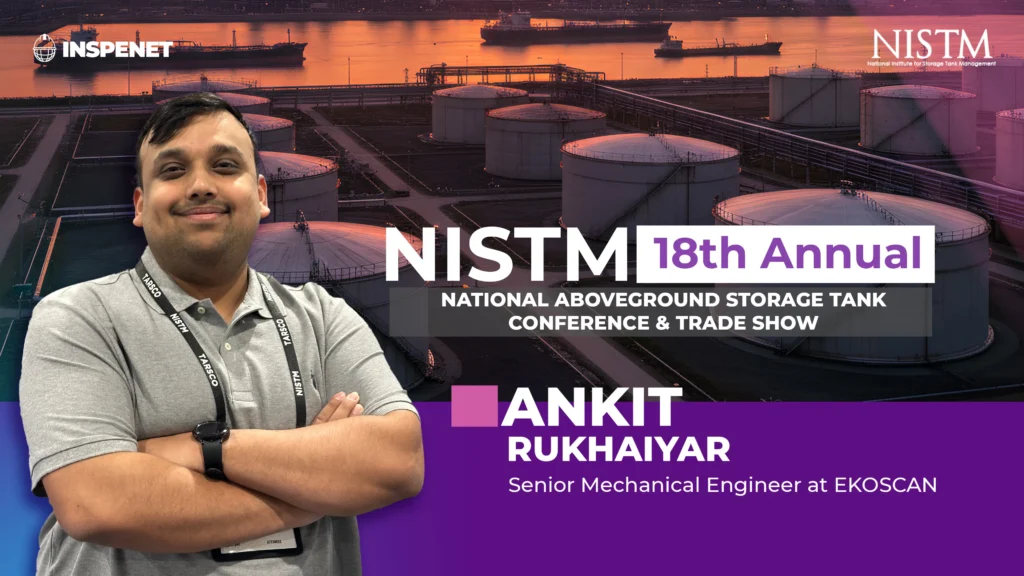
During the NISTM 2025 event, Ankit Rukhaiyar, Senior Mechanical Engineer at EKOSCAN, shared details about the development of robotic solutions applied to industrial inspection. The conversation revolved around the evolution of robotics in non-destructive testing (NDT) and the presentation of the Venom scanner, the new equipment that promises to mark a turning point in the safety and efficiency of the energy and storage industry.
EKOSCAN robots are characterized by their ability to climb vertical surfaces thanks to magnetic wheels, allowing them to inspect tanks and pipes as if they were "Spider-Man." This equipment collects critical data on corrosion, cracks, and structural defects using ultrasonic sensors and eddy current probes.
In addition, the robotic platform is universal and adaptable: it can integrate cameras for visual inspection, perform weld analysis, and measure wall thicknesses. This flexibility makes the robots essential tools for predictive maintenance and risk reduction in industrial operations.
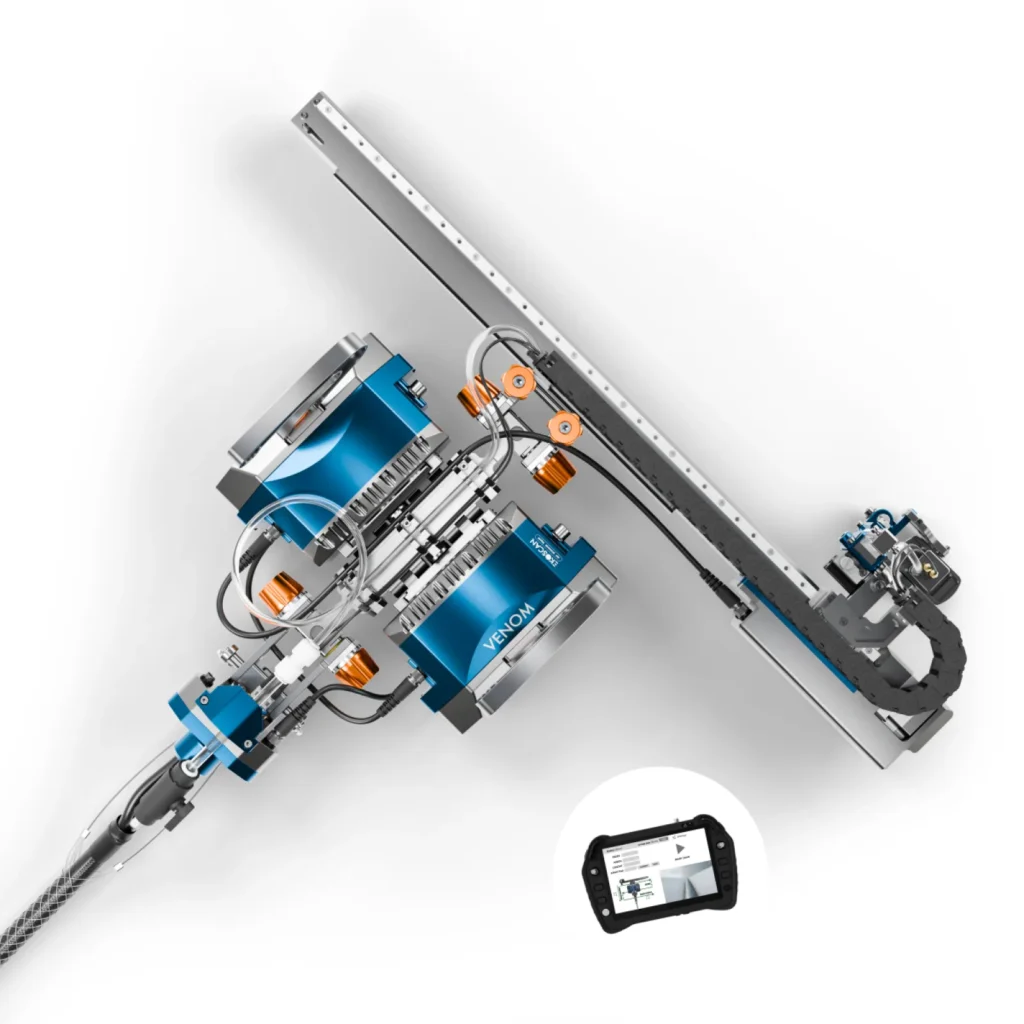
The focus of the interview was the presentation of the Venom scanner, EKOSCAN's upcoming release. This equipment incorporates a closed design that protects all electronic components, preventing overheating and damage from exposed cables.
Among its most notable features are:
Ankit Rukhaiyar emphasized that EKOSCAN's goal is to move toward total autonomy for its robots. Currently, the equipment requires constant supervision by an operator, but the goal is for the Venom scanner and its successors to be able to operate autonomously thanks to the integration of artificial intelligence.
The vision includes:
This approach will allow inspections to be carried out without the need for scaffolding or personnel suspended on ropes, representing a crucial advance in workplace safety.
The Venom scanner brings technological innovation and transforms the way companies manage the integrity of their assets. Its benefits include:
With these advantages, EKOSCAN strengthens the reliability of industrial operations and contributes to the continuity of critical processes in sectors such as energy, storage, and manufacturing.
For more content on NISTM 2025, visit our LinkedIn profile.
Source: Inspenet.