
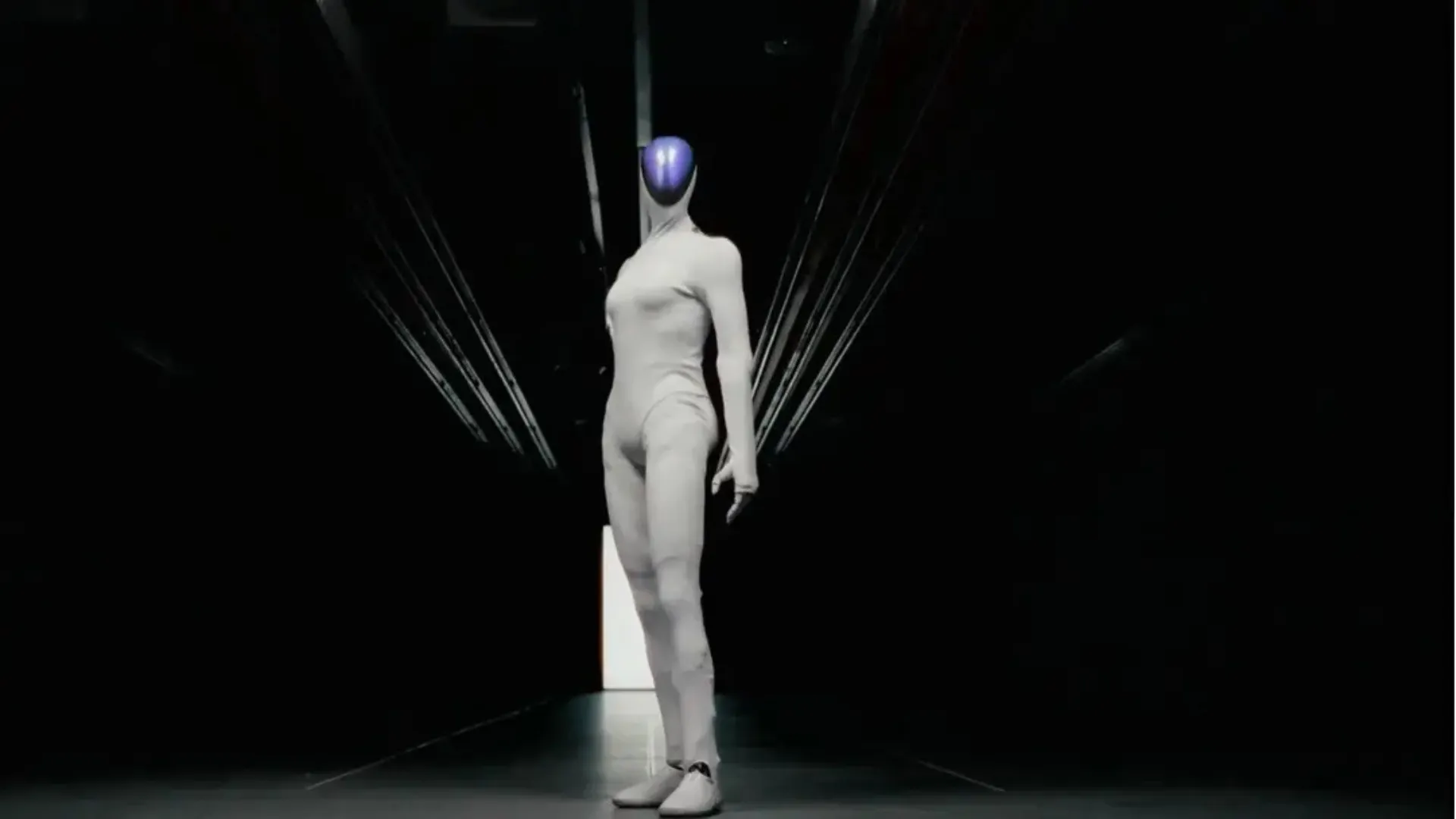
During XPENG AI Day 2025 held in Guangzhou, the company stunned the audience with the unveiling of the Next-Gen IRON, a humanoid robot so realistic that many thought it was a person in disguise. With natural movements, coordinated gestures and a detailed physical presence, this robot set a new benchmark in humanoid robotics.
Extreme bionic design and integrated intelligence
What sets Next-Gen IRON apart from other humanoid robots is its radical focus on functional anthropomorphism:
- 82 degrees of freedom, allowing you to perform precise and natural movements.
- Humanoid spine and bionic muscles, which simulate real human movement.
- Customized flexible leather, adapted for different body types.
- 22 degrees of freedom in the hand alone, with state-of-the-art miniaturized joints.
This level of realism is not just visual, XPENG has integrated in IRON a cognitive system based on three AI models, VLA 2.0, to interpret physical actions, VLM, as a language model and VLT, a decision-making system designed specifically for humanoid robots.
Turing chips and solid state battery
The robot incorporates three AI Turing chips with a total capacity of 3000 TOPS, allowing it to operate in real time with minimal latency.
In addition, it is the first robot of its kind to employ a solid-state battery, which provides greater autonomy, lightness and thermal safety. This technology, still at an early stage in electric vehicles, promises to transform robotics as well.
Capabilities that mimic a human
Thanks to a combination of precision hardware and cognitive models, IRON not only walks or gestures like a person, it can also engage in dialogue, interpret human gestures and move autonomously through complex physical spaces.
XPENG has confirmed that its robot will be implemented in real commercial scenarios starting in 2026, with functions such as:
- Shopping Center Visitor’s Guide
- In-store customer support
- Traffic management in urban areas
- Inspections in industrial environments
The first confirmed partner will be Baosteel, which will test IRON in highly complex industrial environments.
Mass production and ecosystem openness
XPENG plans to start mass production of the Next-Gen IRON by the end of 2026, based on its comprehensive physical AI system, which shares technological origins with its autonomous vehicles. It will also open the IRON SDK to developers worldwide, enabling the creation of specific applications for various sectors.
With this launch, XPENG not only gives a blow on the table in the field of humanoid robotics, but also positions itself as a global reference in innovation applied to intelligent mobility.
Source: XPENG