
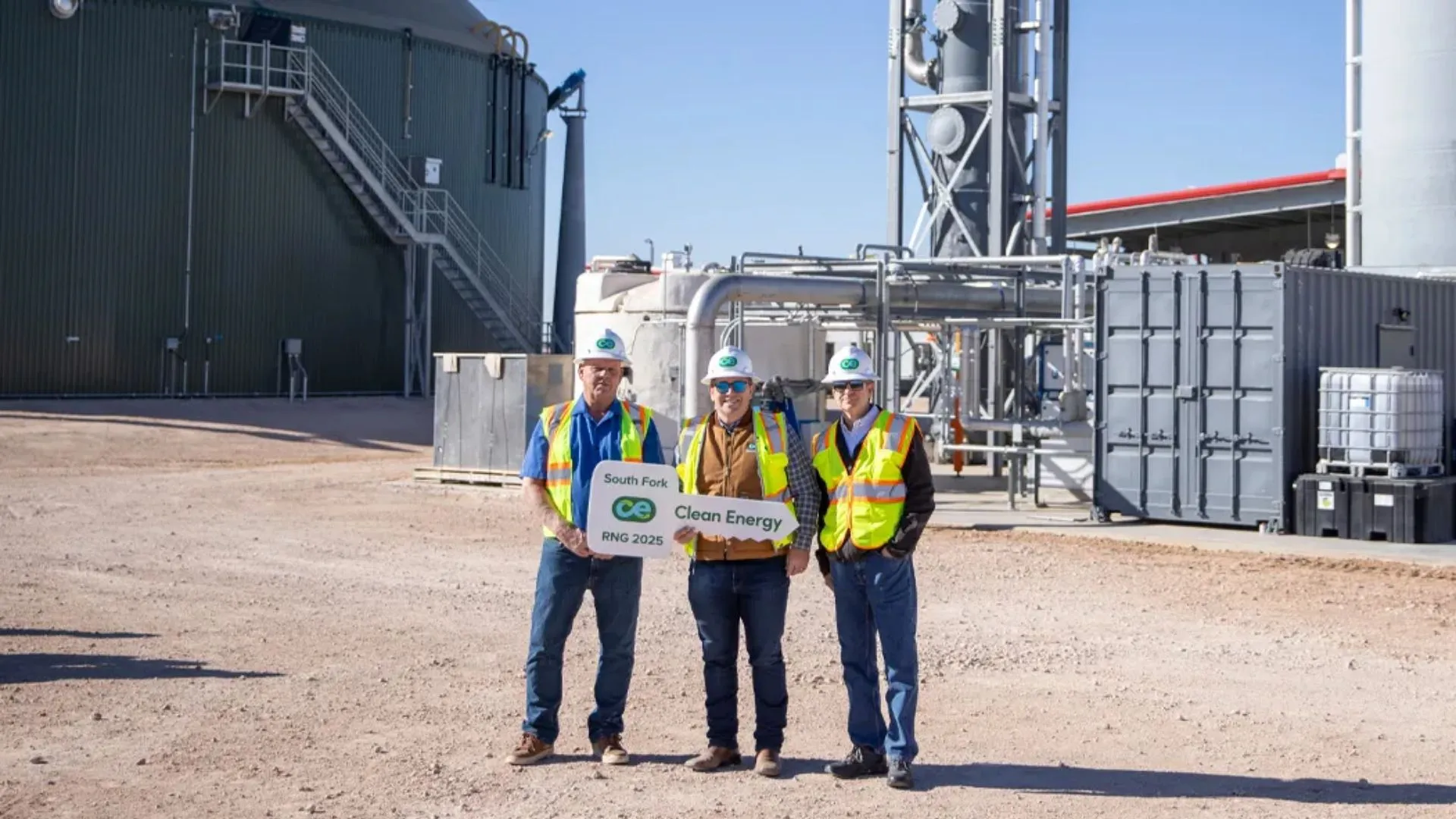
Clean Energy Fuels has officially begun injecting renewable natural gas (RNG) into the interstate pipeline network from its South Fork Dairy facility in Dimmitt, Texas. This facility, considered one of the largest of its kind in the country, represents a key part of Clean Energy’s strategy to increase the availability of low-carbon fuels in the transportation sector.
Injection of NGR from a 100% financed facility
With a total investment of US$85 million, the plant was fully financed by Clean Energy Fuels. Its capacity allows it to process up to 300,000 gallons per day of cattle manure from a herd of 16,000 cows.
The process is carried out using anaerobic digesters and advanced conversion technology, producing approximately 2.6 million gallons per year of pipeline-quality biomethane.
Overcoming setbacks and moving forward with results
Despite an interruption during construction caused by a fire at the dairy, both the livestock facilities and the GNR plant were quickly rebuilt. This recovery was made possible by the close collaboration between South Fork owner Frank Brand and the Clean Energy team, who kept to the original schedule and budget.
Biogas generated at South Fork is already approved by the Environmental Protection Agency (EPA) to generate Renewable Identification Numbers (RINs) under the RFS program. In addition, it is expected to earn credits from the state of California’s Low Carbon Fuel Standard (LCFS) program beginning in the first quarter of 2026.
Infrastructure expansion and emissions reduction
Clean Energy Fuels currently operates more than 600 GNR refueling stations in the United States and Canada. The company continues to expand its supply network for commercial and heavy-duty fleets, focusing on fuels with a negative carbon footprint.
This project reflects the role that the agricultural sector can play in the energy transition. The collaboration model with producers such as South Fork Dairy makes it possible to transform organic waste into clean energy and generate additional income for the farms, while helping to mitigate greenhouse gas emissions.
Source and photo: Clean Energy Fuels