
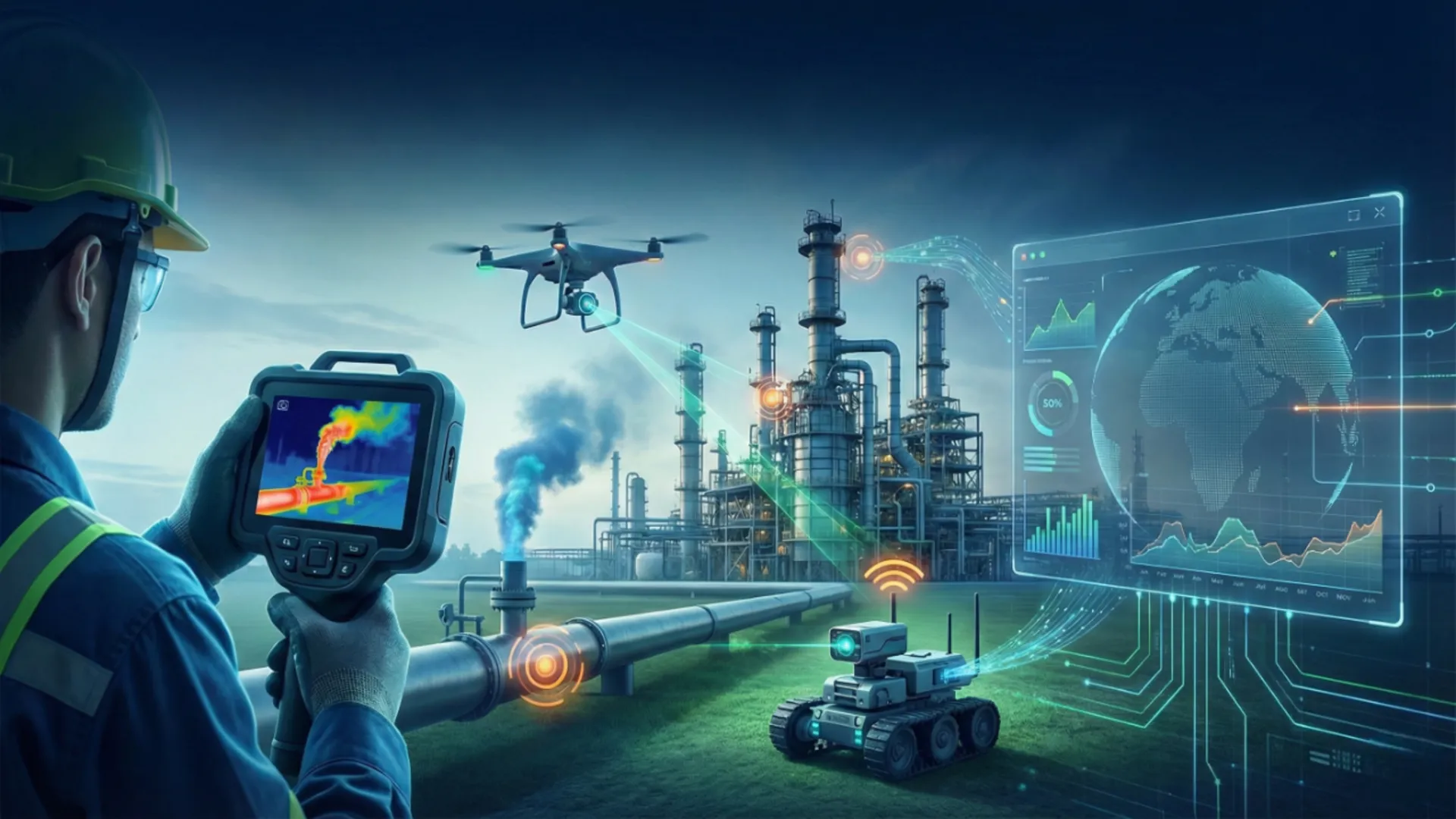
In an era where global industries urgently seek solutions to reduce emissions, safeguard personnel, and preserve the environment, cutting-edge inspection technologies have become not a luxury—but a necessity. The oil and gas industry, a cornerstone of the global energy supply, faces mounting pressure to meet regulatory standards while minimizing environmental impact. Among the most promising advances is the rise of Smart Non-Destructive Testing (NDT)—particularly Advanced Acoustic Imaging technologies that are transforming gas leak detection and asset integrity management.
At the forefront is the Smart Acoustic Ultrasonic Imager, equipped with a high-definition camera to capture real-time videos and images of invisible gas leaks. When combined with AI-powered analytics, drones, robots, and online monitoring sensors, Smart NDT enables operators to shift from reactive maintenance to predictive, proactive leak prevention. Conventional inspection methods often fall short, especially in detecting elusive gas leaks at a distance or in high-risk areas. Enter Smart Acoustic Imaging Technology, which combines:
- Ultrasonic signal collection.
- Beamforming acoustic imaging.
- High-resolution visual capture.
At the core of Smart NDT is a breakthrough tool: the Advanced Acoustic Ultrasonic Imager. This cutting-edge technology detects the unique sound signature of gas escaping from pressurized systems using ultrasonic signal collection and beamforming acoustic imaging. The device overlays this sound data onto real-time high-definition videos and images, allowing operators to literally “see” the leak as it happens.
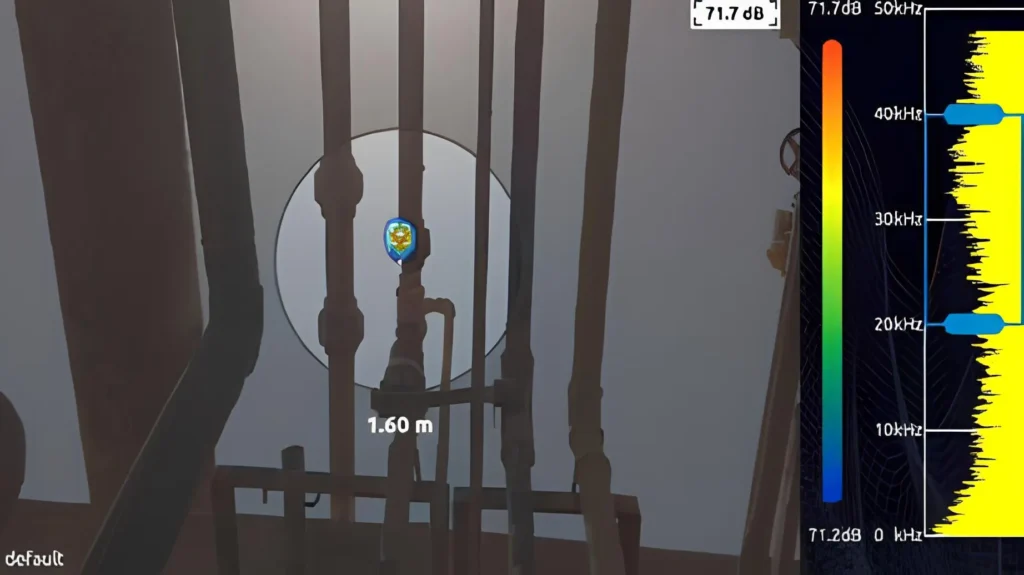
This advanced technology can pinpoint gas leaks with ±3 mm accuracy from distances of 0.5 to 120 meters—eliminating the need to place inspectors in potentially hazardous environments. This not only enhances safety, but also drastically reduces inspection time and operational costs.
By visualizing leaks rather than relying on traditional sniffers or soap tests, the acoustic imager enables a rapid, targeted response before emissions escalate into environmental or safety risks. Smart NDT is not limited to methane; it supports full-spectrum detection of gases, including:
- Hydrocarbons such as methane, propane, and butane.
- Non-hydrocarbons like nitrogen, hydrogen, oxygen, argon, and compressed air.
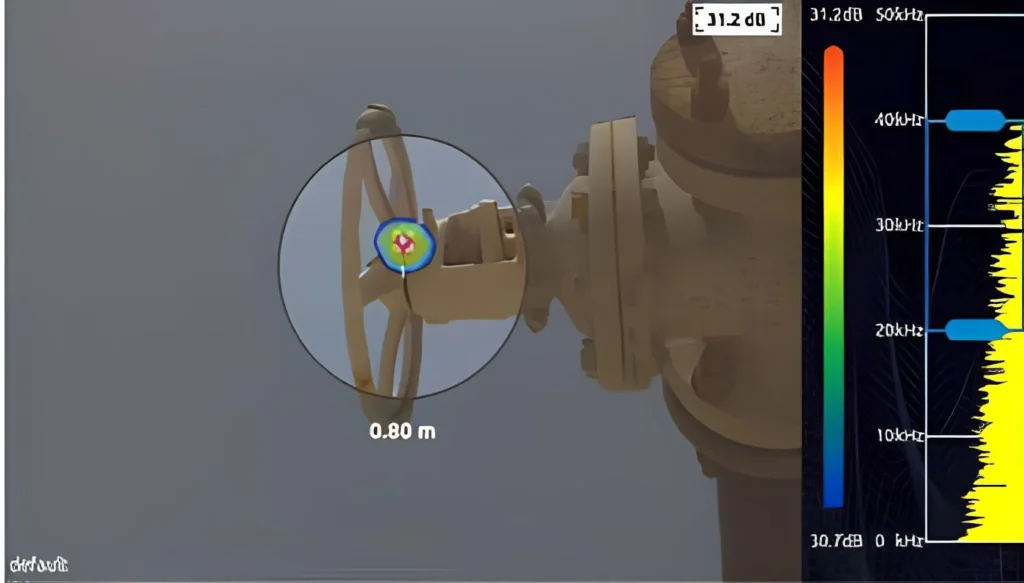
Even inert or non-flammable gases can pose significant environmental and safety issues if left undetected. Acoustic imaging ensures comprehensive coverage, reducing emissions and wastage across the entire facility.
For continuous facility oversight, Smart NDT integrates fixed ultrasonic and infrared sensors with Artificial Intelligence (AI) systems. This shift from periodic inspections to always-on smart monitoring empowers operators to respond faster, maintain safer environments, and align with net-zero emission targets.
Real-time vigilance is now possible through online ultrasonic and infrared sensors connected to AI-driven control systems. These monitoring solutions continuously scan entire plants or pipelines for signs of leakage, anomalies, or performance deviations.
AI integration offers:
- Instant alerts when leaks are detected.
- Continuous trend monitoring to predict failures.
- Predictive analytics to schedule maintenance proactively.
- Real-time leak alerts with precise location tagging.
- AI-driven pattern recognition for anomaly detection.
- Preventive maintenance recommendations.
- Long-term data analysis for regulatory compliance and operational optimization.
This level of insight transforms asset integrity management into a preventive, proactive discipline, ensuring uninterrupted production and minimal emissions.
Incorporating acoustic imagers onto drones and robotic platforms allows for automated or remote full-site inspections across both onshore and offshore facilities.
These systems can:
- Reach elevated pipelines, flare stacks, and confined spaces.
- Survey long-distance pipelines and remote offshore platforms without interruption.
- Operate in harsh conditions where manual inspection is risky or impossible.
- Perform frequent or continuous leak checks without downtime.
Drones and robotic systems operate autonomously, detect leaks from a distance, and record data for post-inspection analysis. The ability to deploy drones 24/7 in any weather or operational scenario means gas detection no longer requires risky manual inspections.
Whether on a remote offshore rig or a sprawling onshore processing plant, Smart NDT systems adapt seamlessly. Their robust design allows them to function in windy, high-vibration, or humid environments, delivering reliable performance across diverse terrains and climates.
Offshore inspections, in particular, benefit immensely from drone-deployed sensors and autonomous robotics, reducing costly shutdowns and improving personnel safety by eliminating the need for rope access or helicopter-based inspections. This is especially valuable in areas where human access is limited, and environmental consequences are high.
Environmental responsibility:
- Drastically reduce fugitive gas emissions.
- Comply with local and international emission regulations.
- Support net-zero and ESG initiatives.
- Early leak detection lowers greenhouse gas emissions.
Operational safety:
- Minimize personnel exposure to hazardous environments.
- Replace manual inspections with safe, remote alternatives.
- Detect risks before they escalate into accident.
- Continuous condition monitoring enhances asset reliability.
Proactive assurance:
- Verify leak-tightness of pipelines and equipment.
- Establish verification protocols before, during, and after maintenance.
- Gain peace of mind with real-time system health insights.
Cost Savings:
- Reduce downtime, emergency shutdowns, and manpower requirements.
- Avoid costs associated with catastrophic failures or regulatory violations
As the energy industry faces increasing pressure to decarbonize while maintaining operational excellence, Smart NDT technologies offer more than just detection— they offer transformation.
With the power of advanced acoustic imaging, autonomous drones and robots, and AI-enhanced 24/7 monitoring, operators are no longer reacting to problems—they’re anticipating and preventing them. These technologies represent a crucial shift from outdated inspection methods toward a modern, connected, and intelligent strategy for asset integrity and environmental stewardship.
The path to zero leaks and lower emissions is no longer aspirational—it’s actionable. With Smart NDT technologies such as advanced acoustic imagers, infrared detection, AI- driven online monitoring, and drone-enabled inspections, the oil and gas industry can now:
- Lower emissions.
- Detect all types of gas leaks from a safe distance.
- Monitor facilities 24/7—both onshore and offshore.
- Enhance operational resilience, operating safer, cleaner, and smarter.
- Meet regulatory and ESG goals with confidence.
- Drive global sustainability efforts.
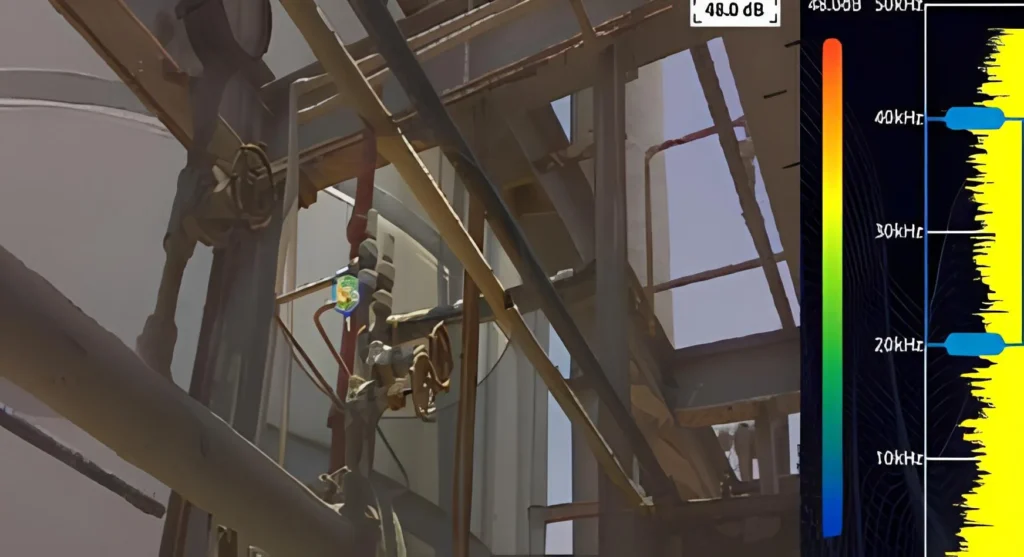
As global demand for cleaner energy intensifies, Smart NDT stands as a powerful enabler of sustainable operations, proactive maintenance, and a safer future for all. In this new era of clean energy, the smartest operations will be those that leave no leaks behind.
This article was developed by specialist Mohammed A. Abufour and published as part of the sixth edition of Inspenet Brief September 2025, dedicated to technical content of the energy and industrial sector.