
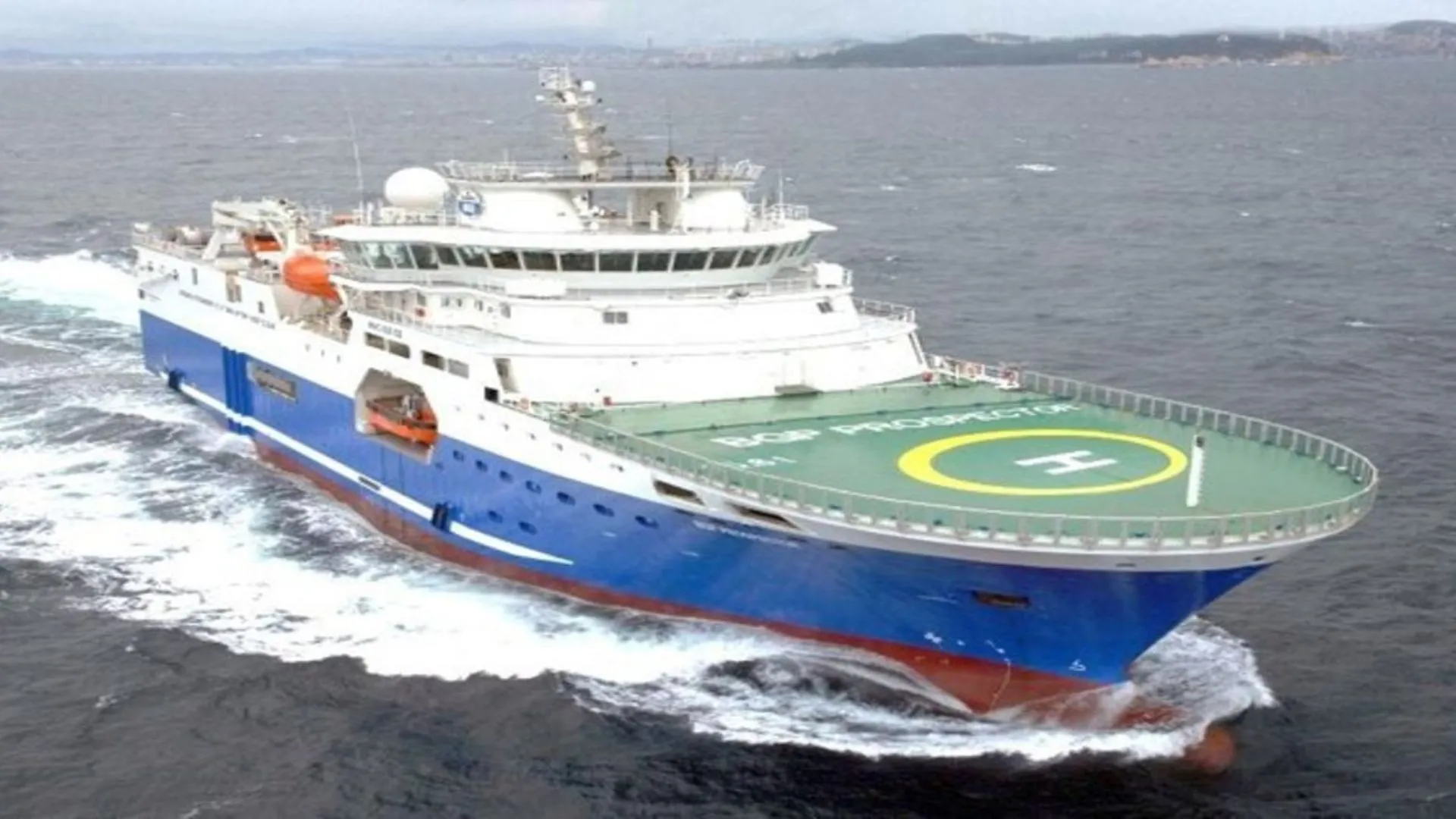
November 20 marked the start of a large-scale seismic survey offshore Suriname, led by the state-owned Staatsolie in collaboration with BGP Offshore and Tomlinson Geophysical Services (TGS). The activity covers an area of approximately 2,000 km² with depths ranging from 20 to 50 meters.
Technical development of the seismic study
Over an estimated period of two months, detailed information will be collected on the subsurface geology of the sea floor to identify possible oil and gas reserves. The BGP Prospector vessel will carry out the operation, towing eight six-kilometer-long seismic cables to a depth of nine meters, which will allow recording the reflections of the generated sound waves.
This geophysical survey is part of a multi-client agreement, a model that allows the data acquired to be shared among several interested parties. Staatsolie will retain the rights to use and commercialize the data, receiving income from its subsequent sale to third parties. This format significantly reduces operating costs for the country without sacrificing quality or control.
Support for the offshore licensing round
The ongoing study is aligned with the recent opening of the offshore licensing round announced by the Surinamese government, which seeks to attract international investment for new exploratory developments in the offshore basin. The information gathered will be key to defining the potential of the blocks on offer and underpinning future exploration decisions.
The project has the approval of the National Environmental Authority (ANM), including an environmental management plan built with the participation of local communities and fishermen from the Coronie and Saramacca regions. This approach seeks to ensure compatibility between oil activity and protection of the marine environment.
Source and photo: Staatsolie