
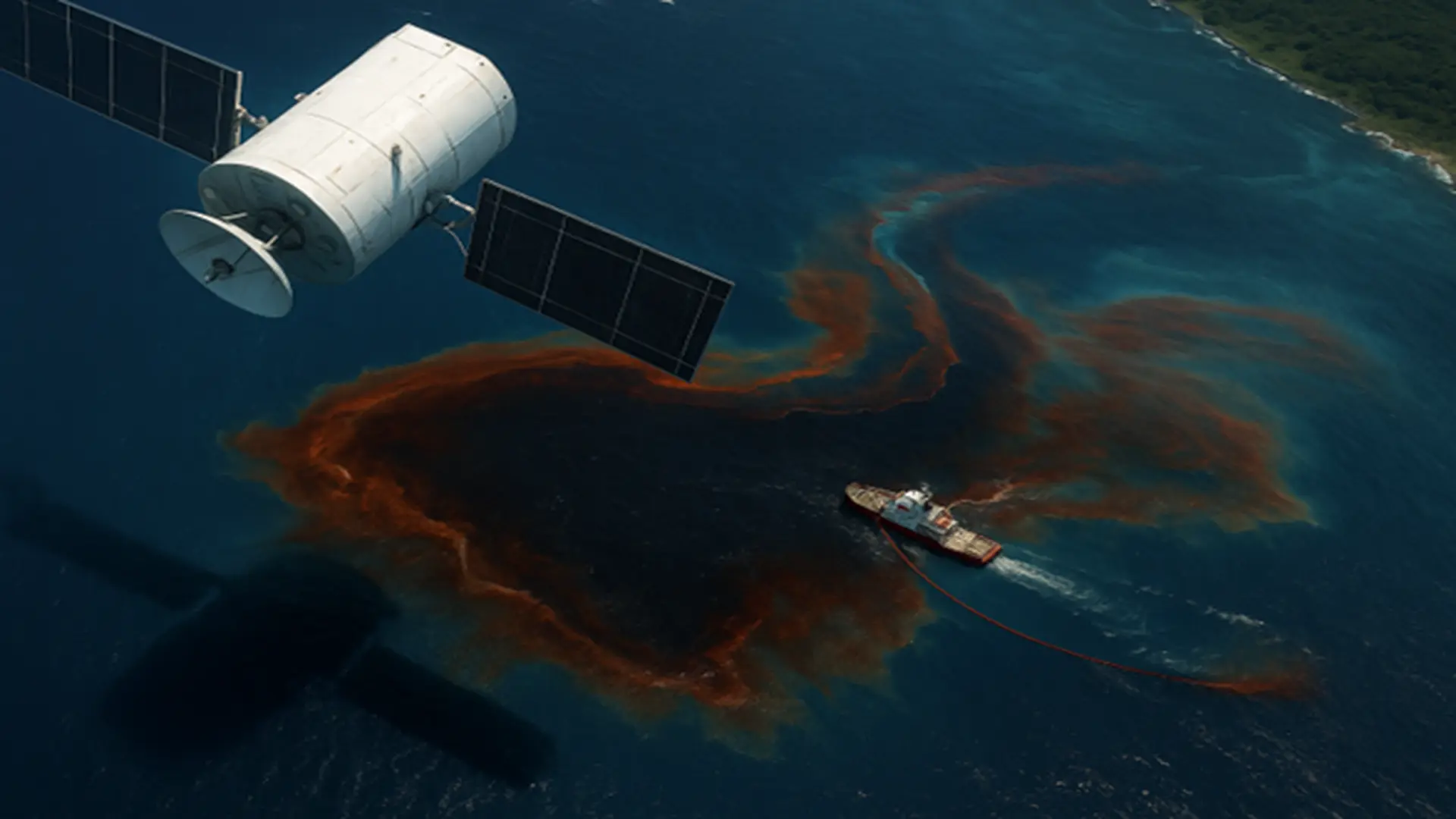
Oil spills pose complex threats to marine ecosystems, coastal biodiversity, and human health. Despite advances in industrial safety and environmental regulation, these incidents persist, causing impacts that can last for decades. Spill prevention is considered a strategic priority for governments, industrial operators, and international organizations.
In this context, technological cooperation, defined as the exchange of tools, knowledge, and capabilities among global actors, is an essential mechanism for reducing the likelihood of incidents and mitigating their consequences.
Main causes of oil spills
Oil spills can be caused by multiple factors, notably human error, mechanical failure, maritime accidents, natural phenomena, and infrastructure deterioration. The European Maritime Safety Agency (EMSA, 2023) reports that human factors account for more than 60% of incidents in European waters, followed by technical and structural failures in pipelines, tanks, and vessels.
Pipeline integrity is a critical factor. Internal corrosion, structural fatigue, overpressure, and the absence of maintenance programs can lead to silent leaks that, if not detected in time, result in significant spills. Extreme weather conditions, such as hurricanes, typhoons, or earthquakes, can also compromise coastal and subsea infrastructure, causing ruptures in subsea pipelines.
Operational errors contribute significantly. Lack of staff training, insufficient supervision, and the absence of immediate response protocols increase the likelihood of incidents. Therefore, prevention depends as much on physical infrastructure as it does on organizational culture and knowledge management.
Use of technology for spill prevention
Technology has transformed the mechanisms for monitoring and preventing oil spills through tools that enable continuous surveillance:
Satellite monitoring
The use of satellites allows oil spills to be detected in real time using optical and synthetic aperture radar (SAR) imagery, even in remote areas, triggering early response protocols (NOAA, 2022).
Industrial IoT
The implementation of the Internet of Things (IoT) allows smart sensors to be installed on assets and equipment, collecting information about potential failures that could lead to leaks. Integrated with predictive analytics platforms, the IoT improves the ability to anticipate and reduces the risk of operational failures (Inspenet, 2023).

Environmental artificial intelligence
Artificial intelligence (AI) applied to environmental monitoring analyzes large volumes of historical and real-time data to identify risk patterns. Machine learning algorithms detect correlations between operational variables and external conditions, optimizing decision-making and prioritizing preventive actions. AI can predict wear and corrosion rates in pipelines, enabling interventions before leaks occur (González et al., 2021).
Simulators and digital twins
Emergency response simulators and digital twins allow spill scenarios to be replicated, evaluating the effectiveness of containment strategies without risk to infrastructure. These tools facilitate staff training and the validation of safety protocols.
International cooperation and prevention
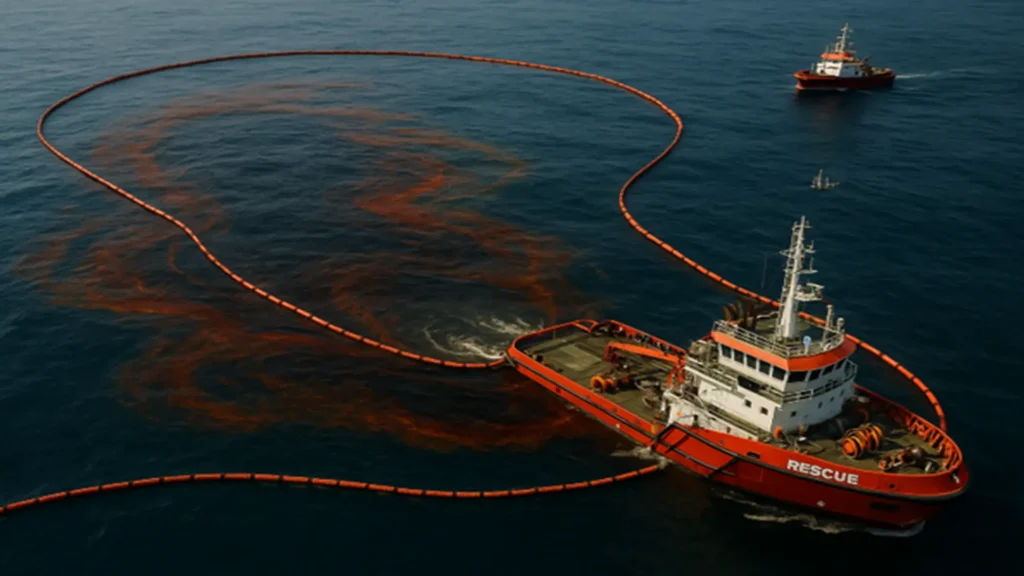
Oil spills require coordinated responses at the international level, as they can affect multiple jurisdictions simultaneously. Organizations such as Oil Spill Response Limited (OSRL) and the Global Response Network (GRN) have implemented technical and logistical cooperation networks to optimize response efforts. OSRL provides rapid response services, specialized training, and access to advanced technologies for companies, governments, and maritime operators.
These international cooperation efforts and spill management have shown significant improvement in:
- Incident Trends: The frequency of spills greater than 7 metric tons from tankers has shown a marked downward trend, with a reduction of more than 90% since the 1970s. [International Tanker Owners Pollution Federation (ITOPF). (2025). Oil Tanker Spill Statistics 2024. ITOPF Ltd. (Note: ITOPF publishes statistics for the previous year at the beginning of the following year, so the report covering data for 2024 is titled “2024”)]
- Recent Volume: However, vigilance is crucial, since the total volume of oil lost to the environment from tanker spills in 2024 was approximately 10,000 tons. [Data Bridge Market Research or Verified Market Research (2025). Global Oil Spill Management Market Size, Share & Growth Report, 2032.] and [General market research (e.g., P&S Intelligence, 2025). Oil Spill Management Technology Reports.]
- Technological Advancement: More than 60% of spill management systems deployed worldwide incorporate real-time monitoring capabilities, reducing detection time from hours to minutes. (Global Oil Spill Management Market Report, 2025)
Periodically, they meet to analyze recent incidents in order to evaluate results and continue improving strategies that enable them to reach an optimal level of expected response.
GRN, on the other hand, facilitates the exchange of resources and knowledge between regional response centers, promoting the standardization of practices and continuous improvement. In Europe, the European Maritime Safety Agency, also known as EMSA, coordinates efforts to harmonize maritime safety standards and spill response operations with different companies.
International cooperation also drives applied research, technological innovation, and joint training. Simulation exercises allow technologies to be tested in real conditions, as well as evaluating the operability of equipment and coordination between actors. Collaboration, in turn, facilitates access to financing for plans to develop preventive solutions.
Risk management and environmental prevention culture
Spill prevention requires comprehensive risk management strategies that identify, assess, and mitigate threats before they materialize. Management includes vulnerability analysis, technical audits, emergency simulations, and updated contingency plans.
A culture of environmental prevention involves prioritizing safety and sustainability, training staff, investing in clean technologies, and maintaining transparent communication about risks. The integration of technological tools into management systems allows for the automation of prevention processes through early warnings and operational recommendations based on IoT data, satellite imagery, and predictive models.
Conclusion
Preventing oil spills requires the integration of advanced technology, international cooperation, and proactive environmental management. Incidents can be mitigated through satellite monitoring, industrial IoT, artificial intelligence, and digital twins. Collaboration between OSRL, GRN, and EMSA strengthens global capacity to anticipate, respond, and evaluate outcomes. The protection of marine ecosystems must be based on science, technological innovation, and an ethical commitment to environmental sustainability.
References
- EMSA. (2023). Annual Overview of Marine Casualties and Incidents 2023. European Maritime Safety Agency. https://www.emsa.europa.eu
- González, M., Pérez, L., & Ramírez, J. (2021). Aplicaciones de inteligencia artificial en la prevención de derrames de hidrocarburos. Revista de Tecnología Ambiental, 12(3), 45-58.
- Inspenet. (2023). Ocean Guardians: Emerging Technologies for Oil Spill Prevention. https://inspenet.com/en/articulo/prevention-of-oil-spills/
- NOAA. (2022). Satellite Monitoring for Oil Spill Detection. National Oceanic and Atmospheric Administration. https://www.noaa.gov
- OSRL. (2024). Global Response Network: Enhancing Oil Spill Preparedness and Response. Oil Spill Response Limited
- Data Bridge Market Research / Verified Market Research (2025). Global Oil Spill Management Market Size, Share & Growth Report, 2032.
- International Tanker Owners Pollution Federation (ITOPF). (2025). Oil Tanker Spill Statistics 2024. ITOPF Ltd.
- Global Oil Spill Management Market Report, 2025