
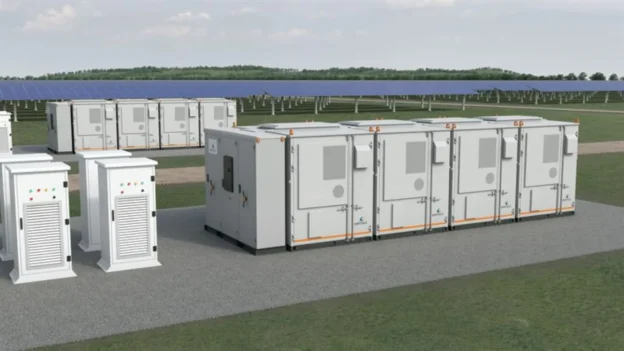
Wärtsilä has confirmed delivery of the world’s largest DC-coupled hybrid battery system DC-coupled hybrid battery system in Australia’s National Electricity Market (NEM), marking a new step in the efficient integration of renewable energy and storage. This ambitious project is part of its ninth BESS system deployment in the country and will consolidate a total installed capacity of 1.5 GW / 5.5 GWh nationwide.
A system that combines scale, efficiency and intelligent control
With the capacity to supply some 120,000 homes and businesses, the system will use batteries coupled directly to solar sources via DC/DC converters. This technical architecture minimizes energy losses and improves overall system performance by more efficiently integrating photovoltaic generation with storage.
PPC hybrid plant controller and GEMS energy management software energy management software GEMS will be responsible for optimizing operation, ensuring a dynamic response to grid conditions and maximizing the value of the asset. This technology will act on battery charging and discharging management, complying with the established interconnection requirements.
Wärtsilä: Moving towards a more stable and sustainable network
The project already has Generator Performance Standards (GPS) approval, a key requirement for its integration into the national electricity system. This step validates the design and operation of the hybrid system, enabling reliable operation in conjunction with renewable generation assets.
Wärtsilä estimates that the system will be operational by 2028, contributing directly to Australia’s goal of achieving zero net emissions by 2045. The initiative also has a 20-year service contract, guaranteeing long-term operation and reinforcing the commitment to sustainable and scalable solutions.
Technological expansion with a focus on decarbonization
Wärtsilä Energy Storage’s Vice President of Global Sales Management, David Hebert, noted that this new system far surpasses previous projects in the country in terms of scale and technical complexity.
For the company, this is a major step forward in its strategy of promoting solar plants and hybrid storage infrastructures as essential tools to stabilize the grid and accelerate the transition to a clean energy matrix.
This project underlines the technical and economic feasibility of large-scale DC coupled solutions, positioning itself as a reference in the evolution of the Australian and regional energy model.
Source: Wärtsilä