
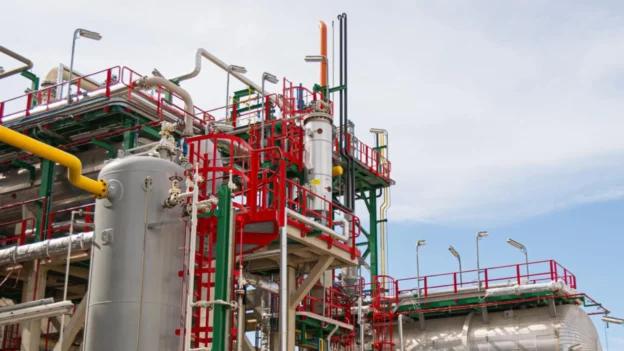
Repsol confirmed last September that its first large electrolyzer, the electrolyzer for the production of renewable hydrogen will be located at its Cartagena industrial complex, which will have an output of 100 megawatts.
Due to its technological and environmental importance, the project has been recognized as being of common European interest (IPCEI) and will receive public funding of 155 million euros. The total investment will exceed 300 million euros and will generate some 900 jobs during its various phases.
The purpose of the new renewable hydrogen plant
The renewable hydrogen produced will be used as a raw material in industrial processes, replacing conventional hydrogen. This will prevent the emission of some 167,000 tons ofCO2 each year.
In addition, the plant will be integrated into the ecosystem of the Hydrogen Valley of the Region of Murcia, one of the most ambitious energy development poles in Spain. The objective is to link renewable production to the needs of the industrial environment, with the future option of injecting this gas into the national natural gas grid and the future Spanish hydrogen backbone.
It is important to mention that the operation will be carried out with the participation of Enagás Renovablewhich holds 25% of the project.
Repsol currently leads hydrogen production and consumption in the Iberian Peninsula, concentrating 60% of the national capacity. With this new step, the company will meet its net emission-free target set for 2050.
Source and photo: Repsol