
Table of Contents
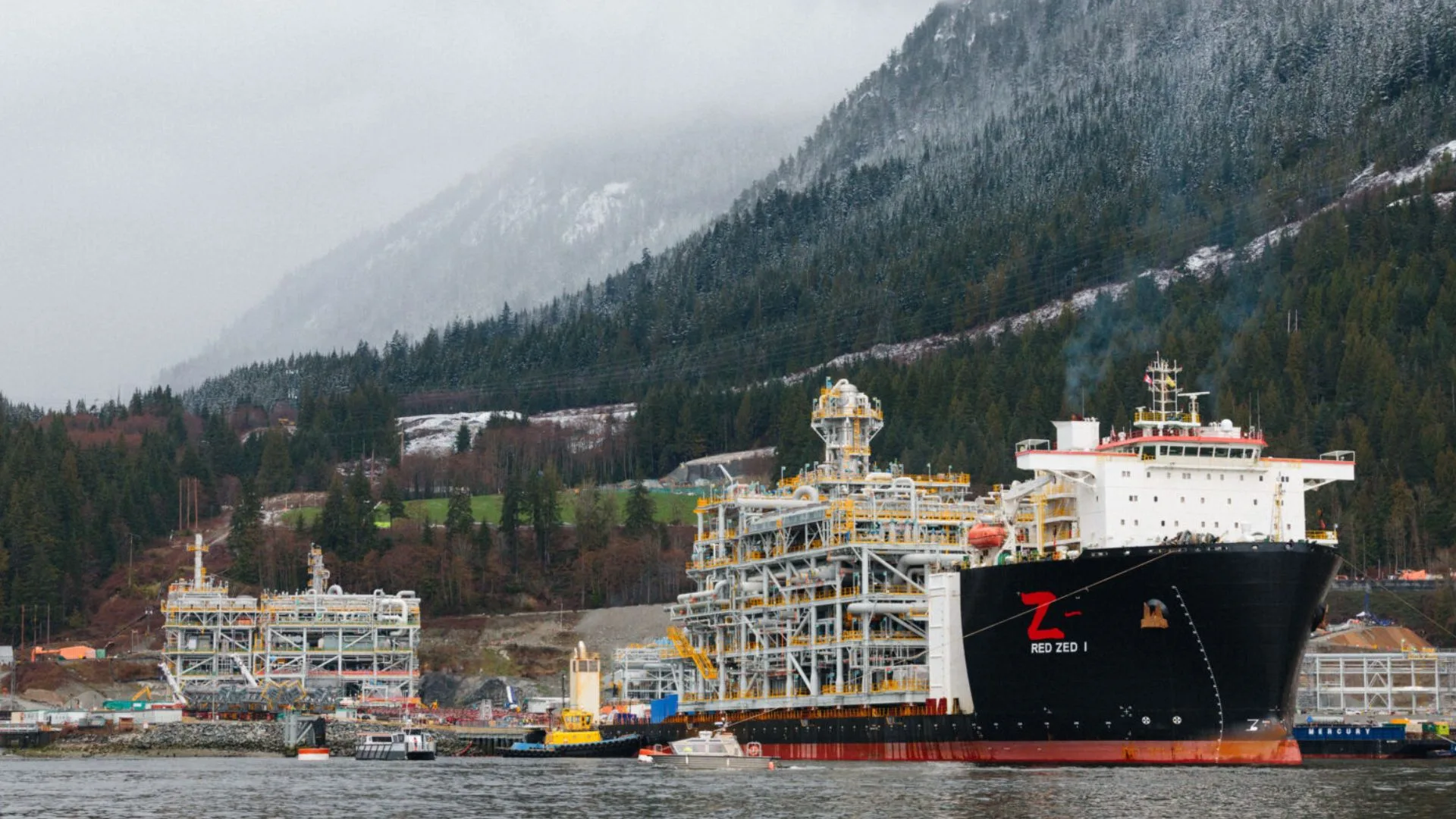
After months of technical preparation, the Woodfibre LNG plant has received the liquefaction module, a structure weighing over 10,000 metric tons, which arrived at the industrial site aboard the vessel Red Zed 1.
This component represents the fifteenth element of a total of nineteen that will form the final infrastructure. The equipment’s size is comparable to a professional football field, and its arrival marks the beginning of the final onshore assembly phase.
Electric Propulsion Technology and the Liquefaction Module
Unlike plants that rely on combustion turbines, this module integrates state-of-the-art Siemens electric motors. Furthermore, the direct connection to BC Hydro’s renewable grid will allow the natural gas cooling process to -162 °C to occur without generating direct operational emissions.
This technical configuration positions the Canadian project as an international benchmark in greenhouse gas management for future environmentally conscious energy projects.
CEO Luke Schauerte emphasized that this system is the operational core that will transform British Columbia’s resource into a high-energy-density fuel. It is essential to mention that this development is overseen by the Squamish Nation, acting as a full environmental authority.
The integration of capital from Pacific Energy Corporation and Enbridge supports a vision where economic profitability and climate responsibility converge. With the goal of completing construction in 2027, the industry is closely observing this model of responsible export.
Source and photo: Woodfibre LNG