
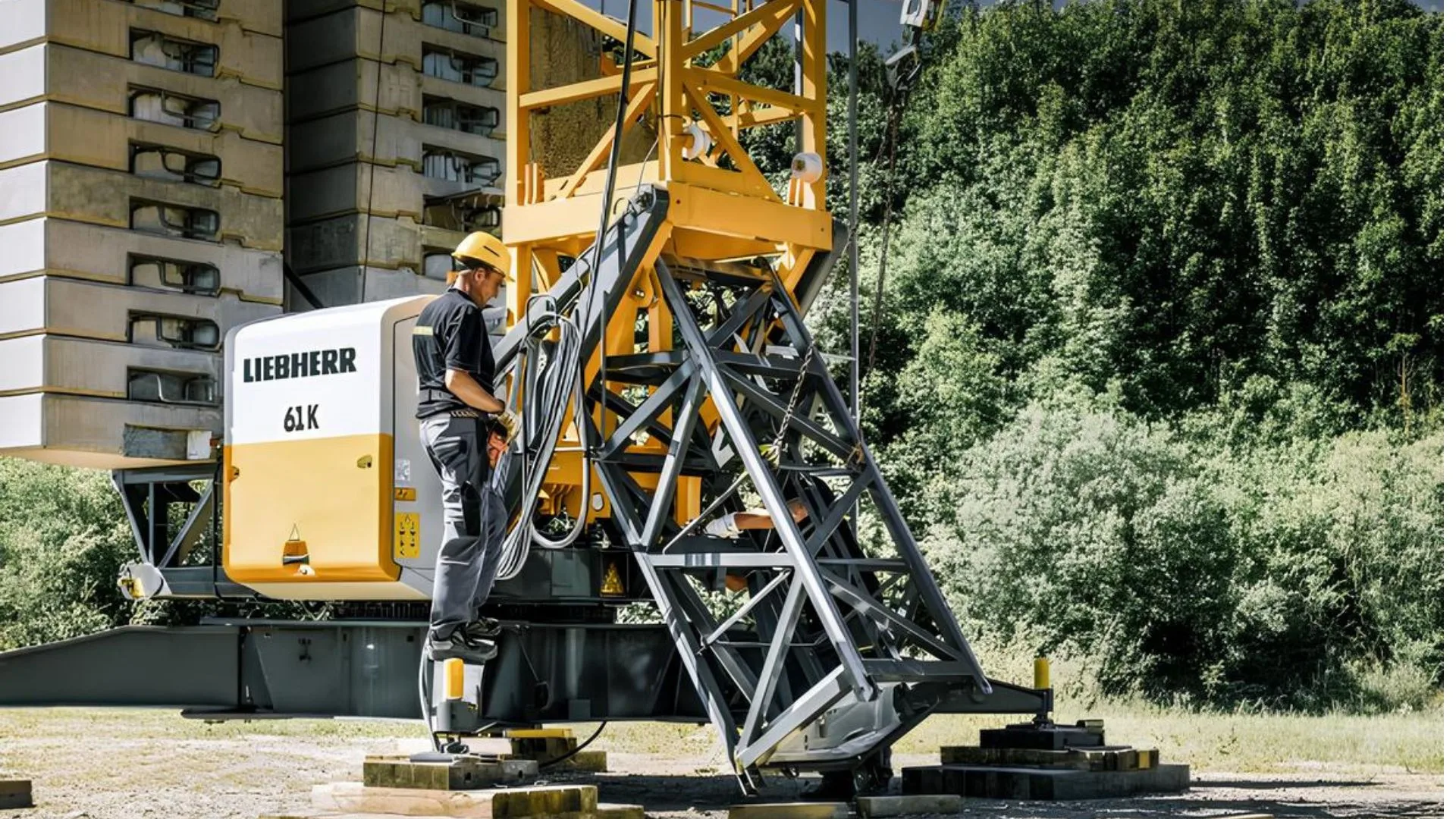
The arrival of self-erecting cranes on U.S. projects is redefining the pace of work, with the integration of plug-and-play systems that allow them to arrive virtually pre-assembled on site, ready to operate within hours. This agility enables critical activities such as concrete pouring or structural placement to begin without the traditional delays of assembly.
In an industry pressured by tight deadlines and delay penalties, simply having immediate lifting capacity represents a decisive competitive advantage.
Reduction of Equipment
A self-erecting crane installed in a strategic location can handle tasks that would normally require several different pieces of equipment. From handling prefabricated elements and steel structures to assisting different trades simultaneously, its radial coverage reduces the need to constantly relocate machinery.
This not only improves on-site coordination, but also reduces fuel consumption, internal traffic, and interference between trades.
Safety Technology
Modern cranes integrate advanced operator assistance systems that raise safety standards on site. Technologies such as Sway Control Plus automatically stabilize the load against wind, while the Guided Hook facilitates precise positioning in limited visibility conditions.
Other systems such as the Vertical Line Finder and the Positioning Pilot enable safer, more repeatable maneuvers with less human effort. The result is fewer errors, fewer accidents, and greater operational confidence.
Compact Yet Powerful
One of the most valued strengths of these cranes is their ability to operate in confined environments without compromising reach or performance. Thanks to their compact design, they can be installed between buildings, in narrow courtyards, or near property lines, providing extensive coverage from a minimal footprint.
In urban, infill, or mixed-use building projects, where space and access are often challenges, these cranes offer an ideal solution.
Economic and Environmental Impact
The electric operation of self-erecting cranes translates into lower operating costs and lower emissions. By requiring fewer personnel and auxiliary equipment, expenses associated with logistics, maintenance, and coordination are also reduced.
For contractors, this means cleaner sites, more stable budgets, and more efficient execution. For rental companies, it translates into high fleet turnover and greater long-term profitability.
A More Efficient Vision of Construction
Self-erecting cranes are marking a tangible shift in how construction projects are approached in the United States. Their speed, versatility, safety technology, and compact design make them strategic allies for contractors seeking efficiency, deadline compliance, and resource optimization on every job site.
Source: Liebherr