
In-depth reengineering of offshore wells for CO₂
The Greensand Future project is moving forward in the North Sea with the conversion of oil wells to CO₂ storage systems. This change is not simply operational, but profoundly structural, involving a complete redefinition of well behavior under new pressure and fluid composition conditions.
Intervention at depths close to 1,800 meters, where work is carried out using wireline intervention techniques.
This depth level introduces significant challenges in terms of integrity control, material compatibility and geomechanical stability.
From a technical perspective, reconversion involves moving from a system designed to extract hydrocarbons to one that must contain CO₂ permanently. This requires redesigning barriers, evaluating existing cementations and ensuring long-term tightness.
Well integrity: the real technical challenge
Well integrity becomes the critical axis of the project. CO₂, under high pressure and temperature conditions, can behave as a highly reactive fluid, generating corrosion risks in pipes and cement degradation.
To mitigate these risks, new safety barriers are being installed, including gaskets, valves and zonal isolation systems. These barriers must meet higher standards than those used in conventional oil and gas production.
In addition, thorough evaluations of existing materials are performed to ensure their compatibility with supercritical phase CO₂. This is the essential component of the system, as failure of a barrier could compromise gas containment and project viability.
Offshore logistics in highly complex environments
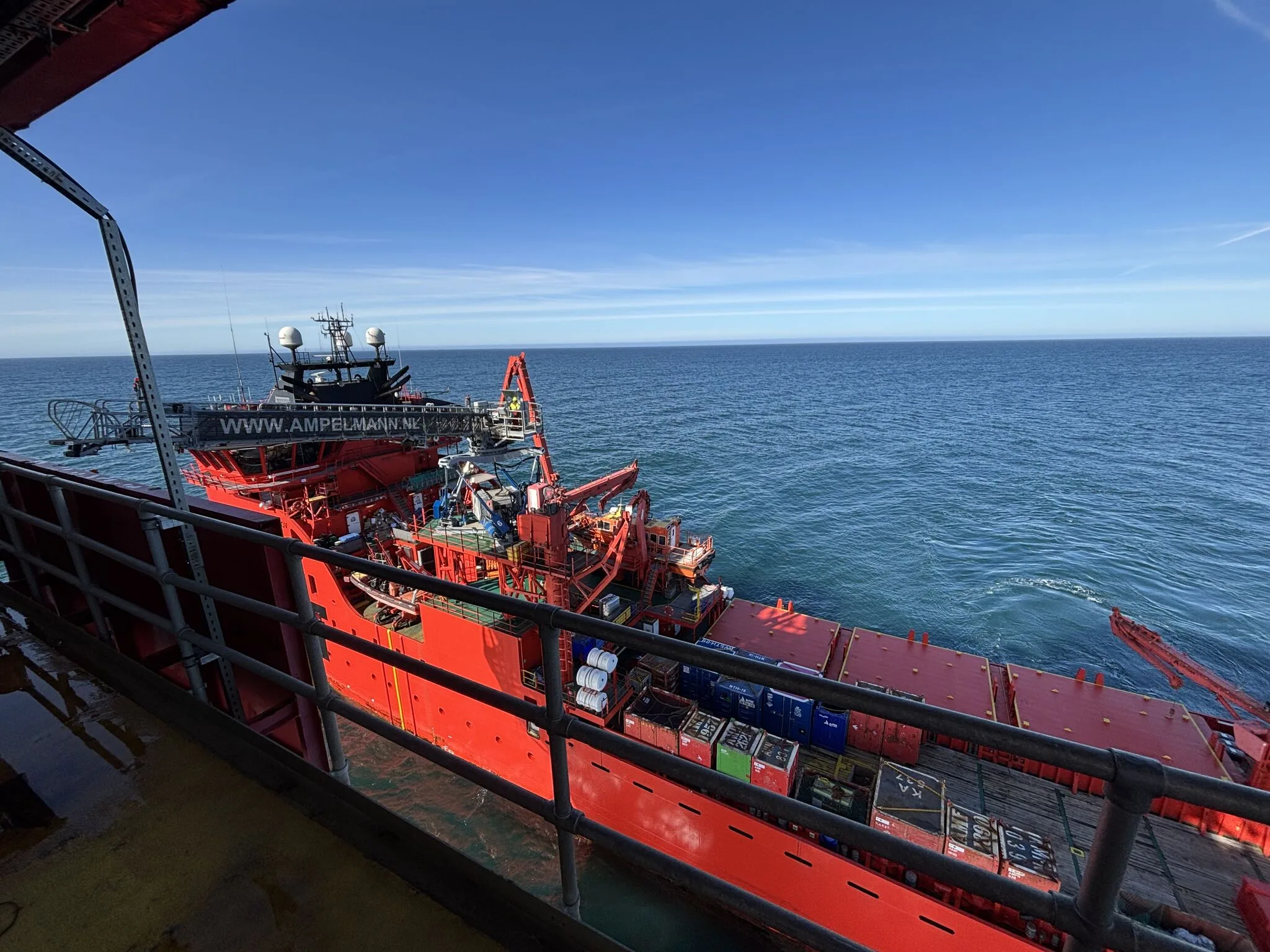
Operations are conducted in offshore conditions, which adds an additional layer of complexity. Access to personnel is mainly by helicopter, supplemented by specialized vessels with access gangways when sea conditions permit.
Each intervention requires meticulous planning, considering weather windows, equipment availability and logistical coordination. The duration of several weeks per well reflects the precision and control required at each stage of the process.
This environment requires the integration of disciplines such as well engineering, marine logistics and risk management, consolidating a multidisciplinary approach to ensure safe and efficient operations.
Critical infrastructure for capture and storage
The conversion of these wells represents a strategic step in the development of carbon capture and storage (CCS) infrastructure. Instead of building new facilities, it takes advantage of existing assets, optimizing costs and implementation times.
This approach also reduces the environmental footprint of the development by reusing platforms and wells already in place. However, it requires rigorous technical validation to ensure that these infrastructures can fulfill their new function for decades.
In the context of the North Sea, this type of project positions the region as a global benchmark in geological storage of CO₂, laying the groundwork for an energy transition based on technically robust and scalable solutions.
Source and Photo: https://www.linkedin.com