
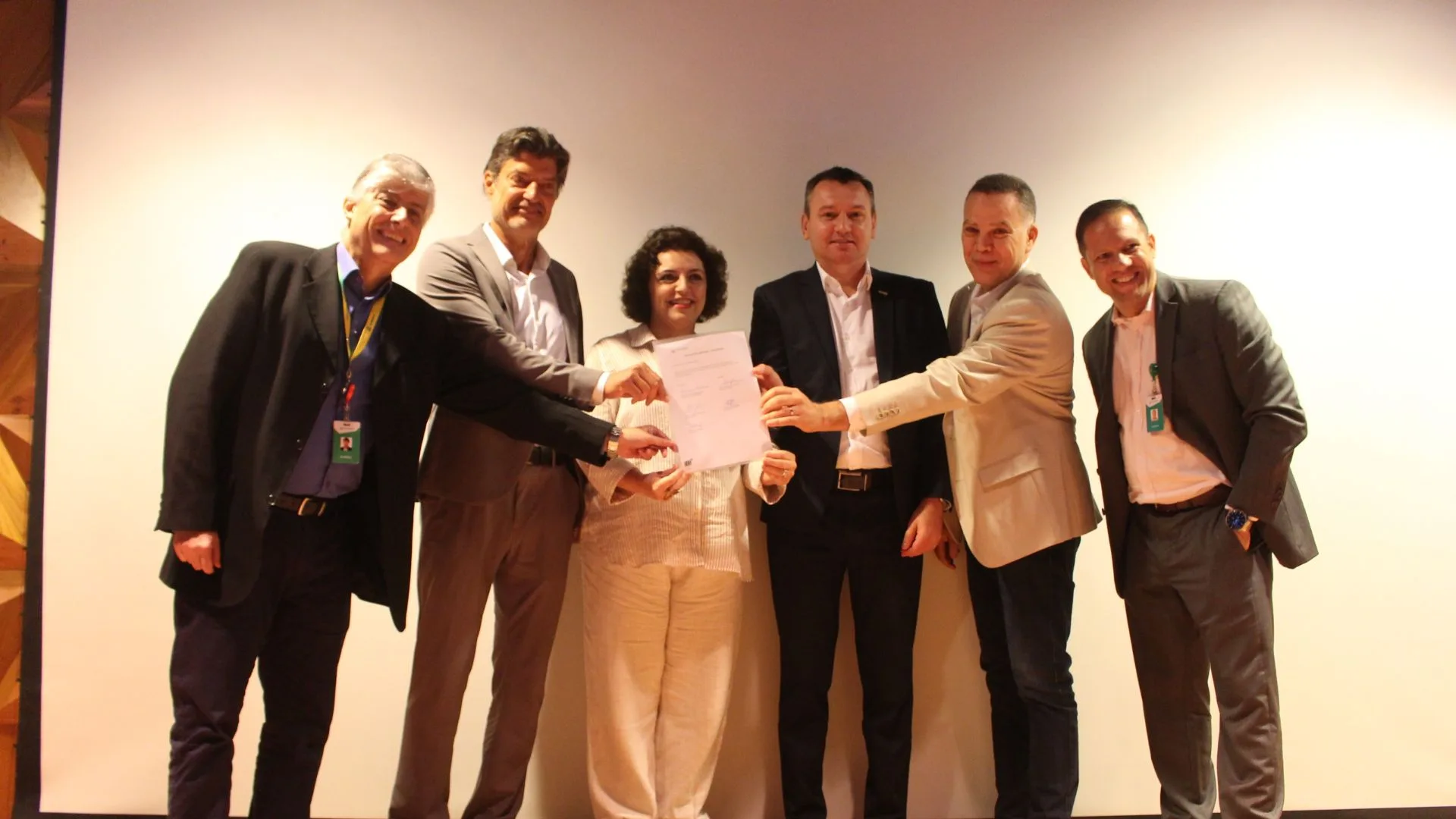
Petrobras announced an investment of more than R$150 million in the Libra Rocks project, an initiative aimed at improving the geological characterization of the pre-salt layer in the Santos Basin. The program will be applied directly in the Mero field, one of the company’s most relevant deepwater assets.
Libra Rocks project reduces pre-salt uncertainty
In this context, Libra Rocks is a partnership between Petrobras and the Libra Consortium, together with academic institutions such as the University of Brasilia (UnB), the Federal University of Paraná (UFPR) and the Pontifical Catholic University of Rio Grande do Sul (PUC-RS).
The main objective is to reduce uncertainties in the production curve and optimize reservoir management. reservoir management. Likewise, the project seeks to improve the location of new wells and more accurately understand critical phenomena such as CO₂ entry into reservoirs.
Artificial intelligence applied to geological analysis
On the other hand, one of the most relevant technological axes of the project is the use of artificial intelligence. use of artificial intelligence. Through advanced algorithms, the processing of large volumes of geological data will be automated, allowing the development of more accurate conceptual models.
In addition, innovative techniques will be incorporated for the analysis of carbonate rocks, which are fundamental in pre-salt reservoirs. These tools will facilitate the evaluation of properties such as porosity and permeability, key for hydrocarbon extraction.
Digital rock and high-precision 3D modeling
Among the innovations is the so-called “Digital Rock”, a technology based on ultra-high resolution images that allows the creation of three-dimensional replicas of geological samples.
This approach expands reservoir characterization capabilities and provides detailed information on the internal structure of rocks, improving decision making in exploration and production.
The geological challenge of the Mero field
The Mero field, located between 5,000 and 6,000 meters below sea level, has complex conditions such as high salinity and high CO₂ levels. Its carbonate rock formations, millions of years old, stand out for their high porosity and good permeability.
These characteristics make it an ideal environment for applying new technologies to maximize the recovery factor and increase operational efficiency.
Impact on innovation and technological development in Brazil
Finally, the Libra Rocks project will also have a significant impact on talent training and technological development. The initiative envisages the hiring of more than 150 professionals and the granting of scholarships at different academic levels.
Petrobras thus reinforces its strategy of investing in research and development, consolidating the Brazilian pre-salt as a benchmark for innovation in the oil and gas industry. oil and gas.
Source and photo: Petrobras