
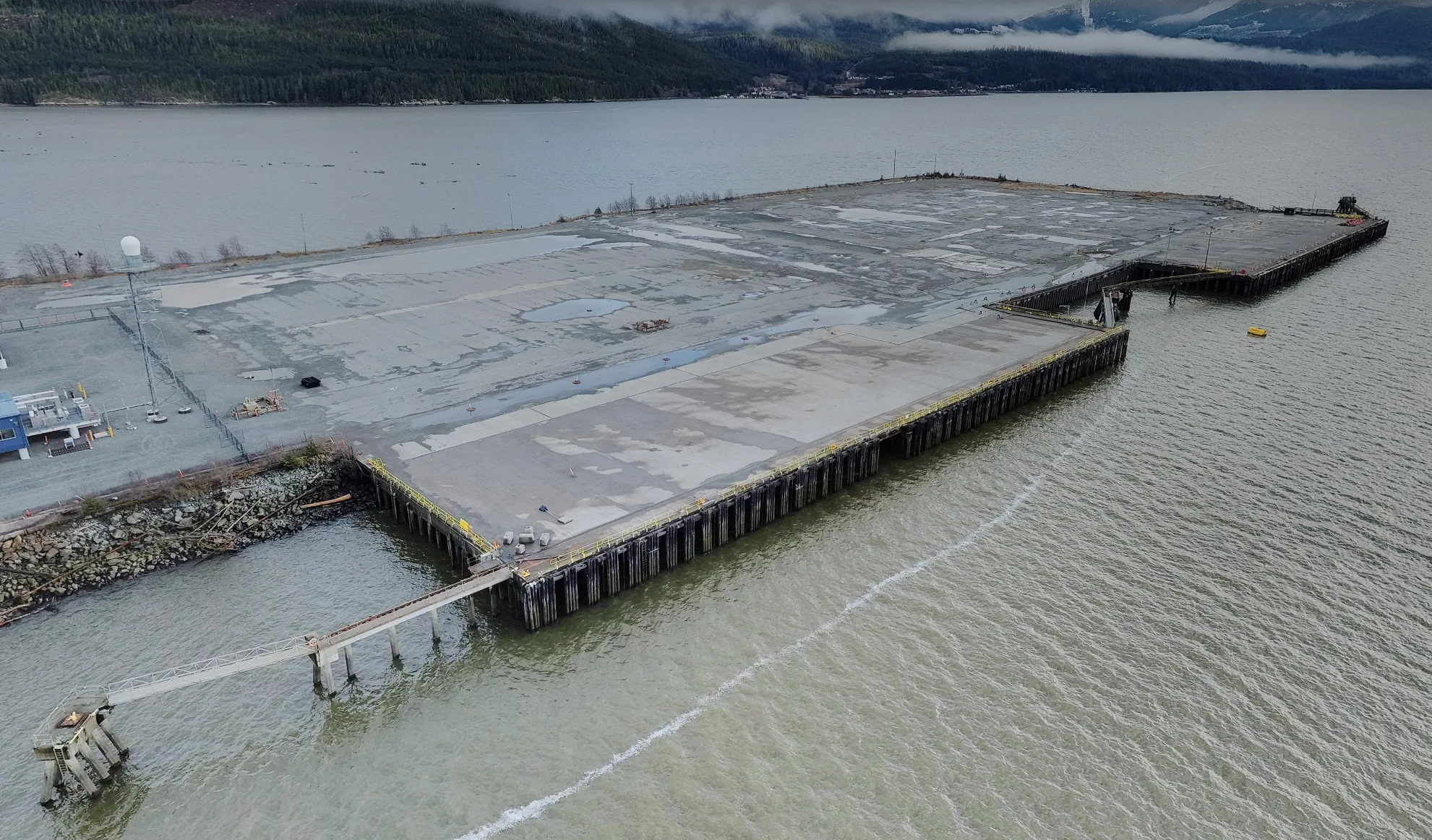
LNG Canada has announced the start of new construction work at its marine terminal located in Kitimat, British Columbia. The project involves the demolition of the existing jetty, construction of a retaining wall and evaluation of dredging works to facilitate safer and more efficient operations.
These actions are part of a strategy to modernize key port infrastructure for the transport of liquefied natural gas, aligned with the growth of global energy demand. global energy demand.
Details of the works and execution deadlines
Demolition activities will begin in April and will last approximately 10 months. During this period, work will be carried out both onshore and offshore, which will result in a significant increase in vessel traffic in the area.
In addition, vehicular traffic is expected to increase on Haisla Boulevard, a key thoroughfare for the transfer of waste to the Sandhill site. For the demolition of the pier, vibratory hammers will be used to remove the marine piles. existing marine piles existing marine piles safely.
In addition, workdays will be limited to 10 p. m. with the aim of reducing the impact on nearby communities such as Kitamaat Village.
Operational and logistical impact on the area
In this context, the development of these works will have direct effects on local dynamics. The increase in maritime and land traffic responds to the need to move equipment, materials and waste derived from the construction process.
Likewise, the noise generated by the piling activities will be perceptible in nearby areas, although operational limits have been established to mitigate any disturbance to the population.
Environmental measures and regulatory compliance
For its part, LNG Canada has established strict environmental protocols during the execution of the project. Water affected by the activities will be collected, treated and discharged in accordance with permits issued by the BC Energy Regulator.
Likewise, continuous monitoring of marine water quality and underwater noise levels will be carried out, especially during activities that may generate localized impacts.
Regarding biodiversity, work in the water will begin on April 15 to avoid interference with the migration of species such as oolichan and Pacific herring.
Protection of marine fauna during construction works
In addition, the project contemplates the presence of marine mammal observers at the site. Exclusion zones will also be implemented, in accordance with federal regulations, to ensure the protection of these species.
In the event that marine mammals enter these areas, activities will be stopped immediately, ensuring compliance with established environmental standards.
LNG Canada and its role in the energy market
These works reinforce LNG Canada’s position as a major player in the export of liquefied natural gas. The improvement of its maritime infrastructure will optimize transportation logistics and strengthen the project’s competitiveness in the international market.
Source: LNG Canada