
Belgian company Jan De Nul continues its strategic expansion in the offshore energy sector with the construction and adaptation of vessels specialized in the laying and protection of subsea power cables. This move aims to strengthen energy independence through a more robust and connected power grid.
Currently, the company is building two XL vessels: the Fleeming Jenkin and the William Thomson. Both will be dedicated to the installation of subsea power cables, essential for transporting energy generated at offshore wind farms to shore or between national grids. These cables represent a key pillar in the energy infrastructure of the future.
Power Cable Vessels with Robots and ULEv Technology
In parallel, Jan De Nul is advancing with the incorporation of the vessel George W. Goethals, designed to protect energy infrastructure with rock layers on the seabed. This measure is complemented by a new strategy: burying cables using state-of-the-art subsea robots.
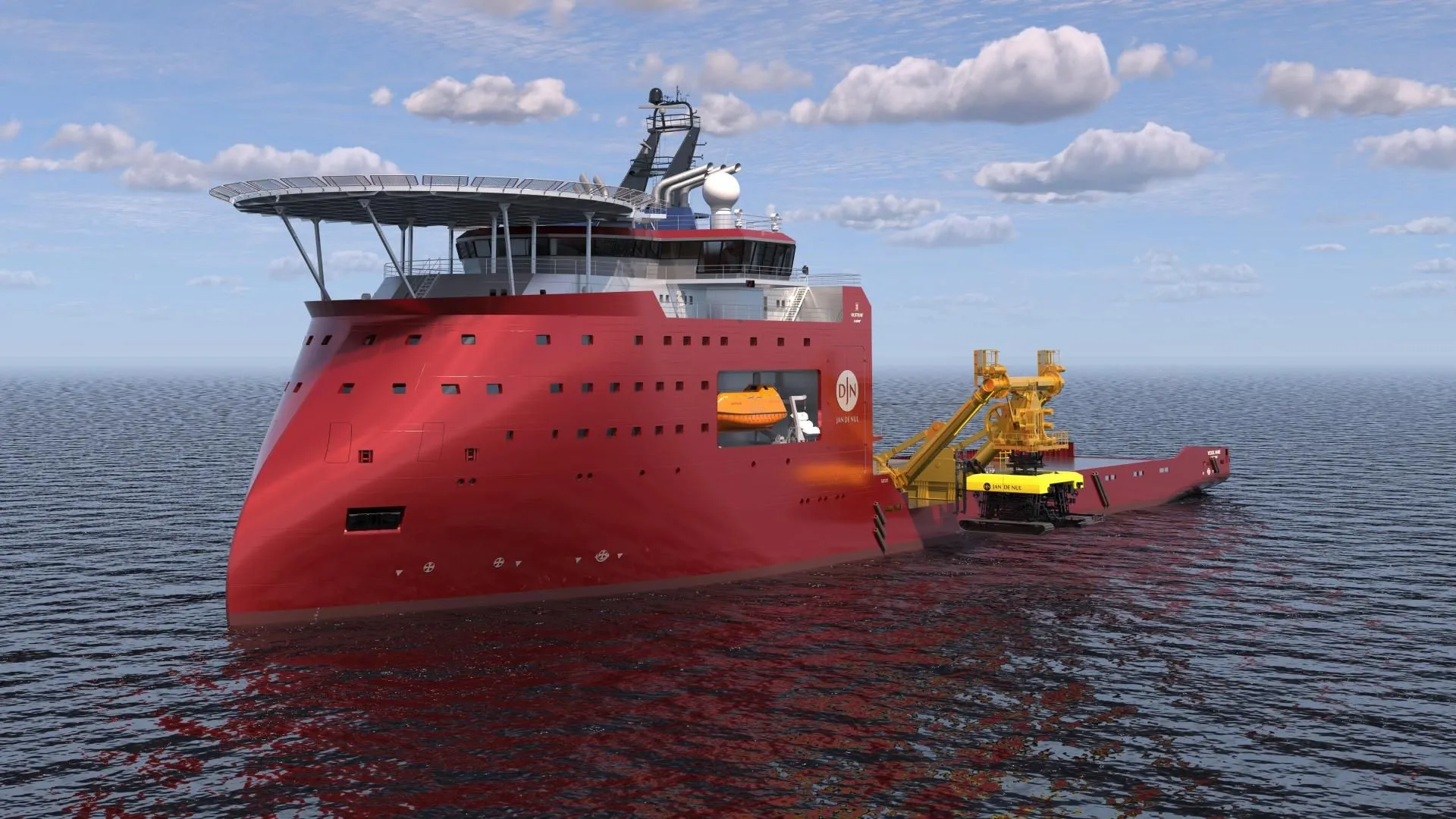
The fleet will be expanded with a new trenching support vessel, designed by Ulstein and built by CMHI in China. It will feature a deck-operated trencher capable of burying cables up to five meters deep. It stands out for its ULEv technology, which reduces exhaust gas nanoparticles by up to 99%, and its ability to operate on biofuel, with plans for a future transition to methanol.
In addition to new construction, the company will adapt the vessel Henry Darcy for trenching operations in shallow waters. This conversion will include a specialized subsea robot acquired from technology partner Osbit, expanding the fleet’s versatility.
Expanding Offshore Energy Infrastructure
Jan De Nul currently has four vessels under construction and one undergoing conversion, all focused on strengthening the offshore power grid. These investments reflect a concrete commitment to a more reliable and sustainable power system, supporting global decarbonization and energy autonomy objectives.
Source and photo: Jan De Nul