
Two natural gas explosions that occurred in January 2024 in Jackson, Mississippi, have been attributed to underground leaks that were not repaired in time. This was concluded by the National Transportation Safety Board (NTSB) after an investigation revealed critical deficiencies in Atmos Energy’s risk management.
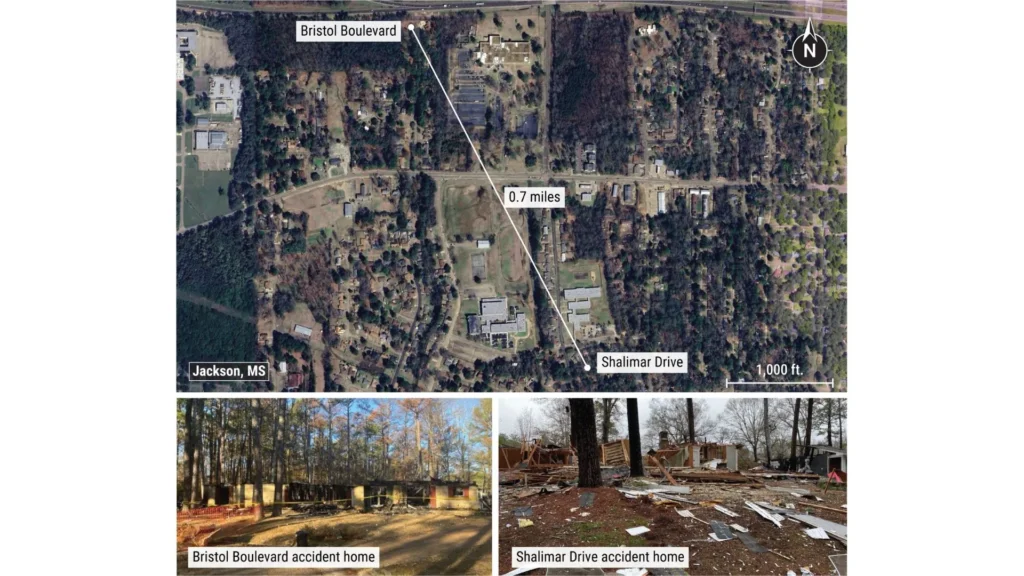
The first incident took place on January 24, when an explosion followed by a fire destroyed a home, leaving one person dead and another injured. Just three days later, a second explosion little more than a kilometer away caused the destruction of two additional houses.
Gas Explosions from Leaks Classified as Non-Hazardous
According to the report, Atmos Energy had detected the leaks at least eight weeks before the incidents. However, these were classified as low-risk, which delayed their repair.
As a result, natural gas progressively seeped into the homes, where it accumulated until reaching flammable levels that triggered the explosions.
Furthermore, the NTSB identified that ground movement contributed to loosening pipe connections, facilitating leaks in the distribution infrastructure.
Deficiencies in Maintenance and Risk Management
The investigation also revealed structural problems in the company’s safety programs. These include a lack of adequate procedures for monitoring known leaks in areas with unstable soil conditions and the absence of complete records on service lines.
These limitations reduced the company’s ability to identify critical infrastructure and prioritize preventive interventions.
Likewise, investigators noted that management programs did not effectively address aging pipelines or risks associated with geotechnical factors.
Lack of Public Information Worsened Impact
Another relevant aspect was the residents’ response. Several people reported smelling gas before the explosions but did not contact the company.
The NTSB concluded that clearer communication from the operator would have allowed residents to evacuate and notify emergency services immediately.
In this context, the use of gas detectors in homes was also identified as a measure that could have reduced the impact of the incidents.
Recommendations to Strengthen Pipeline Safety
As a result of the analysis, the NTSB issued eight recommendations aimed at improving safety in the natural gas network. These include replacing vulnerable connections, more frequent inspection of detected leaks, and improved data collection on infrastructure.
It also emphasizes the need to strengthen training for both emergency personnel and the public, as well as optimize risk assessment methods.
This case once again highlights the importance of proactive management in energy infrastructure, especially in gas distribution systems where small leaks can lead to serious consequences if not addressed quickly.
Source and internal photo: National Transportation Safety Board
Main photo: Shutterstock