
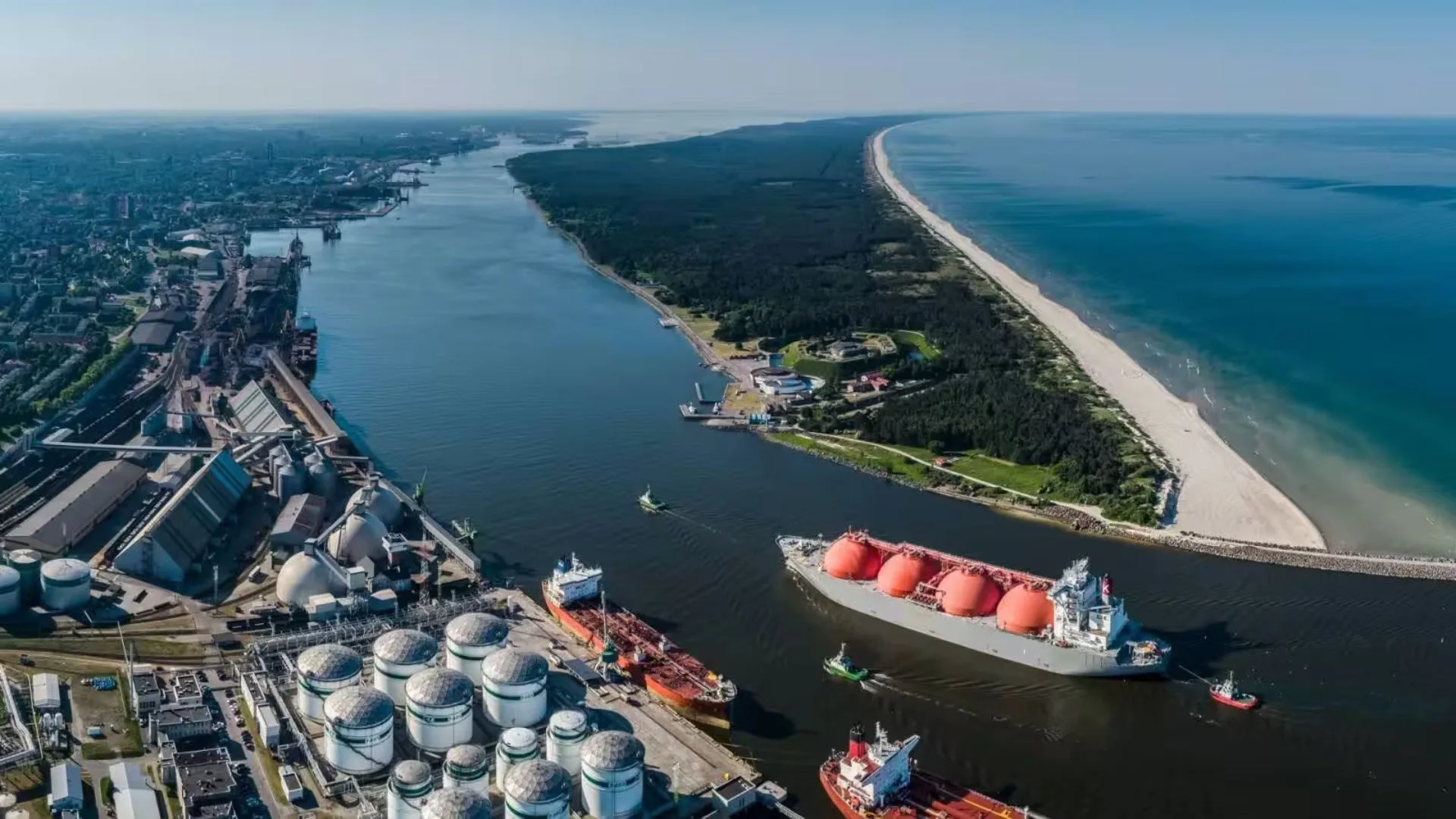
Aker Solutions was awarded a FEED contract to carry out the preliminary engineering design of the first CO₂ transshipment terminal in the Baltic region, located in the Lithuanian port of Klaipėda. The contract was awarded by KN Energies, an international operator of energy terminals in the Baltic Sea.
The planned infrastructure will manage up to 2.8 million tons of carbon dioxide per year from industrial sources in Lithuania, Latvia and other Baltic areas. The CO₂ will be temporarily stored before being transported by ship to geological repositories located in the North Sea.
A terminal at the service of regional decarbonization
This development is part of the Baltic CCS Consortium, a pioneering initiative that seeks to establish a cross-border network for carbon capture, transport and storage. The project is supported by the European Commission and is co-financed by the Connecting Europe Facility (CEF) for Energy program, recognizing it as a Project of Common Interest.
As reported by KN Energies, the aim is to create an efficient, reliable and customer-oriented CO₂ logistics solution that supports the Baltic countries’ climate neutrality goals. This infrastructure will be key to moving the region towards a low-carbon economy and meeting EU climate targets.
Aker Solutions’ technical expertise, a decisive factor
During the FEED phase, more than 100 Aker Solutions engineers from Norway, India and the United Kingdom will work to refine the technical design of the terminal, optimizing expansion routes and operational capacity. The company will apply lessons learned from projects such as Northern Lights, Brevik and Oslo CCS.
Henrik Inadomi, executive vice president of New Energies at Aker Solutions, noted that this award reflects confidence in its capabilities as a CCS systems integrator and its commitment to efficient and scalable solutions for industrial decarbonization. industrial decarbonization.
Institutional commitment and long-term vision
Linas Kilda, business development director at KN Energies, highlighted that the move towards the FEED phase reinforces the company’s commitment to the development of safe and sustainable CO₂ logistics services. This terminal will contribute to a cross-border, integrated value chain for carbon management in Eastern Europe.
The schedule calls for the engineering phase to be completed in the third quarter of 2026. The final investment decision is scheduled for 2027, and commercial commissioning of the system is projected for 2030.
A strategic node for Europe
The development of this terminal represents a tangible step forward in the consolidation of European carbon capture and storage networks. Its strategic location in Klaipėda reinforces the role of the Baltic countries in the climate fight and makes Lithuania a key point for CO₂ logistics on the continent.
Source: Aker Solutions