
Table of Contents
Researchers at North Carolina State University have developed a self-healing composite with the ability to regenerate its own internal structure repeatedly. This breakthrough addresses delamination, a problem that has affected the industry since the 1930s and typically limits aircraft lifespan to just 40 years.
Modern Engineering and the Self-Healing Composite
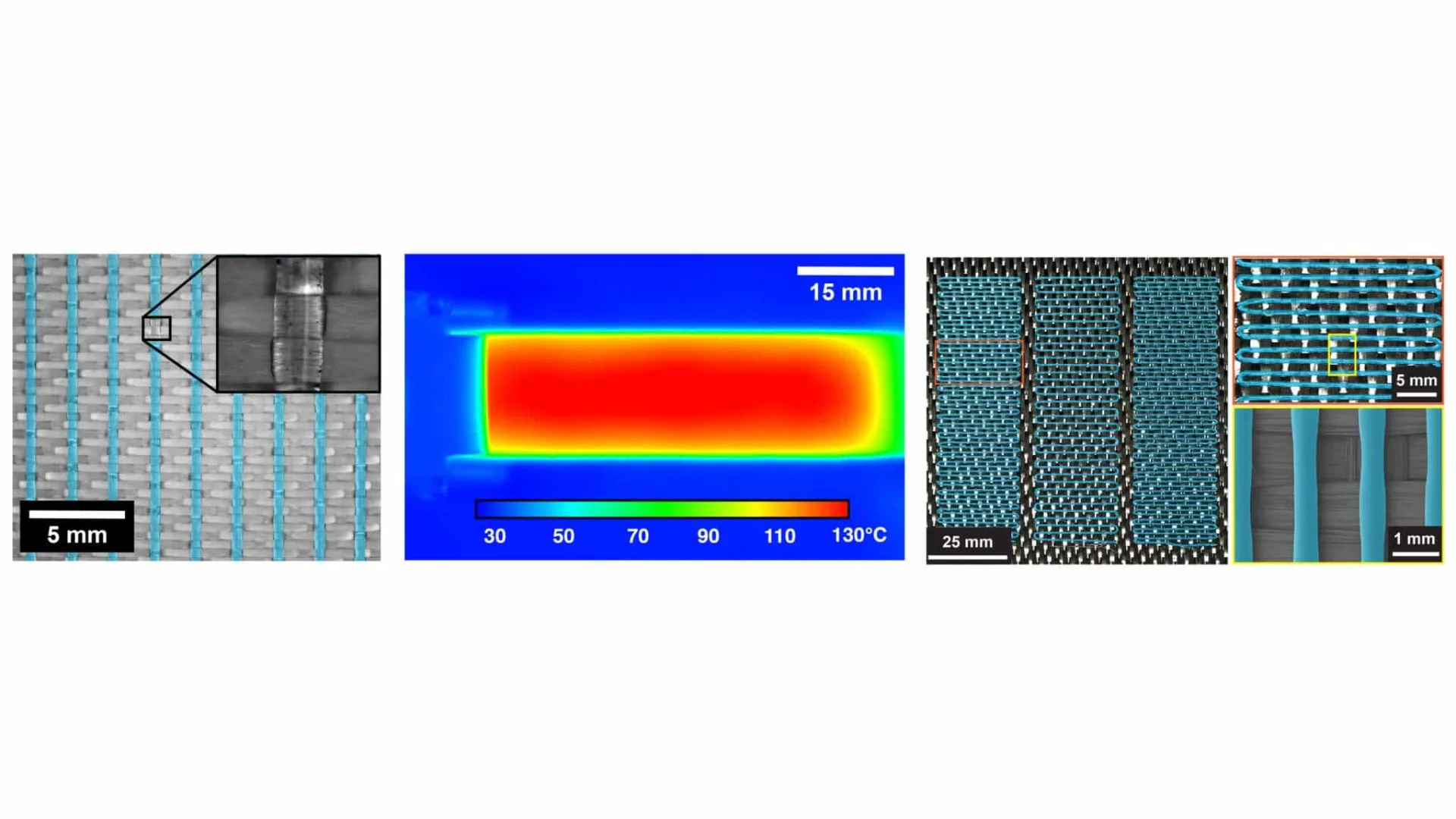
Upon reviewing the technical data, the technology is centered on an intelligent layered structure. The team led by Professor Jason Patrick uses a 3D printer to deposit a thermoplastic healing agent between the fiber sheets.
This design increases the original strength of the material up to four times. When a crack appears, a carbon filament network applies heat through an electric current. The polymer melts, flows into the fracture, and seals the damage internally. Likewise, this process allows the material to recover its structural toughness almost completely.
The durability of this system has been demonstrated after subjecting it to one thousand fracture and recovery cycles over 40 continuous days. This is an impressive figure that surpasses any previous record in the fiber-reinforced polymer composite materials sector.
Statistical models suggest that, with automated quarterly maintenance, structures could reach 125 years of use. In the case of spacecraft, where access for manual repairs is impossible, this mechanical autonomy is vital for long-duration missions.
The economic impact will be massive by reducing waste and energy consumption in spare parts manufacturing. The company Structeryx is working to integrate this method into current manufacturing processes. By avoiding the constant replacement of parts in wind turbines or aircraft fuselages, the industry takes a firm step toward sustainability.
Source and photo: NC State University