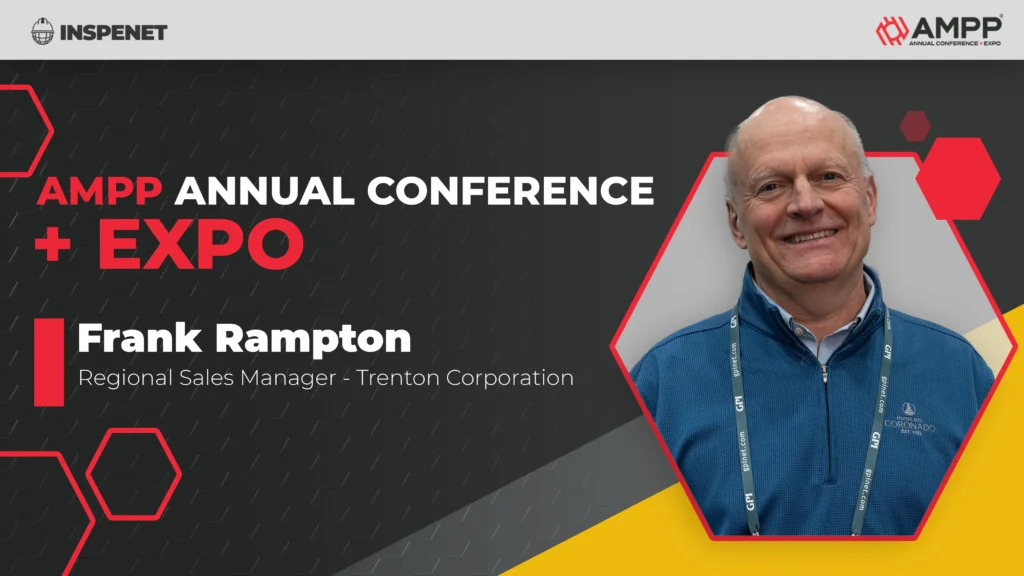
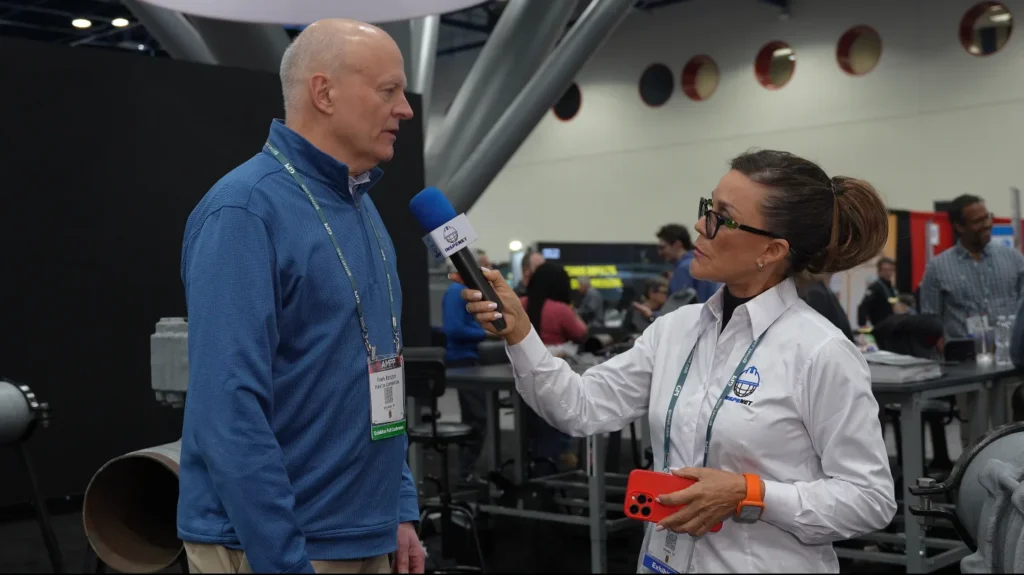
During the AMPP Annual Conference + Expo 2026, Trenton Corporation showcased its anticorrosion coatings solutions with a technical approach focused on long-term performance. In this context, Frank Rampton, the company’s Regional Sales Manager, explained how wax-based systems address current challenges in the energy and industrial sectors.
The interview also provided deeper insight into key aspects such as compatibility with other coatings, performance alongside cathodic protection, and durability under real operating conditions.
Since its founding in 1949, Trenton Corporation has specialized in the development of anticorrosive materials for pipelines. The company has protected thousands of miles of infrastructure around the world with wax-based solutions designed for demanding environments.
Likewise, its value proposition is defined by systems that are easy to apply, compatible with other coatings, and adaptable to irregular surfaces. This approach has enabled the company to remain a benchmark in pipeline protection within the oil and gas sector and other industries.
Compared with solutions such as FBE or epoxies, wax-based anticorrosion coatings stand out for their high compatibility. According to Rampton, these systems can be integrated with other coatings without causing adhesion or performance issues.
On the other hand, they also show a low tendency to disbond, which improves their behavior in conditions where other materials may fail. This feature is especially relevant in critical infrastructure, where coating integrity is essential.
One of the most important points addressed in the interview was the relationship between these coatings and cathodic protection systems. In this regard, Trenton’s products exhibit a low dielectric constant, which supports their performance under current.
In addition, some of its external coatings have been designed to be non-shielding and non-conductive. This means they do not interfere with current distribution, a key factor in ensuring the effectiveness of cathodic protection on buried or submerged pipelines.
Another notable aspect is the minimal surface preparation required. Unlike other systems that demand intensive processes, Trenton coatings can be applied with minimum standards such as SP2.
This means there is no need to use complex equipment, which reduces operating costs and intervention times. Likewise, this flexibility makes it possible to work in conditions where full surface preparation is not feasible.
In environments where moisture is a critical factor, these coatings offer clear advantages. Their hydrophobic nature allows them to repel water, preventing moisture from penetrating the protected surface.
As a result, they are especially effective in applications related to corrosion under insulation. This type of issue is common in industrial facilities, where accumulated moisture can accelerate material deterioration.
One of the strongest arguments in favor of these coatings is their durability. As Rampton explained, there are field applications that have exceeded 70 years of service while maintaining performance.
This is largely due to the inert nature of wax, which does not easily degrade over time. As a result, operators can rely on solutions that reduce the need for frequent maintenance.
In practical terms, these anticorrosion coatings are used in a wide variety of scenarios. These include buried pipelines, submerged pipelines, and rehabilitation projects for existing infrastructure.
Likewise, their ability to adapt to irregular surfaces makes them a viable option for field interventions. This is especially useful in projects where operating conditions are variable or complex.
The development of anticorrosion technologies continues to be a decisive factor in the management of energy infrastructure. In this context, solutions such as Trenton’s provide a balance between ease of application, technical performance, and durability.
Therefore, the evolution of anticorrosion coatings is moving toward systems that are more efficient, compatible, and better suited to the sector’s real needs. Participation in events such as AMPP 2026 reinforces the role of these technologies in the future of pipeline protection.
For more content about AMPP 2026, visit our LinkedIn profile.
Source: Inspenet.