In a context of industrial transformation, industrial cleaning is adopting new strategies to respond to structural challenges. During the AMPP Annual Conference + Expo 2026, Chris Ewart, president of Shape Waterblast Group (SWG), explained how ultra-high pressure technology is evolving to adapt to an increasingly demanding industry.
In this scenario, industrial cleaning is positioned as an important discipline within maintenance and surface preparation. Current solutions are no longer limited to operational efficiency. They now incorporate variables such as operator safety, process automation, and technological integration.
Ewart clarified an essential technical issue: the difference between industrial cleaning and high-pressure water cutting. Although both applications use similar technologies, the determining factor is the pressure level.
As he explained, his company works in ranges between 10,000 and 55,000 PSI; within that margin, the primary objective is material removal and surface cleaning. Exceeding that threshold implies entering cutting applications, an area where SWG does not focus.
In this way, pressure ceases to be an isolated technical data point and becomes a critical variable that defines the type of application. Likewise, the correct selection of the pressure level allows for optimized results and avoids damage to the treated materials.
The company's approach is based on working closely with customers and end users; this collaboration allows each solution to be adjusted to the specific needs of the operation.
Instead of offering standardized equipment, the trend points toward configurable systems that respond to specific variables of the industrial environment. This approach is crucial in sectors where industrial cleaning directly impacts productivity and asset lifespan.
Beyond technology, one of the main challenges in the sector is the human factor; Ewart highlighted the progressive aging of the workforce as a growing concern.
As experienced professionals retire, the industry faces a loss of technical knowledge accumulated over years. This situation creates a gap that is difficult to fill in the short term.
Likewise, the lower intake of new technical profiles aggravates the problem. Industrial cleaning requires specific skills that are not always present in today's labor market.
Automation is positioned as a priority solution; companies are investing in automated systems and robotic equipment that reduce dependence on direct human intervention.
According to Ewart, one of the main goals is to create a safe distance between the operator and the high-pressure equipment. This approach improves working conditions and significantly reduces associated risks.
In this way, robotics applied to industrial cleaning not only responds to the lack of qualified personnel but also introduces substantial improvements in terms of operational safety and consistency in results.
Safety is consolidating as one of the fundamental pillars of technological development in this field. Ultra-high pressure equipment involves inherent risks that must be managed with precision.
Therefore, new solutions incorporate systems that minimize operator exposure. From remote controls to automated platforms, the trend is clear: reduce direct interaction with the equipment.
Likewise, this evolution responds to increasingly strict regulations and a greater awareness of accident prevention in industrial environments.
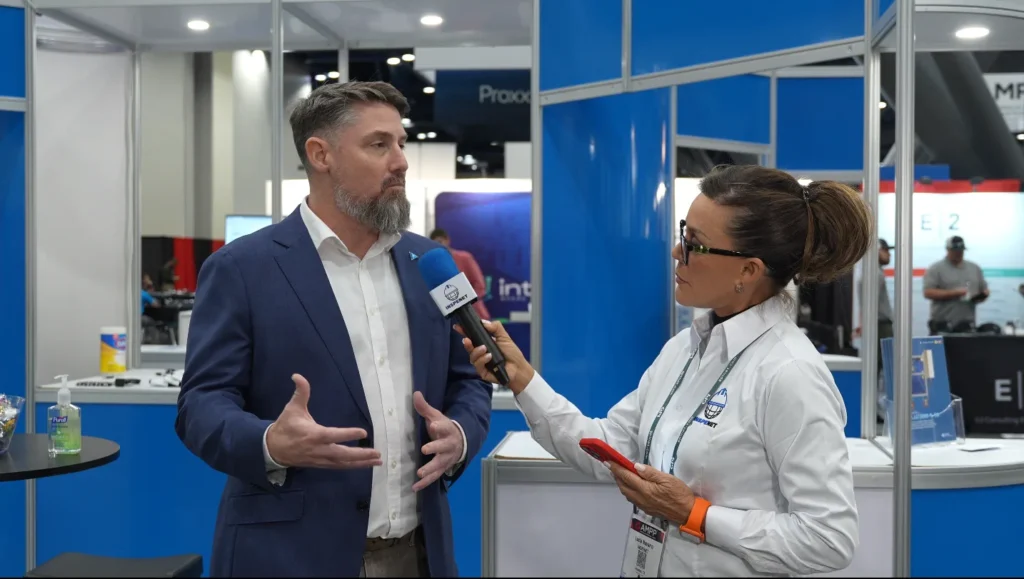
Regarding artificial intelligence, its presence in industrial cleaning is beginning to gain relevance. Ewart noted that while its adoption is inevitable, there is still a debate about the degree of dependence the industry should have on these tools.
On one hand, AI offers opportunities to optimize processes, improve predictive maintenance, and increase operational efficiency. On the other hand, human experience remains an essential component in decision-making.
This balance between advanced automation and human judgment defines the current phase of technological adoption in the sector.
Furthermore, the response to talent challenges is not limited to automation; companies are also strengthening their training programs.
In the case of SWG, investment focuses on developing competencies in the mechanical, electronic, and programming fields. This multidisciplinary approach reflects the increasing complexity of industrial cleaning equipment.
In this way, training becomes a crucial element to ensure operational continuity and the correct implementation of new technologies.
Companies like Advanced Pressure Systems play a relevant role. Founded in Texas in 2007, the company specializes in the manufacturing and distribution of waterblasting equipment globally, with a strong focus on product quality and customer service.
Its market presence reinforces the sector's value chain, facilitating access to specialized solutions adapted to different industrial applications.
Ultimately, industrial cleaning is going through a transition phase marked by the convergence of several factors. The talent shortage, the need to improve safety, and the incorporation of new technologies are redefining the landscape.
As automation and digitalization advance, the sector is moving toward more efficient and controlled models. In this context, the ability to adapt will be decisive for companies seeking to remain competitive.
For more content about AMPP 2026, please visit our LinkedIn profile.
Source: Inspenet.