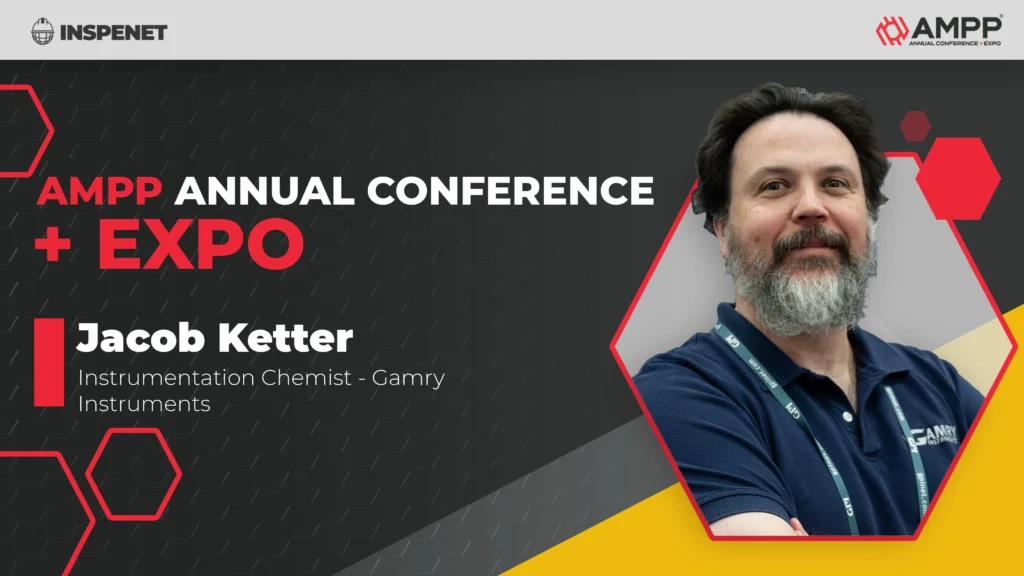
During the AMPP Annual Conference + Expo 2026, Jacob Ketter, Instrumentation Chemist at Gamry Instruments, explained how electrochemistry has become an important tool for understanding corrosion and improving material evaluation. Drawing on more than a decade of experience at the company, he highlighted the role of advanced techniques in enhancing industrial processes.
Gamry Instruments has been developing electrochemical instrumentation since 1989, with an initial focus on the corrosion industry. Over time, the company has expanded into multiple applications, including batteries, coatings, and materials studies.
Its technology is built around equipment such as potentiostats and galvanostats, which are essential for conducting precise electrochemical tests. The company also goes beyond hardware development by offering specialized training and technical resources for professionals working in industrial and research environments.
This combination of instrumentation and expertise has allowed Gamry to establish itself as a benchmark in applied electrochemical analysis, supporting both research and field decision-making.
Electrochemistry is essential for understanding corrosion because this phenomenon is, at its core, an electrochemical process. The use of specific techniques makes it possible to study how materials interact with their environment and how they degrade over time.
Tools such as potentiostats can be used to analyze different behaviors, from inhibitor evaluation to the detection of material failures. Among the most commonly used tests are cyclic polarization for pitting analysis and other methods aimed at localized corrosion.
There are also standards, such as those developed by ASTM, that guide these procedures, especially in critical sectors such as medical devices and infrastructure exposed to aggressive conditions.
In particular, electrochemical impedance spectroscopy (EIS) has become one of the most relevant techniques in electrochemistry applied to corrosion. Its main advantage lies in its non-destructive nature, which makes it possible to obtain detailed information without altering the sample.
Unlike traditional direct current methods, EIS provides a higher density of information. This makes it easier to understand the mechanisms affecting a material under real-world conditions while avoiding processes that could alter its original behavior.
In addition, this technique is especially useful for coating evaluation. Because coatings act as barriers and do not allow current to pass under conventional conditions, EIS makes it possible to analyze their condition and how they evolve over time through alternating current signals.
As a result, professionals can assess coating quality and detect potential degradation without having to wait long periods or cause damage that accelerates corrosion.
From a practical standpoint, electrochemistry offers a clear advantage in terms of speed.
Electrochemical tests make it possible to obtain results in much shorter timeframes compared with traditional methods such as weight-loss testing.
According to Ketter, this speed allows engineers to evaluate changes in formulations or operating conditions almost immediately. It enables them to validate hypotheses, rule out ineffective solutions, and optimize processes without having to wait through long testing cycles.
Likewise, the availability of data in less time improves efficiency in material development and reduces costs associated with prolonged testing or delayed decisions.
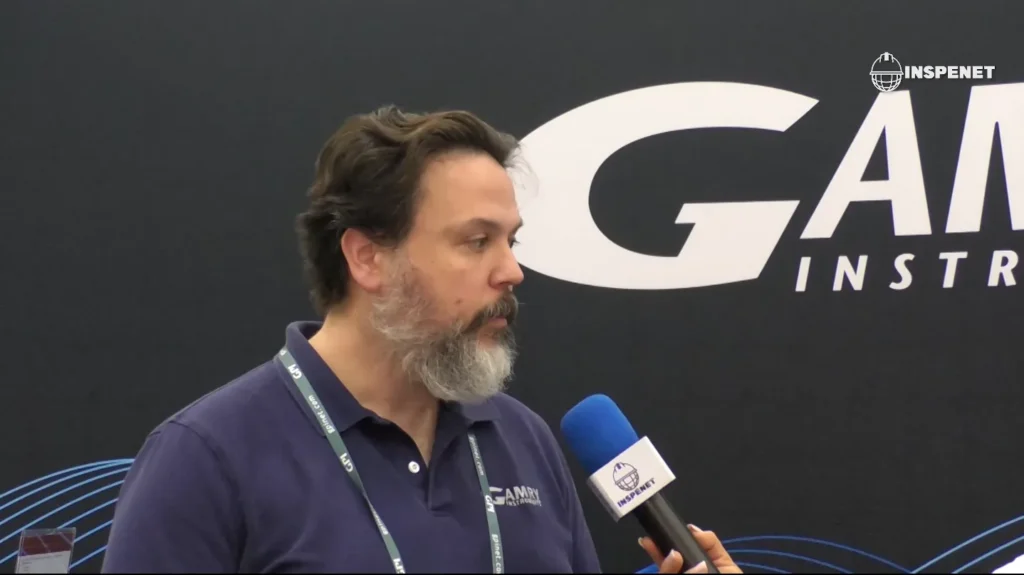
However, one of the biggest challenges in the industry is the inherent complexity of corrosion. This phenomenon depends on multiple variables, such as material type, environment, temperature, pressure, and the presence of mechanical stress.
In this sense, there are particularly complex scenarios, such as materials exposed to CO2 or H2S environments, structures embedded in concrete, or systems subjected to mechanical wear. Each of these factors introduces new variables that make results more difficult to interpret.
In addition, the combination of conditions such as high pressure and temperature or specific gaseous environments requires advanced experimental setups, which increases the difficulty of the analysis.
Given this landscape, collaboration among companies, researchers, and standards organizations is key. Gamry works alongside users of its technology and participates in the development and validation of methods based on standards such as ASTM.
Likewise, the company contributes to industry progress through technical support and training, helping professionals correctly apply electrochemical techniques in different contexts.
There are currently initiatives to develop new standards tailored to specific conditions, such as testing in CO2 environments using rotating cylinders, reflecting the sector’s constant evolution.
Ultimately, electrochemistry is positioned as an essential tool for corrosion and coatings analysis in modern industry. Its ability to provide detailed information in reduced timeframes improves decision-making and helps optimize material performance.
In the context of AMPP 2026, the participation of companies such as Gamry Instruments highlights the importance of continuing to develop technologies and methodologies capable of addressing today’s industry challenges with greater precision and efficiency.
For more content about AMPP 2026, visit our LinkedIn profile.
Source: Inspenet.