As part of the AMPP Annual Conference + Expo 2026, Jennifer Pratt, Product Development Specialist at 3M, discussed the role advanced coatings play in Corrosion protection for critical infrastructure within the energy sector. The conversation focused on established solutions that continue to be essential in an industrial environment where reliability makes all the difference.
On the one hand, 3M positions itself as a global company focused on applying science to solve industrial challenges across multiple sectors. Its work ranges from advanced materials to specific solutions for energy, manufacturing, and transportation, with a clear focus on operational efficiency.
In this context, the company has developed technologies that address specific needs in the oil and gas sector. Among them are coatings designed to protect assets exposed to demanding environmental conditions, where corrosion represents one of the main operational risks.
In this regard, fusion-bonded epoxy coatings, known as FBE, are 3M’s main solution for the sector. As Jennifer Pratt explained, this technology has been on the market since the 1960s, when the company itself developed this type of material.
These coatings are applied to the external surface of pipelines and act as a barrier against the environmental conditions that promote corrosion. Their purpose is clear: to prevent metal deterioration and preserve the structural integrity of the infrastructure.
In addition, their use has remained relevant for decades due to their reliability and field performance. Far from being an emerging solution, FBE coatings represent a proven technology that continues to meet the current needs of the sector.
On the other hand, one of the most relevant aspects of these coatings is their ability to integrate with other protection systems. In particular, FBE coatings are compatible with cathodic protection systems, which are widely used in the industry to mitigate corrosion.
This combination creates a more comprehensive protective environment, where the coating acts as the first physical barrier and cathodic protection complements the system from an electrochemical standpoint. The result is a stronger strategy for extending the service life of pipelines.
Likewise, this compatibility makes implementation easier in existing infrastructure, without the need to completely redesign protection systems. This represents a significant operational advantage for companies in the sector.
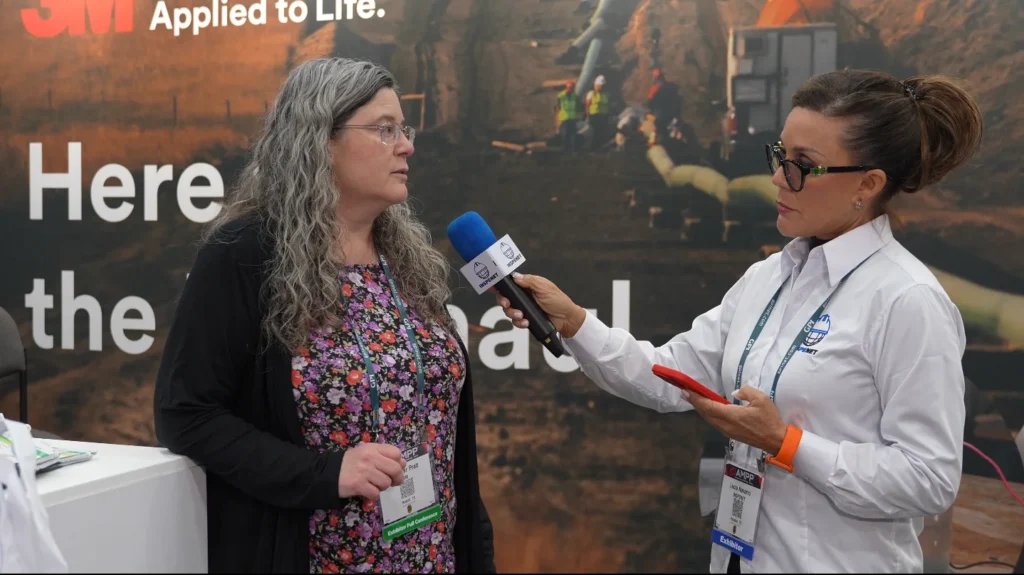
At the same time, Pratt noted that the segment in which these materials operate is characterized by stability. Unlike other technological fields, where disruptive innovation sets the pace, corrosion protection in oil and gas evolves more gradually.
In this scenario, companies prioritize solutions that have already demonstrated their performance under real-world conditions. Reliability, durability, and compatibility with existing systems carry more weight than the adoption of completely new technologies.
For this reason, 3M’s approach is centered on providing materials that meet these requirements, maintaining consistent standards and adapting to the operational demands of the sector.
However, the interview also made it clear that 3M’s role in this area is well defined. The company is not involved in the development of monitoring systems or predictive solutions aimed at asset management.
Instead, its specialization is focused on the development of protective materials. As Pratt indicated, the goal is to provide coatings that perform effectively within existing systems, without intervening in other technological layers.
This approach allows the company to focus on optimizing the performance of its products, ensuring they meet the standards required in demanding industrial environments.
Finally, corrosion protection continues to be a fundamental element in the management of oil and gas infrastructure. In a sector where asset integrity is critical, having reliable solutions is essential to ensuring operational continuity.
In this context, technologies such as 3M’s fusion-bonded epoxy coatings remain relevant thanks to their effectiveness and track record. The perspective shared by Jennifer Pratt at AMPP 2026 reflects a clear reality: in certain industrial segments, progress comes from refining what already works.
For more content about AMPP 2026, visit our LinkedIn profile.
Source: Inspenet.