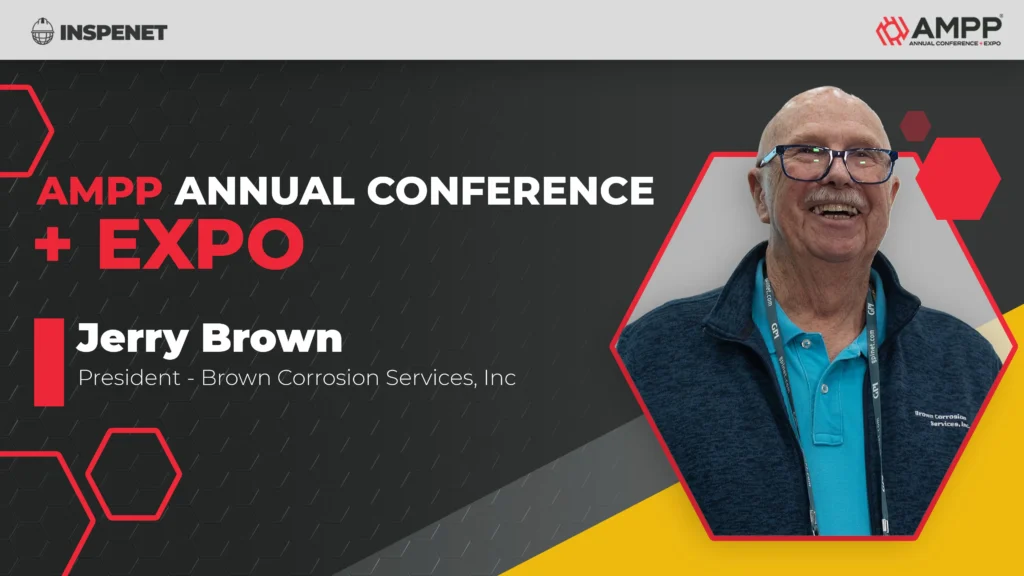
At the AMPP Annual Conference + Expo 2026, Gerald Brown, President of Brown Corrosion Services, shared his vision on one of the major challenges in the energy and industrial sector: maintaining asset integrity against phenomena such as corrosion, erosion, and fouling.
With over 50 years of experience in organizations like NACE and AMPP, and an international career spanning more than 25 countries, Brown brings a practical, field-based perspective. His message is clear: corrosion monitoring is not optional; it is an operational requirement to prevent critical failures and ensure the continuity of energy supply.
Brown emphasizes that any effective strategy begins with understanding the problem; before mitigating corrosion, it is necessary to identify what type of degradation affects the system and under what conditions it occurs.
In this context, corrosion monitoring allows transforming operational data into concrete decisions. Just as variables like temperature or pulse are monitored in the medical field, in industrial systems, it is essential to measure the internal state of pipes and equipment.
This way, companies can assess whether implemented solutions, such as chemical inhibitors or coatings, are working correctly. Otherwise, the risk increases significantly.
Furthermore, a lack of control can lead to catastrophic failures with direct environmental impact, affecting rivers, oceans, and soil. Therefore, continuous monitoring becomes a key tool for safe and efficient operation.
The interview focuses on a specific technology: direct sand monitoring. This approach is particularly relevant in scenarios where erosion poses a significant threat.
Unlike indirect methods, direct monitoring allows real-time identification of solid particles within the flow. This aspect is crucial, as erosion does not depend solely on the fluid's composition but also on variables such as velocity and the nature of the transported materials.
Likewise, Brown explains that erosion involves the progressive wear of metal, which can compromise the structural integrity of the system. Detecting this phenomenon early allows action to be taken before major damage occurs.
Consequently, the use of direct monitoring technologies provides greater precision and responsiveness, leading to a significant improvement in industrial asset management.
Another highlight is the phenomenon of fouling, a problem that can severely affect system performance. This process occurs when solids accumulate inside pipes or equipment, which can obstruct flow.
For example, the accumulation of bacteria, paraffins, or corrosion products can block conduits and affect measuring instruments. In more complex cases, it can even interrupt large-scale product transportation.
In this regard, anti-fouling systems play an essential role. Their objective is to prevent the formation of deposits that limit flow and reduce operational efficiency.
Furthermore, fouling control has both technical and economic implications. An obstruction can affect energy supply, impacting both industries and end-users.
Therefore, integrating anti-fouling strategies within a corrosion monitoring program allows addressing the problem from a comprehensive perspective.
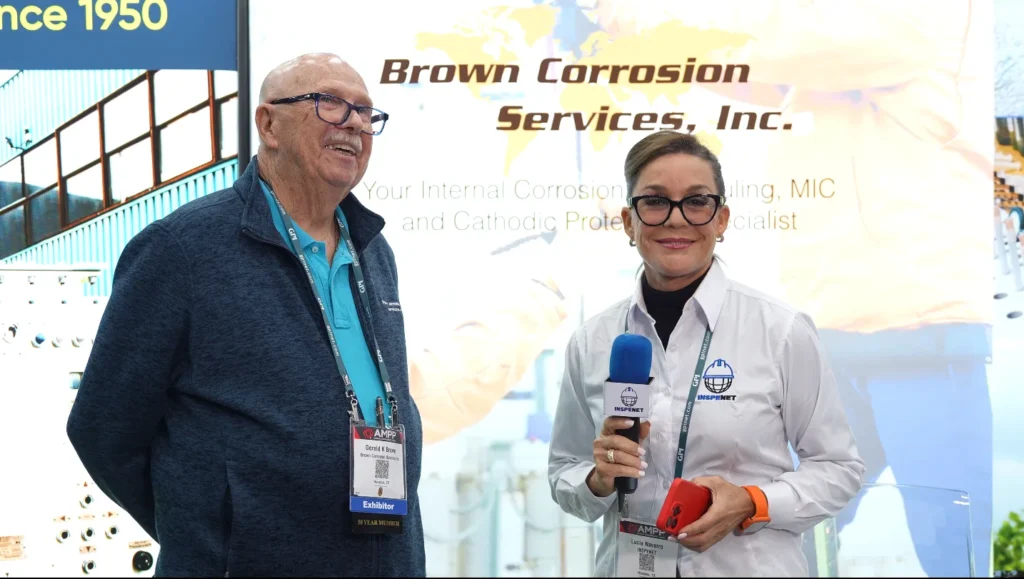
Regarding practical application, Brown mentions a representative case his team is currently working on. It involves a pipeline extending from the Oregon coast to Ohio, with multiple branches along its route.
This type of infrastructure presents an additional challenge: the variability of the transported product. As the fluid progresses, its composition can change due to the incorporation of new streams.
Consequently, the system's behavior at the origin point is not the same as at 100, 500, or 1,000 kilometers.
Given this reality, corrosion monitoring must adapt to each section of the pipeline. Evaluating each segment ensures that the product reaches its destination in optimal conditions, whether for domestic, industrial, or urban use.
This approach demonstrates the importance of having flexible solutions adapted to dynamic environments.
Gerald Brown's career reinforces the relevance of these approaches. His experience in multiple countries has allowed him to face a wide variety of operational conditions, from marine environments to onshore facilities.
This international exposure has contributed to developing a broad vision of the sector's challenges.
Although conditions change, the fundamental principles remain: monitor, analyze, and act.
According to Brown.
Likewise, his participation in projects over decades highlights the evolution of monitoring technologies. Today, available solutions allow obtaining more precise and real-time data, which improves responsiveness to potential failures.
Finally, the central message of the interview can be summarized in one key idea: safety must always be the priority.
Corrosion monitoring prevents failures and helps optimize operations. With accurate information, companies can adjust their strategies, reduce costs, and improve asset performance.
Likewise, the combination of monitoring, erosion control, and fouling prevention offers a complete overview of system status. This comprehensive approach is essential in a context where energy demand and regulatory requirements continue to increase.
In short, Brown's experience and the work developed by Brown Corrosion Services highlight that anticipation is key. Detecting problems before they become failures is the foundation of efficient and safe operation.
For more content about AMPP 2026, please visit our LinkedIn profile.
Source: Inspenet.