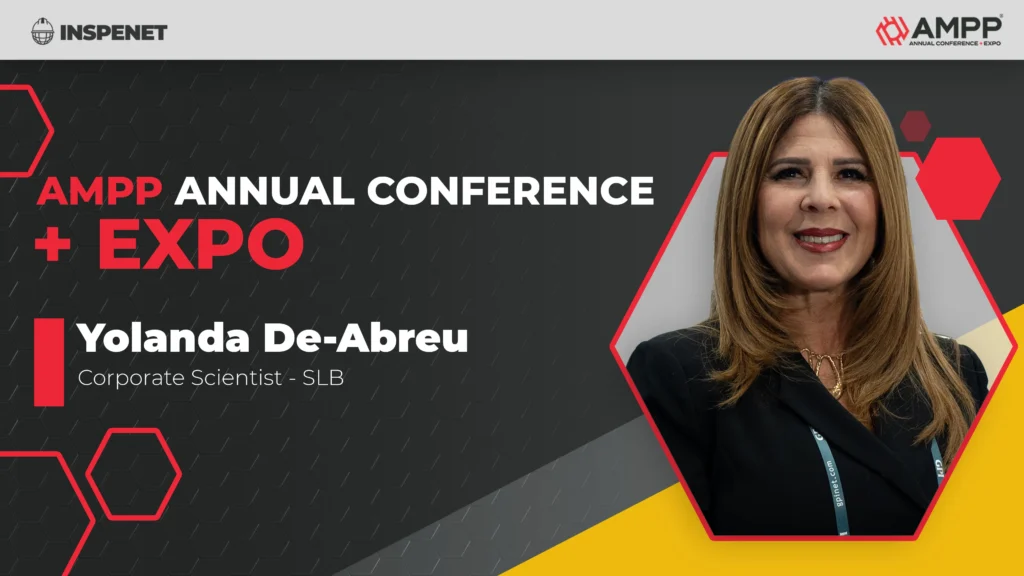
During the AMPP Annual Conference + Expo 2026, Yolanda De Abreu, Corporate Scientist at SLB, focused on a common practice in the oil and gas sector that could be limiting the effectiveness of chemical treatments. Her presentation questions the selection of corrosion inhibitors based exclusively on the aqueous phase and opens the debate on the need to adopt evaluation criteria more representative of actual operating conditions.
Corrosion remains one of the main operational challenges in the energy industry. Pipeline integrity depends largely on the use of corrosion inhibitors, chemical compounds that adhere to the metal surface and prevent direct contact with water.
Likewise, in multiphase systems (where water and crude oil coexist), the behavior of these inhibitors is especially complex. Depending on their nature, they can distribute differently between both phases, which affects their effectiveness.
In this context, companies typically evaluate the performance of these products by measuring the residual amount present in the water. However, this approach could be generating incomplete interpretations.
One of the most relevant points of De Abreu's presentation is the lack of direct correlation between the amount of inhibitor in the aqueous phase and the actual level of metal protection.
Through techniques such as liquid chromatography and mass spectrometry, the SLB team analyzed how inhibitors distribute between the oil and water phases. The results show that classifying these products solely based on their presence in water can lead to imprecise decisions.
In fact, many operators use this parameter as their primary reference, without considering other dynamic factors of the system. This practice, according to the expert, should be critically reviewed.
One of the most relevant findings of the study is the active role played by the oil phase. Far from being a passive medium, oil acts as a corrosion inhibitor reservoir.
Over time, the inhibitor components migrate from the oil to the water, which helps maintain protection on the metal surface. This phenomenon implies that treatment effectiveness is not static, but evolves based on the equilibrium between both phases.
Likewise, the tests demonstrated that contact time is a determining factor. For example, separating the phases after one hour provides a lower level of protection compared to waiting several hours, when greater inhibitor transfer has occurred.
This behavior challenges laboratory methods that evaluate only the aqueous phase without considering the presence of oil at the top of the system.
De Abreu emphasizes the need to advance toward standardization in the evaluation of corrosion inhibitors. Currently, there is no uniform procedure among chemical suppliers, which generates discrepancies in results and makes it difficult to compare solutions.
Consequently, the expert proposes incorporating biphasic systems in laboratory tests, replicating conditions closer to actual operation. This approach would allow obtaining more representative data and improving field decision-making.
Likewise, the creation of common standards would facilitate alignment between manufacturers and operators, reducing uncertainty in product selection.
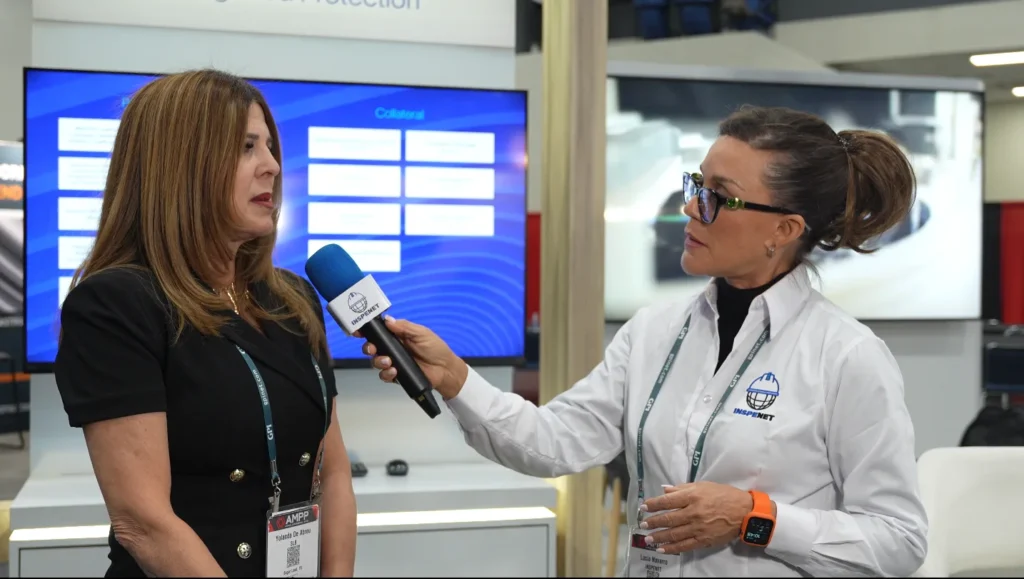
From an operational perspective, this change in approach can have direct implications for asset integrity management. A more accurate evaluation of corrosion inhibitors would allow optimizing chemical treatments and reducing risks associated with pipeline failures.
Additionally, adopting more realistic methodologies would contribute to improving the efficiency of maintenance programs and extending the service life of infrastructure.
In parallel, this type of advancement highlights the importance of applied research in a sector where small adjustments in processes can translate into significant improvements.
On the other hand, the interview also addressed one of the industry's structural challenges: the shortage of professionals specialized in corrosion and materials science.
According to De Abreu, there is a growing need to attract young talent to this field, especially at a time when other disciplines such as artificial intelligence capture greater attention.
Likewise, she highlighted the increase in female presence in the sector, with more women occupying positions of responsibility. This evolution reflects a positive change in the industry, which seeks to diversify profiles and strengthen its technical capabilities.
Ultimately, the contribution presented at AMPP 2026 invites a rethinking of one of the most deeply rooted assumptions in corrosion inhibitor evaluation. Considering the complete system (and not just the aqueous phase) emerges as a necessary step to advance toward more accurate practices aligned with operational reality.
In this way, the industry faces the opportunity to redefine its standards and improve the long-term protection of its assets, in line with approaches such as that proposed by SLB.
For more content about AMPP 2026, please visit our LinkedIn profile.
Source: Inspenet.