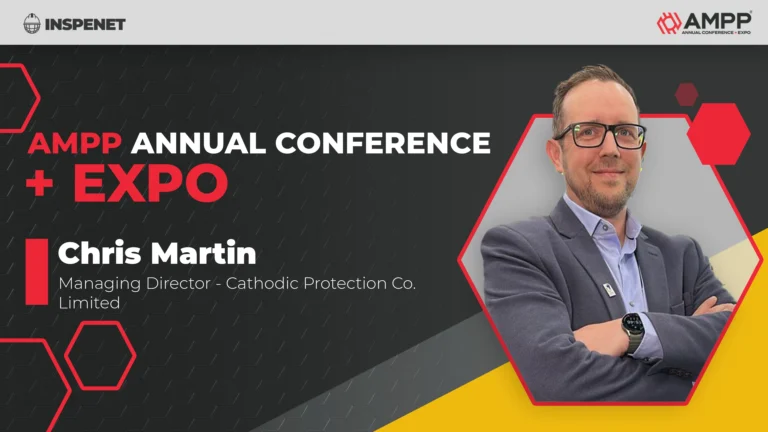
During the AMPP Annual Conference + Expo 2026, one of the most important gatherings in the sector, Cathodic Protection Co. Ltd. (CPCL) shared its perspective on the current challenges of cathodic protection. Chris Martin, the company’s Managing Director, explained how accumulated experience and technical knowledge make it possible to address increasingly complex scenarios in the energy and industrial sectors.
In this context, the conversation focused on technological evolution, the importance of human talent, and the need to adapt to new operational and environmental demands.
CPCL stands out as a company with a strong foundation in the sector. Founded in 1950, the company has 75 years of experience providing cathodic protection solutions for critical applications such as oil pipelines, gas pipelines, offshore structures, and storage systems.
Over the decades, it has developed a global presence with operations on six continents, combining consulting, design, and the manufacturing of custom systems. This comprehensive capability allows the company to take on complex projects with a fully technical approach.
Likewise, its value proposition is supported by value engineering, continuous product development, and an international network of strategic partners, which strengthens its position in highly demanding markets.
The evolution of cathodic protection is directly tied to changes in the energy sector.
Today’s challenges are numerous and require constant adaptation.
According to Chris Martin, accumulated experience plays a crucial role. The company has built its knowledge over decades, enabling it to respond quickly to new needs in pipelines and offshore applications. However, Martin emphasizes that the true driving force behind this evolution is the human team.
The Managing Director highlights that the company’s differentiating value lies in a group of highly qualified professionals who work in a coordinated way to adapt solutions to each context. This combination of experience and talent supports the transition toward new forms of applied engineering.
In terms of technological development, one of the most relevant aspects is the design of equipment capable of operating under adverse conditions. Transformer rectifiers are a clear example of this capability.
The development of a specific range for hazardous environments, designed in-house, reflects the company’s level of specialization. This approach makes it possible to control the entire engineering process and ensure that the equipment meets the most demanding technical requirements.
In addition, the international experience gained across different regions provides practical knowledge that translates into reliable solutions. The combination of in-house design and field experience is key to ensuring system performance.
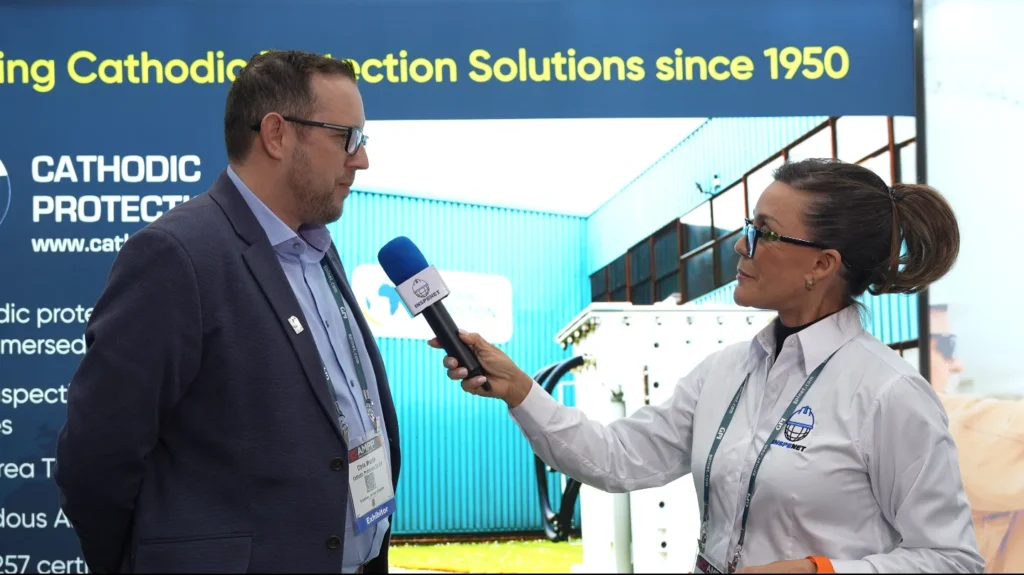
When addressing the protection of infrastructure such as pipelines and offshore structures, technical accuracy is essential. At this point, Martin notes that one of the most important factors is the correct interpretation of the client’s specifications.
From there, the work consists of aligning those needs with the applicable technical standards. This process requires a high level of expertise and a constant ability to adapt, since each project presents its own particular conditions.
In this way, cathodic protection becomes a discipline in which applied engineering and hands-on experience come together to ensure the long-term integrity of assets.
The industry is undergoing significant changes in its approach. Corrosion management is no longer limited to one-time solutions, but is instead adopting a full lifecycle perspective.
In Martin’s words, the sector is moving toward more environmentally responsible methods. This transition involves developing solutions that reduce environmental impact without compromising operational efficiency.
Likewise, innovation continues to be a key factor. Companies are seeking new ways to optimize their systems and adapt to a constantly changing environment, where efficiency and environmental responsibility are becoming increasingly important.
Finally, beyond technology and experience, CPCL places strong emphasis on its people. With a staff of 61 professionals, the company defines itself as a group of specialists focused on solving problems.
This approach reinforces a corporate culture based on collaboration and shared knowledge. For Martin, leading this team represents one of the organization’s greatest assets.
As a result, the combination of talent, experience, and commitment allows the company to maintain its position in a highly competitive sector.
Ultimately, cathodic protection continues to evolve in order to respond to today’s challenges in the energy industry. Accumulated experience, technological development, and the value of human talent are becoming established as the pillars on which the solutions of the future are built.
From this perspective, companies such as CPCL demonstrate that constant adaptation and technical knowledge remain decisive factors in ensuring the integrity of critical infrastructure on a global scale.
For more content about AMPP 2026, visit our LinkedIn profile.
Source: Inspenet.